Prediction Markets Get Professional: Sharper Prices, Scarcer Profits
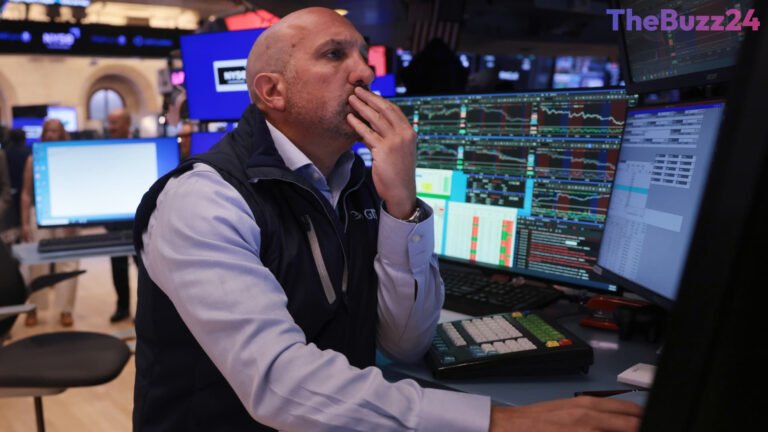
Prediction markets are undergoing a significant shift as professional traders and institutional liquidity increasingly enter the space. This influx is expected to refine price accuracy, making it considerably more challenging for many participants to exploit pricing errors and arbitrage opportunities. While this professionalization benefits the platforms through increased volume and appeal as forecasting tools, it presents a double-edged sword for individual traders.
An academic analysis of substantial trading volume on Polymarket revealed that a small fraction of highly skilled traders consistently captured a disproportionate share of profits. These traders excelled by rapidly responding to news, capitalizing on price discrepancies across related contracts, and trading against predictable behavioral biases. However, as more sophisticated players enter the arena, market prices are expected to adjust more swiftly, diminishing the window for such profitable strategies. Experts suggest that the percentage of traders consistently demonstrating an edge could shrink significantly, potentially leaving only the most elite hedge funds capable of outmaneuvering the market.
Despite the increased competition, there are potential benefits for less experienced traders. More efficient and accurate pricing means these participants are less likely to consistently overpay for contracts due to market inefficiencies. While individual trades may still result in losses, especially after accounting for transaction costs, the overall pricing should more closely reflect the true probabilities of events. This maturation could transform prediction markets into more reliable forecasting instruments, with their data potentially being referenced and traded alongside traditional market benchmarks.
Furthermore, large institutions may face their own challenges. In less liquid markets, even modest trades can significantly impact prices, potentially eroding the advantage that these firms seek. This dynamic could create opportunities for specialized traders who possess deep expertise in niche markets, allowing them to act as market makers and retain an edge where larger players cannot effectively operate.
Key Takeaways
- Prediction markets are attracting more professional liquidity, leading to more accurate pricing.
- This professionalization makes it harder for individual traders to profit from market inefficiencies and arbitrage.
- While skilled traders face increased competition, less experienced participants may benefit from more reliable price discovery.
Editor’s Analysis & Impact
The increasing professionalization of prediction markets signals a maturation of the industry, moving it closer to traditional financial markets. While this trend promises greater price efficiency and utility as forecasting tools, it raises concerns about market accessibility for retail traders. The shrinking profit margins for those without a significant edge could lead to a consolidation of expertise among a smaller group of sophisticated players, such as hedge funds. However, the inherent complexity and niche opportunities within prediction markets may still allow specialized traders to thrive. Ultimately, this evolution could enhance the credibility and data value of prediction markets, potentially influencing broader economic forecasting and decision-making.
Frequently Asked Questions
Q: What is a prediction market?
A: A prediction market is a type of exchange where participants trade contracts whose payoffs depend on the outcome of future events. They are used for forecasting and can provide insights into the likelihood of various events occurring.
Q: How does professionalization affect prediction markets?
A: Professionalization, driven by increased participation from institutional investors and skilled traders, leads to more efficient pricing. This means market prices more accurately reflect the probability of outcomes, making it harder to find and exploit mispricings or arbitrage opportunities.
Q: Who benefits from more professionalized prediction markets?
A: Platforms benefit from increased volume and credibility. Less experienced traders may benefit from more accurate pricing, reducing the risk of making costly mistakes. However, the most significant profits are likely to be captured by a smaller group of highly skilled professional traders and institutions.
AI Disclosure: This article is based on verified data and official reports. Our Team and AI have cross-referenced every financial detail with primary sources to ensure total accuracy.
More from this Category