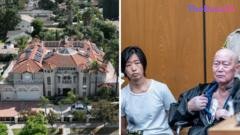
Prominent Chinese Underground Church Leader Released and Relocated to U.S.
Jin Mingri, the founder of the influential Zion Church, has been released from imprisonment in China and has successfully relocated to the United States. His release comes less than two months after his detention became a focal point of high-level diplomatic discussions between the U.S. and Chinese administrations. Jin, also known as Ezra Jin, had been held following a series of widespread raids targeting unregistered religious organizations in October.
Zion Church, which Jin established in 2007, grew into a significant network spanning 40 cities with approximately 10,000 members. The organization faced increasing scrutiny from the Chinese government, eventually leading to an official ban in 2018 after the church refused to install state-mandated surveillance equipment on its premises. The subsequent crackdown on the church and its leadership has been characterized by international observers as one of the most severe campaigns against religious activity in recent Chinese history.
Following his arrival in Los Angeles, Jin’s family expressed profound relief, describing his release as a miracle. While the family acknowledged the role of international diplomatic pressure in securing his freedom, they also expressed hope that this development might signal a shift in the treatment of religious practitioners within China. Despite this individual success, human rights advocates note that many other church leaders and members remain in custody, highlighting the ongoing tensions between the state’s promotion of atheism and the growth of independent religious communities.
Key Takeaways
- Pastor Jin Mingri, founder of the Zion Church, has been released from Chinese custody and has arrived in the United States.
- The Zion Church, once a network of 10,000 members, was banned in 2018 for resisting government surveillance requirements.
- While Jin's release is viewed as a positive development, numerous other church leaders remain incarcerated following recent government crackdowns.
Editor’s Analysis & Impact
The release of Jin Mingri serves as a rare example of how high-level diplomatic intervention can influence the outcomes of individual cases involving religious persecution in China. However, the broader implications for religious freedom remain grim. The Chinese government’s systematic pressure on unregistered churches, often framed as a matter of national security and social control, continues to intensify. For the international community, this case underscores the difficulty of balancing geopolitical relations with human rights advocacy. While the release provides a temporary reprieve for one prominent figure, it is unlikely to signal a systemic change in China’s policy toward independent religious institutions. Future outlooks suggest that the state will continue to prioritize the integration of religious groups into state-sanctioned frameworks, leaving underground movements in a precarious and vulnerable position.
Frequently Asked Questions
Q: Why was the Zion Church banned by the Chinese government?
A: The Zion Church was banned in 2018 primarily because it refused to comply with government demands to install security cameras and surveillance equipment on its property.
Q: What is the status of other Zion Church members?
A: While Jin Mingri has been released, human rights groups report that many other religious practitioners, including at least eight members of the Zion Church, remain incarcerated in China.
AI Disclosure: This article is based on verified data and official reports. Our Team and AI have cross-referenced every financial detail with primary sources to ensure total accuracy.
More from this Category