Putin Signals Potential End to Ukraine Conflict Amid Scaled-Back Victory Day Parade
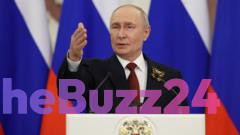
Russian President Vladimir Putin has indicated that the ongoing conflict in Ukraine may be nearing its conclusion. Speaking to reporters following a significantly scaled-down Victory Day parade in Moscow, Putin remarked that the situation is “coming to an end,” though he characterized the resolution as a complex and serious matter. The Russian leader used the occasion to criticize Western nations, accusing them of escalating tensions by continuously supplying military aid to Kyiv and fueling a prolonged confrontation.
This year’s Victory Day celebrations, which mark the Soviet Union’s victory in World War II, featured a starkly different atmosphere in Red Square. For the first time in nearly two decades, the event proceeded without the traditional display of heavy military hardware, such as tanks and missiles. The decision to scale back the parade stemmed from heightened security concerns, particularly the threat of Ukrainian drone strikes. However, a temporary ceasefire brokered by US President Donald Trump helped mitigate immediate security risks, allowing the event to conclude without incident.
In his official address, Putin defended the military campaign, describing it as a “just” war against what he termed an aggressive Ukrainian force backed by the NATO alliance. Regarding potential diplomatic resolutions, Putin stated he would only agree to a direct meeting with Ukrainian President Volodymyr Zelensky once a comprehensive, long-term peace treaty has been finalized. He suggested such a meeting could take place in a neutral third country to sign the final agreement.
Looking toward future diplomatic frameworks, Putin expressed openness to negotiating new security arrangements for Europe. He identified former German Chancellor Gerhard Schröder, a long-time associate who has faced scrutiny for his ties to Russian state energy firms, as a preferred intermediary. Additionally, while a recent US-brokered agreement included a planned exchange of 1,000 prisoners from each side, Putin noted that Moscow had not yet received formal communication from Kyiv to execute the swap.
Key Takeaways
- Russian President Vladimir Putin suggested the conflict in Ukraine is "coming to an end," while continuing to criticize Western and NATO support for Kyiv.
- Moscow's annual Victory Day parade was heavily scaled back, omitting military hardware for the first time in nearly twenty years due to security and drone threats.
- Putin conditioned any personal meeting with Ukrainian President Volodymyr Zelensky on the prior finalization of a long-term peace treaty.
Editor’s Analysis & Impact
Putin’s remarks, delivered during a highly unusual and scaled-back Victory Day parade, signal a strategic shift in Moscow’s public rhetoric. By framing the conflict as “coming to an end,” Putin may be attempting to prepare domestic audiences for a transition from active warfare to a diplomatic phase, potentially leveraged by the recent US-brokered temporary ceasefire. However, his insistence on a pre-negotiated peace treaty before meeting Zelensky, combined with his preference for controversial figures like Gerhard Schröder as negotiators, suggests that Russia intends to dictate the terms of any post-war European security architecture. The absence of heavy military hardware at Red Square also highlights the tangible strain the war has placed on Russia’s military resources and domestic security, forcing the Kremlin to prioritize defense over traditional displays of geopolitical strength.
Frequently Asked Questions
Q: Why was the Victory Day parade in Moscow scaled back this year?
A: The parade was scaled back due to security concerns, specifically the threat of potential Ukrainian drone attacks on Red Square. For the first time in nearly twenty years, no heavy military hardware, such as tanks or missiles, was showcased.
Q: What conditions did Putin set for meeting with Ukrainian President Volodymyr Zelensky?
A: Putin stated he would only meet with President Zelensky once a final, long-term peace treaty has been agreed upon, suggesting that a meeting in a third country would serve as the final step to sign the treaty.
Q: Who did Putin suggest as a preferred partner for European security negotiations?
A: Putin expressed a preference for negotiating new European security arrangements with former German Chancellor Gerhard Schröder, a long-time friend of the Russian president who has faced controversy due to his work with Russian state-owned energy companies.
AI Disclosure: This article is based on verified data and official reports. Our Team and AI have cross-referenced every financial detail with primary sources to ensure total accuracy.
More from this Category