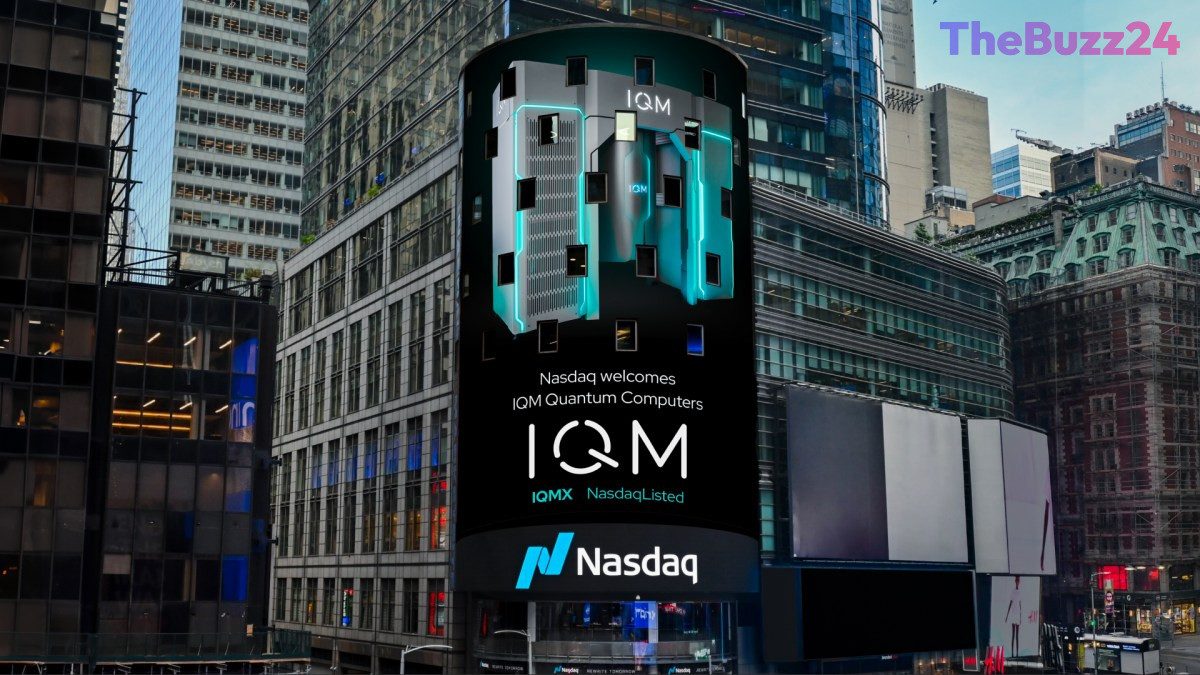
Quantum Pioneer IQM Faces Market Skepticism Following Public Debut
Finnish quantum computing firm IQM has officially entered the public markets, listing on the Nasdaq via a SPAC merger at a valuation of approximately $1.9 billion. Despite the milestone, the company’s shares experienced a lukewarm reception, trading below their initial offering price throughout the day. This tepid investor response reflects broader market caution regarding the long-term commercial viability of quantum technology, a concern IQM itself acknowledged in its regulatory filings by noting that large-scale commercial adoption remains unproven.
Despite the uncertainty, IQM continues to build its operational footprint. The company currently serves 22 customers, including major research institutions like the VTT Technical Research Centre of Finland and the Leibniz Supercomputing Centre in Germany. By providing both physical hardware and cloud-based computing access, IQM is positioning itself as a key player in the transition toward quantum advantage—the theoretical point at which quantum processors will significantly outperform classical supercomputers in complex simulations and data processing.
IQM’s growth strategy is bolstered by increasing government interest in quantum sovereignty. With recent executive actions in the United States aimed at accelerating quantum development, IQM is well-positioned to leverage its existing presence in the U.S. market, including a facility in Maryland and a deployment at the Oak Ridge National Laboratory. While the company maintains strong ties to its Finnish roots and European sovereign support, its dual-listing strategy on both the Nasdaq and Nasdaq Helsinki underscores its ambition to remain a global leader in a sector that remains in its experimental infancy.
Key Takeaways
- IQM debuted on the Nasdaq with a $1.9 billion valuation, though share prices struggled to gain momentum on the first day of trading.
- The company openly warned investors that large-scale commercial traction for quantum computing technology is not guaranteed.
- IQM is expanding its global footprint by leveraging U.S. government initiatives while maintaining its core research and development operations in Finland and Germany.
Editor’s Analysis & Impact
The public debut of IQM serves as a bellwether for the broader quantum computing industry. Investors are clearly balancing the immense potential of quantum-driven breakthroughs in fields like biotech and encryption against the reality that the technology is still years, if not decades, away from widespread commercial utility. The lukewarm market reception suggests that while capital is available for ‘deep tech’ firms, the era of speculative, high-valuation growth for pre-revenue or early-revenue quantum companies is cooling. IQM’s ability to secure government contracts and maintain a dual-listing strategy provides a defensive moat, but the company—and the industry at large—must eventually demonstrate a clear path to ‘quantum advantage’ to justify these valuations to public market investors who are increasingly focused on tangible, scalable revenue streams.
Frequently Asked Questions
Q: What is the primary risk identified by IQM regarding its business model?
A: IQM has acknowledged in its prospectus that large-scale commercial traction for quantum computing technology may never occur, highlighting the experimental nature of the industry.
Q: How does IQM generate revenue currently?
A: The company generates revenue by selling physical quantum computers to research and data centers, as well as providing access to its computing power through cloud-based services.
AI Disclosure: This article is based on verified data and official reports. Our Team and AI have cross-referenced every financial detail with primary sources to ensure total accuracy.
More from this Category