Race Against Time in Cali: Rescuers Search for Survivors in Colombia’s Deadliest Earthquake This Century
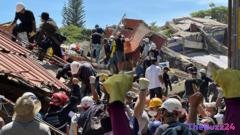
A devastating magnitude 7.4 earthquake has struck Colombia, marking the country’s most severe seismic event of the century. The southwestern city of Cali has emerged as one of the hardest-hit urban areas, with Mayor Alejandro Éder confirming at least 95 fatalities. Among the widespread destruction, the collapse of the four-story Torres del Limonar residential building in the southern Capri neighborhood has become a focal point of the tragedy, where rescue teams are working tirelessly to locate survivors trapped beneath the concrete ruins.
For families of the missing, the wait is agonizing. Efraín Gallego is among those holding onto hope as his 80-year-old brother and sister-in-law remain buried under the debris of the apartment complex. Emergency personnel, including firefighters, military units, and paramedics, are employing delicate search methods. Periodically, rescuers raise their hands to signal absolute silence across the site, allowing teams to listen for any faint sounds or cries for help from deep within the rubble. While approximately ten survivors, including a young infant, have been successfully pulled from the wreckage, officials estimate that around 25 people were initially trapped under this single structure.
The disaster has prompted an outpouring of community solidarity, with local volunteers like 19-year-old Alejandro Mahecha joining professional crews to clear debris, distribute water, and facilitate evacuation routes. To expedite these critical operations, local authorities implemented a nighttime curfew. The earthquake’s devastation extends beyond Cali, causing severe damage in other regions such as Chocó. Despite the mounting challenges and the passage of time, search-and-rescue specialists remain optimistic, noting that survivors have historically been recovered even days after similar structural collapses.
Key Takeaways
- A powerful 7.4 magnitude earthquake has struck Colombia, resulting in at least 95 deaths in the city of Cali alone.
- The collapse of the Torres del Limonar apartment building in Cali has become the focal point of intense search-and-rescue operations.
- Local authorities have implemented curfews to facilitate rescue efforts, which are being supported by a massive wave of local volunteers.
Editor’s Analysis & Impact
The devastating 7.4 magnitude earthquake in Colombia highlights critical vulnerabilities in urban infrastructure across Latin America. As the strongest seismic event the country has faced this century, the disaster will likely trigger a rigorous review of building codes and structural engineering standards, particularly for older multi-story residential buildings like the Torres del Limonar. In the short term, the economic impact will be felt through immediate emergency response costs, infrastructure rehabilitation, and temporary housing provisions. Long-term, the focus must shift toward proactive disaster preparedness and retrofitting vulnerable structures in high-risk seismic zones. The overwhelming community response and volunteer mobilization underscore strong social cohesion, but also point to the necessity of highly coordinated municipal emergency frameworks to manage large-scale urban crises effectively.
Frequently Asked Questions
Q: What was the magnitude of the earthquake that struck Colombia?
A: The earthquake registered a magnitude of 7.4, making it the most severe seismic event recorded in Colombia this century.
Q: What is the current situation at the Torres del Limonar building in Cali?
A: The four-story residential building collapsed during the quake, trapping an estimated 25 people. Rescue teams and volunteers are actively digging through the rubble, and several survivors, including an infant, have been successfully rescued.
Q: What measures have local authorities taken to assist rescue operations?
A: Cali's Mayor, Alejandro Éder, declared a nighttime curfew to clear the streets and accelerate the movement of emergency vehicles and rescue operations.
AI Disclosure: This article is based on verified data and official reports. Our Team and AI have cross-referenced every financial detail with primary sources to ensure total accuracy.
More from this Category