Race Against Time: The Advanced Technology and Tactics Saving Lives in Venezuela’s Earthquake Rubble
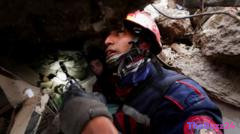
Rescue operations in Venezuela have entered a critical phase following devastating twin earthquakes that have claimed at least 1,700 lives, a toll that officials fear will continue to climb. Although the crucial 96-hour survival window closed on Sunday evening, international rescue teams and local residents refuse to give up hope. Specialized units are working alongside community members, maintaining the same rigorous search standards established on the first day of the disaster to locate any remaining survivors trapped beneath the collapsed structures.
To navigate the vast fields of debris, search teams are deploying highly trained canine units. These search dogs possess an extraordinary ability to detect human scent even when victims are buried up to 10 meters deep under concrete and steel. Upon locating a scent, the dogs deliver a sustained bark to alert handlers. Beyond initial detection, these canine teams are instrumental in identifying safe access paths through highly unstable rubble, allowing human rescuers to plan precise extraction routes.
In tandem with canine units, rescuers rely heavily on acoustic and seismic listening devices. By calling out in the local language and using sensitive audio equipment, teams can detect incredibly faint sounds, such as a survivor scratching on a concrete slab deep within a collapsed building. Visual technology further enhances these efforts; technical search cameras mounted on extendable poles offer 360-degree views of tight voids, while thermal imaging cameras detect body heat radiating through walls. Additionally, cutting-edge micro-drones, designed to mimic the movement of insects, are being flown into highly restricted crevices to locate survivors.
Once a survivor is located, the physically demanding process of breaching begins. Rescue teams utilize an array of manual and power tools, including disk cutters, saws, and handheld angle grinders powered by portable diesel generators. When victims are trapped beneath multiple collapsed floors, heavy machinery such as bulldozers, excavators, and cranes are coordinated by local teams to carefully lift massive concrete slabs, completing the delicate and dangerous process of extraction.
Key Takeaways
- The critical 96-hour post-earthquake survival window has closed in Venezuela, but international and local rescue teams continue intensive search operations.
- Rescuers are utilizing a combination of biological assets, like highly trained search dogs, and advanced acoustic sensors capable of detecting faint scratching through concrete.
- High-tech visual tools, including thermal imaging, 360-degree pole cameras, and micro 'cockroach' drones, are being deployed to locate survivors in hard-to-reach voids.
Editor’s Analysis & Impact
The deployment of advanced search and rescue technologies in Venezuela highlights a significant evolution in disaster response. While traditional methods like search dogs remain irreplaceable, the integration of acoustic sensors, thermal imaging, and micro-drones represents a paradigm shift in how rescue operations are conducted under extreme time constraints. However, the effectiveness of these high-tech tools is heavily dependent on rapid deployment and seamless coordination with local communities, especially when official government infrastructure is strained. Moving forward, the global disaster response community must focus on democratizing access to these technologies, ensuring that localized teams in earthquake-prone regions are equipped with both the training and the tools necessary to initiate high-tech searches immediately, rather than waiting for international aid to arrive.
Frequently Asked Questions
Q: What is the '96-hour window' in disaster rescue?
A: The 96-hour window is the critical timeframe after a disaster during which trapped survivors are most likely to be found alive. After this period, the probability of survival drops significantly due to dehydration, exposure, and injuries.
Q: How do search dogs locate people buried deep under concrete?
A: Specially trained search dogs can detect human scents up to 10 meters (nearly 33 feet) beneath the rubble. Once they locate a scent, they alert handlers with a sustained bark, guiding rescue teams to the exact spot.
Q: What role do micro-drones play in earthquake rescue operations?
A: Micro-drones, sometimes referred to as 'cockroach drones,' are designed to navigate extremely tight, unstable spaces within collapsed structures where human rescuers or larger machines cannot safely enter, providing real-time visual data of potential survivors.
AI Disclosure: This article is based on verified data and official reports. Our Team and AI have cross-referenced every financial detail with primary sources to ensure total accuracy.
More from this Category