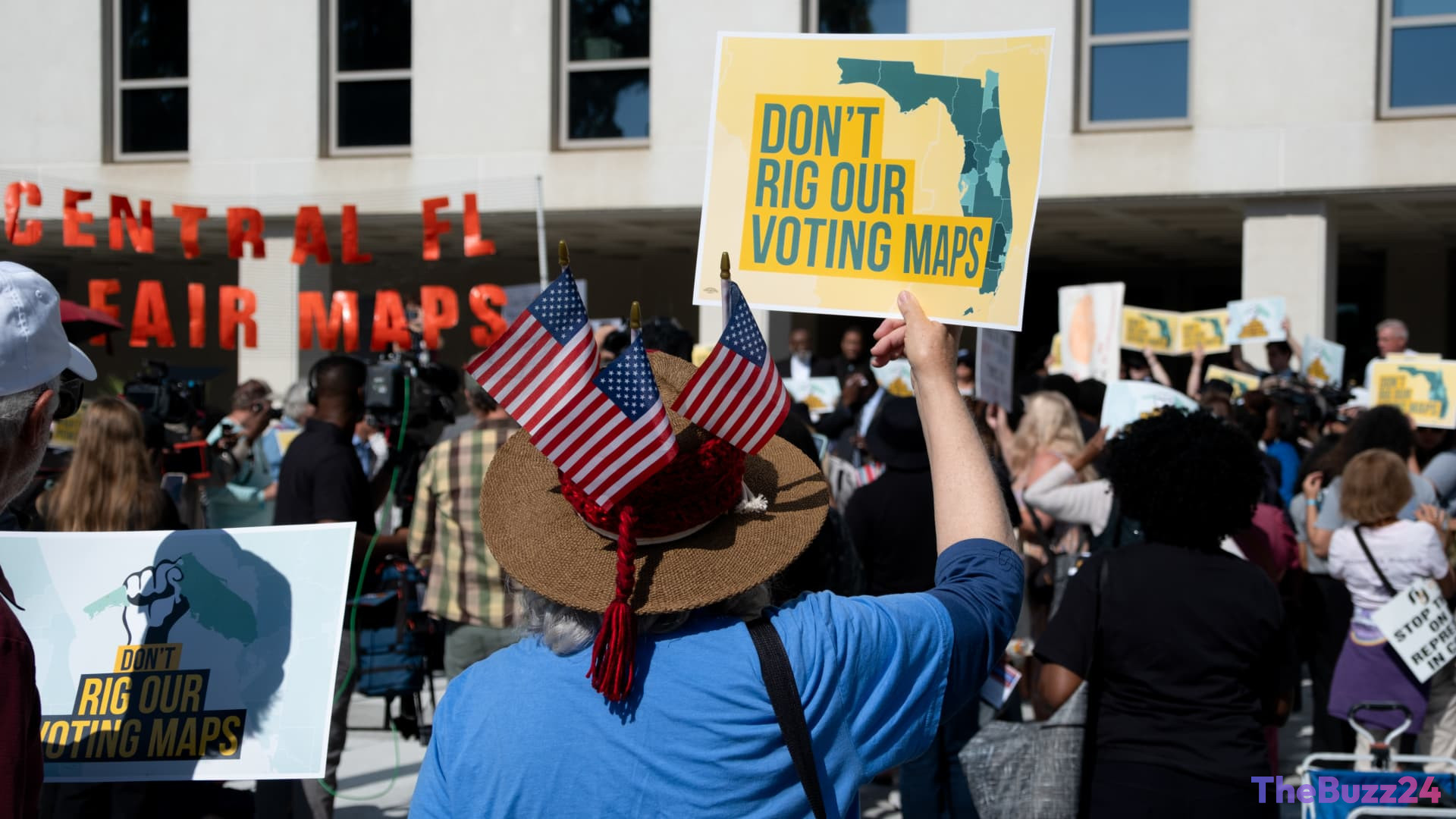
GOP-Led States Accelerate Redistricting Efforts Following Supreme Court Ruling
Republican-controlled states, particularly in the South, are rapidly advancing plans to redraw congressional district maps following a recent Supreme Court decision that weakened a key provision of the Voting Rights Act. This strategic move aims to create electoral maps more favorable to the Republican party ahead of the 2026 midterm elections.
Tennessee has already enacted new House district lines, signed into law by Governor Bill Lee. This legislation notably eliminates the state’s sole congressional seat currently held by a Democrat. Critics, including the targeted Democratic representative, have decried the move as a “power grab” and an attempt to “rig the game” to secure a Republican majority, with threats of legal challenges already emerging. The redrawn maps are criticized for consolidating voters from geographically distant areas into single districts, a practice some argue disenfranchises constituents.
The Supreme Court’s ruling in Louisiana v. Callais, which invalidated a majority-black congressional district, has opened the door for states like Alabama and South Carolina, in addition to Tennessee, to pursue similar redistricting strategies. While Republicans face challenges such as President Trump’s approval ratings and economic concerns, they see these redrawn maps as crucial for maintaining their slim majority in the House. Operatives suggest that even a few seats gained through redistricting could be decisive in a closely contested election.
Despite these efforts, Democrats express confidence that voters will ultimately determine the House majority, dismissing the redistricting maneuvers as unsustainable. However, analyses indicate that partisan gerrymandering, particularly in states like Texas, Florida, and North Carolina, could significantly benefit Republicans. Concerns have been raised by policy advocates that these changes could dilute the voting power of minority communities and allow politicians to prioritize self-preservation over genuine voter engagement. The trend is expected to continue, with more states potentially revisiting district lines for future election cycles.
Key Takeaways
- Republican-led states are actively redrawing congressional maps following a Supreme Court decision impacting the Voting Rights Act.
- Tennessee has eliminated its only Democrat-held congressional seat through new district lines, sparking accusations of a partisan power grab.
- The redistricting efforts are seen by Republicans as a critical strategy to secure their House majority, while Democrats remain optimistic about voter influence.
Editor’s Analysis & Impact
The recent Supreme Court decision has ignited a fierce redistricting battle, with Republican-controlled states moving swiftly to reshape electoral maps. This strategic maneuvering underscores the intense partisan competition for control of the House of Representatives. While Democrats express confidence in voter outcomes, the potential for gerrymandering to significantly alter the political landscape cannot be understated. The implications extend beyond immediate electoral gains, raising concerns about minority voter disenfranchisement and the integrity of the democratic process. The long-term impact could see increased political polarization and a greater focus on state-level legislative battles over electoral fairness.
Frequently Asked Questions
Q: What was the Supreme Court ruling that prompted these redistricting changes?
A: The Supreme Court ruling in Louisiana v. Callais invalidated a majority-black congressional district, weakening a part of the Voting Rights Act and allowing states to redraw their congressional maps.
Q: Which states are currently involved in redrawing their congressional maps?
A: States like Tennessee, Alabama, and South Carolina have already taken steps to redraw their maps. Other states like Florida, Missouri, North Carolina, and Texas are also expected to follow suit.
Q: What are the main concerns raised by critics of these redistricting efforts?
A: Critics argue that these efforts are partisan power grabs aimed at rigging elections, potentially disenfranchising minority voters, and allowing politicians to choose their voters rather than the other way around.
AI Disclosure: This article is based on verified data and official reports. Our Team and AI have cross-referenced every financial detail with primary sources to ensure total accuracy.
More from this Category