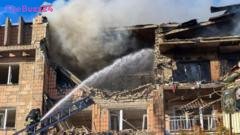
Russia Strikes Ukrainian Energy Sites Hours After Trump Claims Ceasefire
Ukrainian President Volodymyr Zelensky has stated that Russia launched attacks on six energy facilities across Ukraine shortly after U.S. President Donald Trump announced an agreement for an energy ceasefire between the two nations. Despite Trump’s declaration on Sunday that the truce would be “effective immediately,” Zelensky reported that Russian forces targeted “our gas stations, energy infrastructure, and other facilities.”
These strikes resulted in widespread blackouts in the city of Izyum due to damaged power grids, according to Ukraine’s state news agency Ukrinform. Additionally, energy and railway infrastructure in western Ukraine were reportedly targeted overnight. The Ukrainian president indicated that 33 people were injured in the attacks on energy infrastructure nationwide. Zelensky suggested these actions were a direct response from Russian President Vladimir Putin to President Trump’s announcement.
The conflict’s impact on global fuel prices has been a significant concern, particularly with U.S. midterm elections approaching. President Trump’s earlier proposal to import Russian diesel into the United States had already drawn attention. On Monday, Ukraine’s state-owned grid operator, Ukrenergo, confirmed “new power cuts” in the Kharkiv, Donetsk, and Zaporizhzhia regions, attributing the disruptions to damage sustained by energy equipment from Russian assaults. To manage the strain on the damaged infrastructure, electricity rationing has been implemented in several Ukrainian areas.
Zelensky took to social media platform X to assert that the continued strikes demonstrate Russia’s “unwillingness to accept an energy ceasefire.” In a separate incident on Monday evening, Kyiv’s mayor reported that a drone strike hit a 25-story residential building in the Darnytskyi district, causing fires in nearby vehicles and resulting in one fatality and eleven injuries. While initially expressing cautious optimism about Trump’s ceasefire proposal, Zelensky had previously stated that he was unaware of any such truce but supported it as a “major step toward ending the war, if the Americans truly step in now and make sure Russians respect the energy ceasefire.”
Key Takeaways
- Russia reportedly attacked six Ukrainian energy facilities shortly after President Trump announced an energy ceasefire.
- Ukrainian President Zelensky confirmed the strikes, stating they targeted energy infrastructure and resulted in injuries and blackouts.
- The attacks raise questions about Russia's commitment to the announced ceasefire and its broader implications for global energy markets and the ongoing conflict.
Editor’s Analysis & Impact
The reported Russian strikes on Ukrainian energy infrastructure, immediately following President Trump’s announcement of an energy ceasefire, underscore the volatile and complex geopolitical dynamics at play. This incident highlights the potential for de-escalation efforts to be undermined by ongoing hostilities, particularly concerning critical infrastructure. The attacks could further destabilize global energy markets, especially with concerns about fuel prices ahead of key political events. For Ukraine, these strikes represent a direct threat to its energy security and civilian population, while for Russia, they may be interpreted as a strategic move to exert pressure. The international community’s response, with mixed reactions from European officials, suggests a cautious approach to verifying any de-escalation agreements, emphasizing the need for tangible actions over mere declarations.
Frequently Asked Questions
Q: What did President Trump announce regarding an energy ceasefire?
A: President Trump announced on Sunday that the U.S. had brokered an agreement for an immediate energy ceasefire between Russia and Ukraine.
Q: What was Ukraine's reaction to the alleged ceasefire and subsequent strikes?
A: Ukrainian President Zelensky confirmed that Russia had attacked energy facilities despite the announced ceasefire. He expressed that the strikes were proof of Russia's unwillingness to adhere to the truce and suggested it was a response to President Trump's announcement.
Q: What are the implications of these attacks on energy infrastructure?
A: The attacks have led to blackouts and electricity rationing in parts of Ukraine, damaging essential energy and railway infrastructure. They also raise concerns about the reliability of de-escalation efforts in the conflict and could potentially impact global energy prices.
AI Disclosure: This article is based on verified data and official reports. Our Team and AI have cross-referenced every financial detail with primary sources to ensure total accuracy.
More from this Category