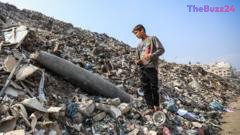
Severe Environmental Crisis Hits Gaza as Debris and Toxic Contaminants Threaten Long-Term Health
More than 99 percent of the Gaza Strip now exhibits indicators of severe environmental contamination following extensive military operations and continuous bombardment. Mass destruction of urban infrastructure and the deployment of over 200,000 tonnes of explosives have left persistent toxic hazards scattered across the enclave. Hazardous substances, including heavy metals, explosive residues, asbestos, dioxins, and dangerous biological pathogens, now severely compromise the soil, air, and water, posing grave risks to human survival that could persist for decades.
The catastrophic breakdown of basic sanitation infrastructure has compounded the crisis. With all six major wastewater treatment plants currently out of service, millions of liters of untreated sewage are discharging directly into local groundwater aquifers and the Mediterranean Sea. Recent winter storms have flooded streets and temporary shelter camps, mixing rainwater with raw sewage and fine dust from destroyed concrete buildings. Healthcare providers operating in the region report a five-fold increase in chronic skin conditions, alongside surging rates of acute respiratory infections and gastrointestinal illnesses, with children being the most severely affected group.
The widespread contamination is also severely damaging local food production capabilities. Farmers and fishermen report that agricultural soil degradation and heavy marine pollution—including sunken structural rubble and floating garbage—have disrupted the local ecosystem and made safe food production nearly impossible. Experts warn that long-term exposure to persistent environmental contaminants will likely cause elevated rates of cancer, organ damage, severe birth defects, and stillbirths among the population.
While international environmental observers urge immediate independent testing and specialized remediation protocols to protect future recovery efforts, technical challenges remain severe. Local scientific laboratories have been destroyed, and severe restrictions on the importation of specialized environmental testing equipment continue to hinder thorough assessments. Israeli officials have defended military operations as self-defense measures targeting Hamas, asserting that subterranean tunnel construction significantly contributed to soil disruption and disputing the methodology of open-source environmental evaluations.
Key Takeaways
- Over 99% of Gaza displays indicators of hazardous environmental contamination, including asbestos, heavy metals, and unexploded munitions residues.
- The complete destruction of wastewater treatment infrastructure has caused untreated sewage to pollute groundwater and coastal waters, leading to widespread disease.
- Medical professionals report a dramatic increase in respiratory, skin, and gastrointestinal illnesses, with long-term risks including elevated cancer and birth defect rates.
Editor’s Analysis & Impact
The environmental destruction in Gaza highlights a critical yet frequently overlooked consequence of modern warfare: environmental fallout that outlasts active combat operations. The extensive soil degradation, groundwater toxicification, and chemical rubble present a severe challenge to any future humanitarian and reconstruction framework. Restoring basic environmental safety will require tens of billions of dollars alongside unprecedented international cooperation in hazardous waste management and environmental remediation. Until comprehensive infrastructure restoration and decontamination take place, public health crises will continue to escalate, significantly compounding long-term economic and social recovery costs across the region.
Frequently Asked Questions
Q: What primary hazardous materials are contaminating Gaza's environment?
A: The primary contaminants include toxic heavy metals from munitions, asbestos from pulverized building rubble, explosive chemical residues, dioxins, and raw human sewage.
Q: How is environmental pollution affecting the population's health?
A: Residents are experiencing sharp increases in acute respiratory issues, severe skin conditions, and gastrointestinal infections, alongside heightened long-term risks of organ damage and cancer.
Q: Why are environmental cleanup efforts currently hindered?
A: Remediation efforts are stalled by ongoing security hazards, massive volumes of contaminated debris, destroyed laboratory infrastructure, and strict limitations on importing technical equipment.
AI Disclosure: This article is based on verified data and official reports. Our Team and AI have cross-referenced every financial detail with primary sources to ensure total accuracy.
More from this Category