Silicon Valley’s Future: Stanford Graduates Divided on AI’s Impact, Stage Commencement Protests
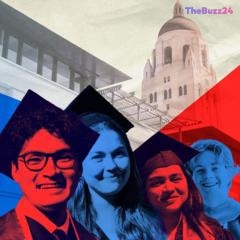
Stanford University’s recent commencement ceremony became a focal point for the complex relationship between the next generation of tech leaders and the burgeoning field of artificial intelligence. During Google CEO Sundar Pichai’s address, a significant number of graduates staged a walkout, chanting slogans and displaying signs critical of Google’s AI contracts, specifically referencing ties to ICE and the Israeli military. This act underscored a broader sentiment among American college graduates, who have increasingly expressed unease with AI, even prompting tech luminaries like former Google boss Eric Schmidt to face boos when discussing the technology.
The graduating class at Stanford, a university deeply intertwined with Silicon Valley’s innovation ecosystem, holds a wide spectrum of views on AI. While some, like computer science and AI major Ifdita Hasan, express optimism, viewing AI as a powerful tool for learning and exploration, others harbor significant apprehension. Earth Systems major Atash Heil voiced concerns about the rapid, uncertain transformation AI is bringing, particularly its ethical implications and potential impact on human creativity. These anxieties are compounded by reports from the Federal Reserve Bank of New York indicating recent graduates are struggling to find work, with a Stanford study highlighting employment declines in AI-exposed fields like software development. Students also worry about “cognitive offloading,” where reliance on AI might hinder critical thinking, leading some classes to reintroduce proctoring and spoken-word tests to combat suspected AI-assisted cheating.
Stanford’s unique legacy in AI development, where the term “artificial intelligence” was coined and where pioneers like Larry Page, Sergey Brin, Fei-Fei Li, and Sam Altman have deep ties, contrasts sharply with the current student skepticism. The university has long been a “golden ticket” to successful tech careers, yet even within this hub of innovation, the ethical and societal ramifications of AI are paramount. Graduates like Colbey Harlan, a psychology major, acknowledge AI’s utility but raise environmental concerns about the energy consumption of data centers, questioning the relentless pace of AI progression.
Despite the misgivings, some graduates acknowledge AI’s potential to address global challenges. Atash Heil, for instance, sees AI as a valuable tool for climate modeling and resilience efforts. This nuanced perspective reflects a generation that has witnessed AI’s explosive growth firsthand, from the pre-ChatGPT era to its current pervasive influence. As these graduates step into a world increasingly shaped by AI, their diverse perspectives and demands for ethical development will undoubtedly play a crucial role in defining its future trajectory.
Key Takeaways
- Stanford graduates exhibit mixed feelings about AI, ranging from optimism about its potential to deep concern over its ethical implications and societal impact.
- Protests erupted during Google CEO Sundar Pichai's commencement speech, highlighting student opposition to Google's AI contracts with entities like ICE and the Israeli military.
- Despite Stanford's historical role as an AI innovation hub, students are wary of AI's potential to disrupt job markets, foster "cognitive offloading," and raise ethical dilemmas.
Editor’s Analysis & Impact
The tech industry, particularly AI developers, faces increasing scrutiny from future talent, as evidenced by the Stanford commencement protests. Student concerns signal a growing demand for ethical AI development and transparency in corporate contracts, which could influence hiring, R&D priorities, and public relations strategies for major tech firms. The mixed sentiment among graduates from a leading tech university suggests a complex future for AI integration. While innovation will continue, the emphasis on responsible AI and addressing its societal and environmental costs will likely intensify. Companies failing to address these concerns risk alienating talent and consumers. The protests underscore a broader societal debate about the power and responsibility of Big Tech, indicating that AI is no longer just a technological issue but a significant socio-political one, demanding greater accountability from developers and deployers.
Frequently Asked Questions
Q: Why were Stanford graduates protesting during the commencement ceremony?
A: Stanford graduates protested during Google CEO Sundar Pichai's commencement speech to voice opposition to Google's AI contracts, specifically those with ICE (Immigration and Customs Enforcement) and the Israeli military, citing ethical concerns and geopolitical implications.
Q: What are the main concerns Stanford students have about AI?
A: Students expressed concerns about AI's ethical development, its potential to disrupt job markets for recent graduates, the practice of "cognitive offloading" where reliance on AI might hinder critical thinking, and the environmental impact of AI's energy consumption.
Q: How does Stanford University relate to the history of AI development?
A: Stanford University has a profound historical connection to AI, being the place where the term "artificial intelligence" was coined. It has been a hotbed of AI research and innovation, with numerous prominent figures in the field, including Google co-founders Larry Page and Sergey Brin, and OpenAI co-founder Sam Altman, having ties to the institution.
AI Disclosure: This article is based on verified data and official reports. Our Team and AI have cross-referenced every financial detail with primary sources to ensure total accuracy.
More from this Category