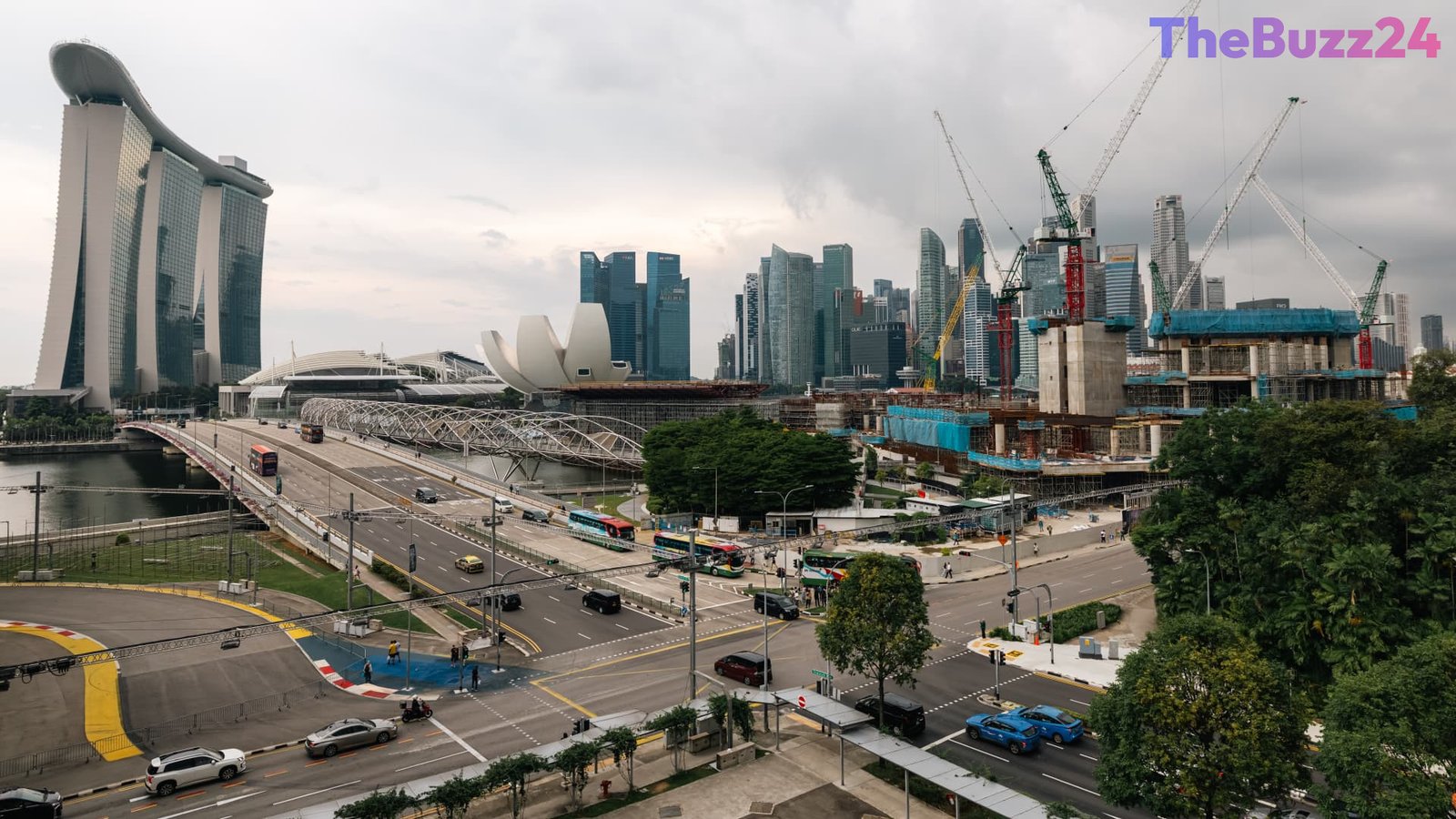
Singapore Economic Outlook Surges Amid AI Boom and Resilient Trade
Singapore has significantly upgraded its full-year economic growth forecast, signaling a robust recovery driven by a surge in artificial intelligence-related sectors and stronger-than-anticipated export performance. The Ministry of Trade and Industry now projects GDP growth for 2026 to fall between 4.5% and 5.5%, a substantial increase from the previous estimate of 2% to 4%. This marks the second upward revision this year, reflecting a steady acceleration from the initial 1% to 3% outlook provided at the start of 2026.
The revised figures follow a strong second-quarter performance, where the economy expanded by 5.9%, outpacing the 5.7% growth initially reported in advance estimates. Key sectors fueling this momentum include manufacturing, wholesale trade, and the finance and insurance industries. Officials noted that the global economic environment has remained more resilient than expected, particularly regarding geopolitical tensions in the Middle East, which have had a less severe impact on energy prices than analysts originally feared.
This economic strength provides the Monetary Authority of Singapore with greater flexibility to manage inflationary pressures. While the central bank recently tightened monetary policy to address rising costs in fuel and electronic components, the current growth trajectory suggests that the city-state is well-positioned to navigate potential global headwinds. With core inflation currently tracking near the lower end of the official forecast range, the government remains optimistic about maintaining this positive momentum through the remainder of the year.
Key Takeaways
- Singapore raised its 2026 GDP growth forecast to a range of 4.5%–5.5%, up from the previous 2%–4% projection.
- The growth surge is primarily attributed to the manufacturing, finance, and AI-related export sectors.
- Geopolitical tensions, specifically the U.S.-Iran conflict, have had a more muted impact on global energy prices than initially anticipated.
Editor’s Analysis & Impact
Singapore’s upward revision is a bellwether for the broader Asian trade landscape, highlighting how specialized economies are successfully pivoting to capture value from the global AI infrastructure build-out. By outperforming initial estimates, Singapore demonstrates high resilience to external shocks, particularly in energy markets where supply chain diversification has mitigated geopolitical risks. The central bank’s recent policy tightening, coupled with this growth, suggests a proactive approach to balancing inflation control with economic expansion. Looking ahead, the sustainability of this growth will depend on the continued demand for high-end electronic components and the stability of global trade routes. If the current momentum holds, Singapore is likely to remain a top-tier destination for capital investment, though it must remain vigilant against potential volatility in import costs and global interest rate fluctuations.
Frequently Asked Questions
Q: Why did Singapore increase its GDP growth forecast?
A: The increase is driven by stronger-than-expected performance in the first half of the year, particularly in AI-related sectors, manufacturing, and wholesale trade.
Q: How has the U.S.-Iran conflict affected Singapore's economy?
A: The impact has been less severe than feared, as the drawdown of oil inventories and a shift toward alternative energy sources have helped stabilize global energy prices.
AI Disclosure: This article is based on verified data and official reports. Our Team and AI have cross-referenced every financial detail with primary sources to ensure total accuracy.
More from this Category