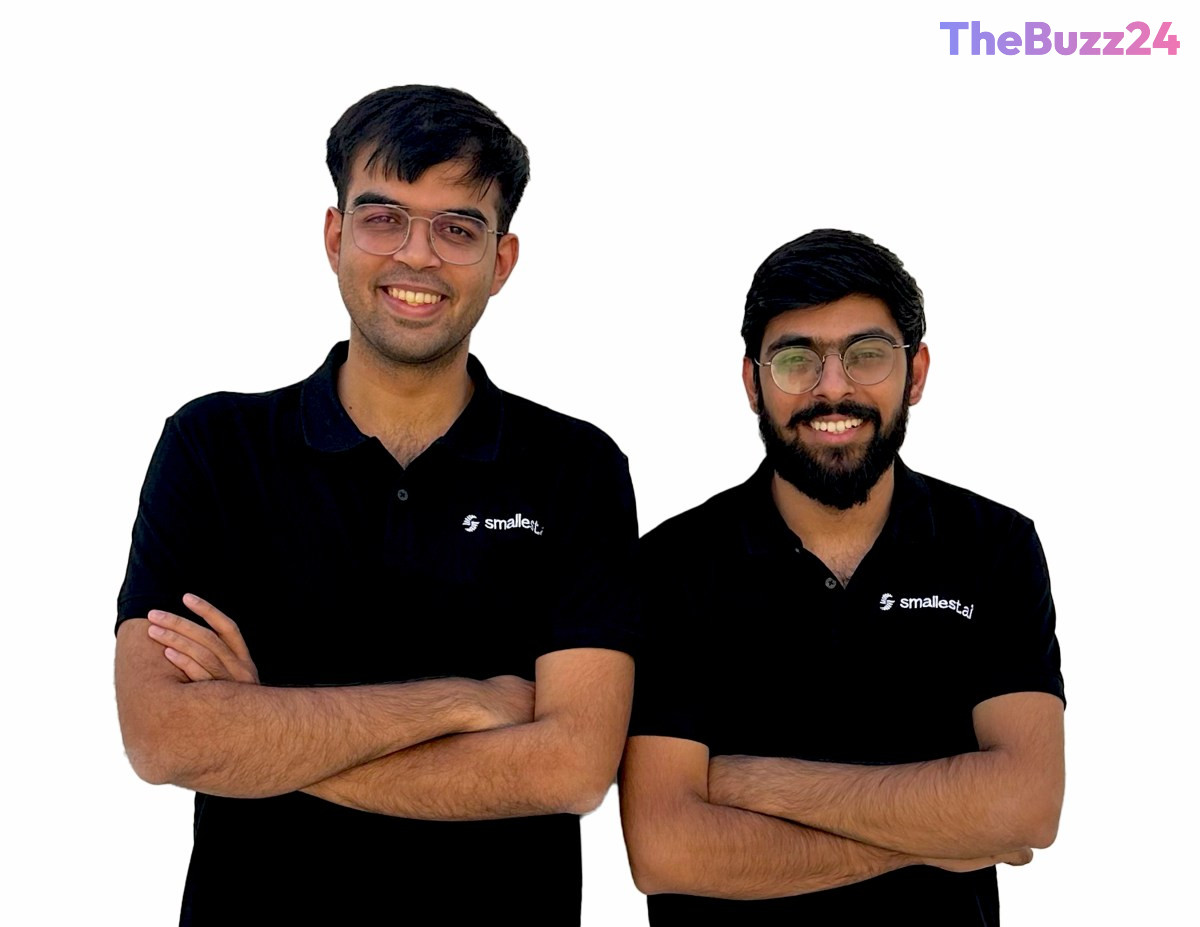
Smallest.ai Secures $13 Million to Revolutionize Real-Time Voice AI
Smallest.ai, a startup established in late 2024, has successfully raised $13 million in a Series A funding round to advance its mission of creating voice AI agents that are indistinguishable from human speakers. The investment, led by Seligman Ventures with contributions from Sierra Ventures and 3one4 Capital, brings the company’s total funding to more than $21 million. The startup aims to move beyond the limitations of traditional large language models (LLMs) by focusing on specialized, compact models designed specifically for fluid, real-time human conversation.
Unlike standard LLMs that require a full prompt before processing, Smallest.ai’s technology mimics human cognitive patterns by listening, thinking, and speaking simultaneously. This approach significantly reduces latency, eliminating the unnatural pauses that often characterize current AI voice interactions. By operating as a real-time intelligence layer, the system can handle complex customer support queries with near-zero delay. When faced with topics outside its immediate knowledge base, the model is designed to seamlessly hand off tasks to a larger foundational model, effectively simulating the way a human might pause to research a complex issue.
Smallest.ai is positioning itself as a specialized infrastructure provider for enterprise clients, including major players like RingCentral and Truecaller. By focusing exclusively on voice-specific challenges—such as diverse accents, multilingual support, and performance in noisy environments—the company seeks to provide a superior alternative to general-purpose AI tools. CEO Sudarshan Kamath emphasizes that the company’s primary goal is to pass the Turing test in voice interactions, ensuring that users cannot discern whether they are speaking to a machine or a person.
Key Takeaways
- Smallest.ai raised $13 million in Series A funding, bringing its total capital to over $21 million to develop human-like voice AI.
- The company utilizes a specialized, compact model that processes audio in real-time, mimicking human cognitive patterns to eliminate unnatural latency.
- Smallest.ai focuses on enterprise-grade voice solutions, serving clients like RingCentral and Truecaller while competing with firms like ElevenLabs.
Editor’s Analysis & Impact
The emergence of Smallest.ai highlights a critical shift in the AI industry: the transition from ‘generalist’ large language models to ‘specialist’ architectures optimized for specific modalities. While LLMs have dominated the conversation, their inherent latency makes them ill-suited for high-stakes, real-time voice applications. By decoupling the ‘conversational layer’ from the ‘reasoning layer,’ Smallest.ai is addressing the primary friction point in AI-driven customer service. This modular approach is likely to become the industry standard, as companies realize that building proprietary voice models is a distraction from their core product offerings. If successful, this technology could fundamentally alter the economics of customer support, shifting the industry toward fully automated, high-fidelity voice interactions that maintain human-like rapport.
Frequently Asked Questions
Q: How does Smallest.ai differ from standard large language models?
A: Standard LLMs typically process information after receiving a full prompt, which creates unnatural pauses. Smallest.ai uses a compact, specialized model that listens, thinks, and speaks simultaneously to mimic human-like flow.
Q: What happens if the Smallest.ai model encounters a question it cannot answer?
A: The system is designed to hand off complex queries to a larger foundational model, effectively 'researching' the issue before responding, similar to how a human agent might pause to verify information.
AI Disclosure: This article is based on verified data and official reports. Our Team and AI have cross-referenced every financial detail with primary sources to ensure total accuracy.
More from this Category