Software Sector Stumbles as AI Disruption Fears Trigger Market-Wide Selloff
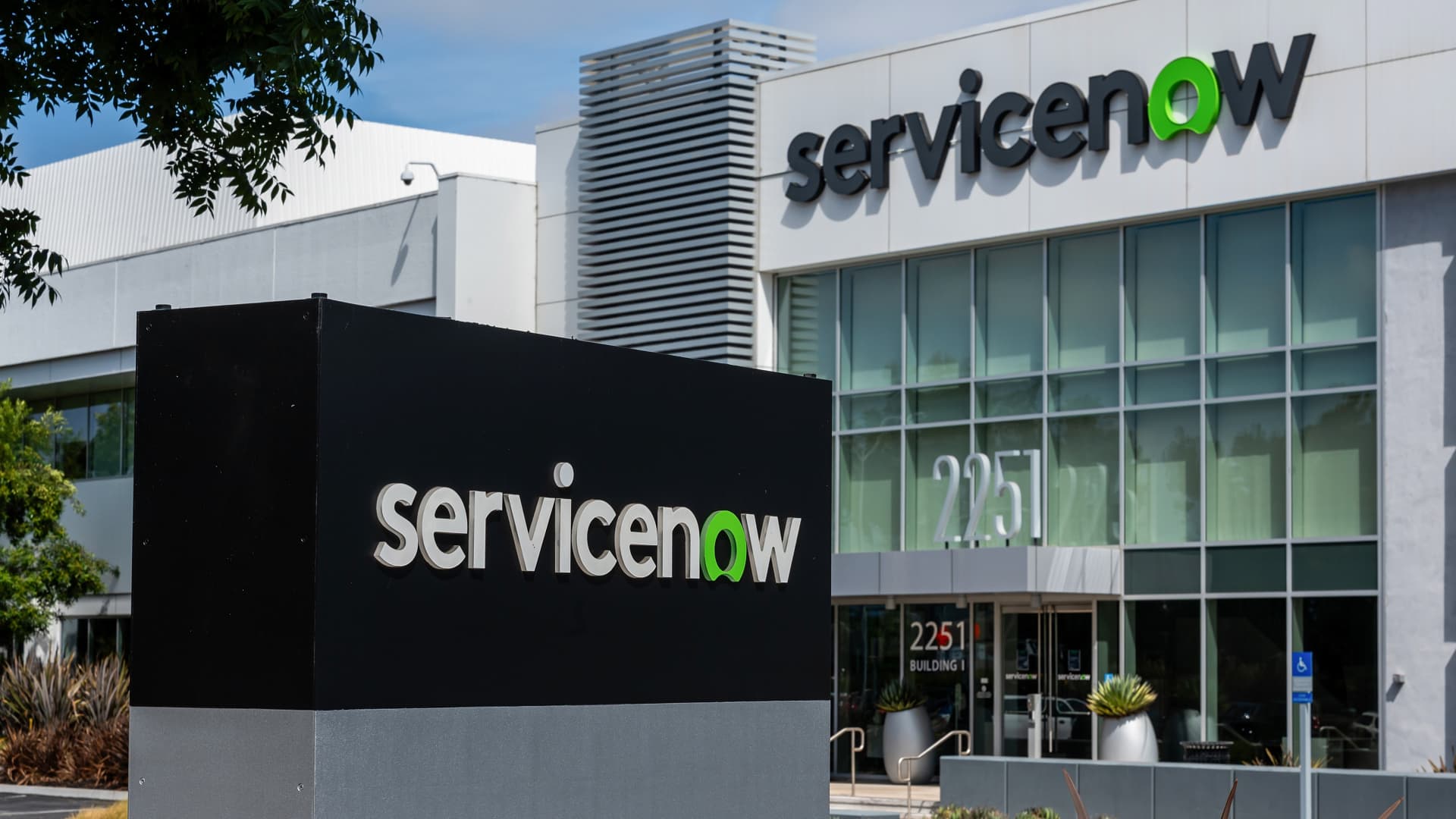
The software industry faced a turbulent trading session this week as investors reacted to disappointing quarterly results from key market players, fueling broader anxieties regarding the sector’s long-term growth. ServiceNow experienced a historic decline, plummeting 17.8% in a single day, while IBM shares dropped 8% despite the company reporting earnings that technically surpassed analyst expectations. Executives from these firms cited a difficult macroeconomic climate, with geopolitical instability in the Middle East specifically noted as a factor impacting subscription-based revenue growth.
The negative sentiment quickly rippled across the technology landscape, leading to significant losses for other industry leaders. Salesforce and HubSpot both saw their share prices fall by approximately 9%, while Adobe recorded a 7% decline. Other major software providers, including Intuit, Oracle, and Workday, also faced downward pressure, contributing to a 6% drop in the iShares Expanded Tech-Software ETF. This benchmark index has now retreated roughly 19% year-to-date, signaling a broader cooling of investor enthusiasm for the software-as-a-service model.
At the heart of this market volatility is a growing concern over the disruptive potential of advanced artificial intelligence. As companies like OpenAI and Anthropic continue to innovate, investors are questioning whether traditional cloud-based subscription models can remain the primary engine of growth for software firms. While pure-play software vendors are currently bearing the brunt of this uncertainty, the market is now looking toward upcoming earnings reports from major tech conglomerates—including Microsoft, Alphabet, Meta, Amazon, and Apple—to determine if these larger entities can successfully integrate AI without cannibalizing their existing revenue streams.
Key Takeaways
- Major software firms including ServiceNow and IBM saw significant stock declines following quarterly reports and macroeconomic concerns.
- The broader software sector, represented by the iShares Expanded Tech-Software ETF, has fallen nearly 20% year-to-date amid fears of AI-driven disruption.
- Investors are closely watching upcoming earnings from big tech giants to see if they can successfully monetize AI while protecting traditional subscription revenue.
Editor’s Analysis & Impact
The recent selloff in the software sector represents a critical inflection point for the ‘SaaS’ (Software as a Service) business model. For over a decade, subscription-based revenue has been the gold standard for tech valuations, but the rapid proliferation of generative AI is forcing a re-evaluation of these models. The market is currently struggling to distinguish between companies that will use AI to enhance their product suites and those whose core offerings are being rendered obsolete by AI-native competitors. The upcoming earnings cycle for the ‘Magnificent Seven’ will be the ultimate litmus test; if these giants show that AI can drive tangible margin expansion rather than just increased R&D costs, we may see a stabilization in the sector. However, if growth continues to decelerate, the industry may face a prolonged period of valuation compression as investors rotate into more defensive assets.
Frequently Asked Questions
Q: Why are software stocks falling despite some companies beating earnings expectations?
A: Investors are increasingly concerned about the long-term sustainability of traditional subscription models in the face of rapid AI advancement, leading them to discount future growth prospects even when current earnings meet expectations.
Q: What role does AI play in the current software sector downturn?
A: AI is viewed as a double-edged sword; while it offers innovation potential, it also threatens to disrupt established software revenue streams, forcing companies to prove they can monetize AI without undermining their existing business foundations.
AI Disclosure: This article is based on verified data and official reports. Our Team and AI have cross-referenced every financial detail with primary sources to ensure total accuracy.
More from this Category