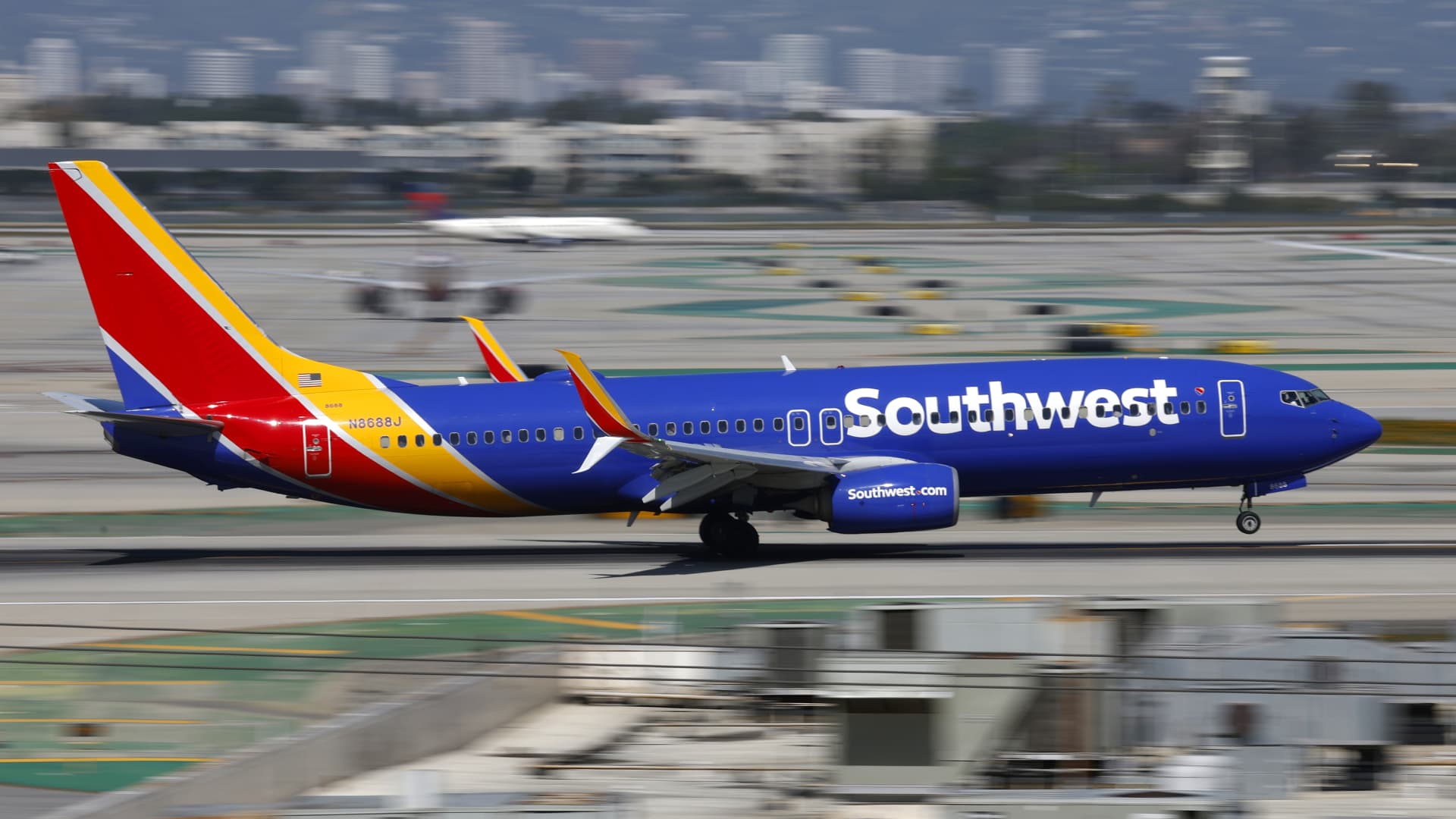
Southwest Airlines Overhauls Business Model, Ending Iconic Open-Seating Policy
Southwest Airlines has announced a significant strategic pivot, revising its second-quarter financial guidance as it grapples with the persistent volatility of jet fuel prices. While the carrier successfully returned to profitability in the first quarter, it is now adjusting its expectations to account for broader economic pressures. The company currently projects diluted earnings per share to land between 35 and 65 cents, a more conservative outlook than previously anticipated.
In a move that marks a departure from its decades-old operational philosophy, Southwest is abandoning its signature open-seating policy. The airline plans to introduce assigned seating and new fees for checked baggage, effectively ending the customer-centric, no-fee model that has defined its brand identity for years. These structural changes are designed to bolster revenue streams as the company works toward its ambitious long-term target of achieving $4 earnings per share by the end of 2026.
Despite these internal shifts, operational capacity is expected to remain relatively flat, with growth projections capped at 1% for the second quarter. However, the airline remains optimistic regarding unit revenues, forecasting a year-over-year increase of 16.5% to 18.5%. CEO Bob Jordan emphasized that consumer demand remains resilient across all market segments, providing a necessary buffer against the rising operational costs that have forced many other carriers to curtail their expansion efforts.
Key Takeaways
- Southwest Airlines is ending its long-standing open-seating policy in favor of assigned seats and baggage fees.
- The company lowered its Q2 earnings forecast, citing the impact of volatile jet fuel prices on operational costs.
- Despite rising costs, the airline reports strong passenger demand and expects significant growth in unit revenue.
Editor’s Analysis & Impact
Southwest Airlines’ decision to abandon its iconic open-seating model represents a watershed moment for the aviation industry. By prioritizing revenue generation over its historical brand identity, the company is signaling that the era of ‘low-cost, no-frills’ convenience is being squeezed by the realities of fuel volatility and labor costs. This shift is a calculated risk; while it may alienate long-time loyalists, it aligns the airline more closely with the revenue-per-seat models utilized by major legacy carriers. The market will be watching closely to see if these fee structures can offset rising operational expenses without dampening the robust passenger demand that leadership continues to emphasize. If successful, this could set a new standard for how budget-conscious airlines maintain profitability in an inflationary environment.
Frequently Asked Questions
Q: Why is Southwest Airlines changing its seating policy?
A: Southwest is moving away from its open-seating policy as part of a broader strategic shift to increase revenue and offset rising operational costs, such as jet fuel.
Q: What is the long-term financial goal for Southwest Airlines?
A: The airline has reaffirmed its commitment to achieving $4 earnings per share by the end of the 2026 fiscal year.
AI Disclosure: This article is based on verified data and official reports. Our Team and AI have cross-referenced every financial detail with primary sources to ensure total accuracy.
More from this Category