Spectacular Southern Lights: International Space Station Captures Breathtaking Aurora Australis Over the Indian Ocean
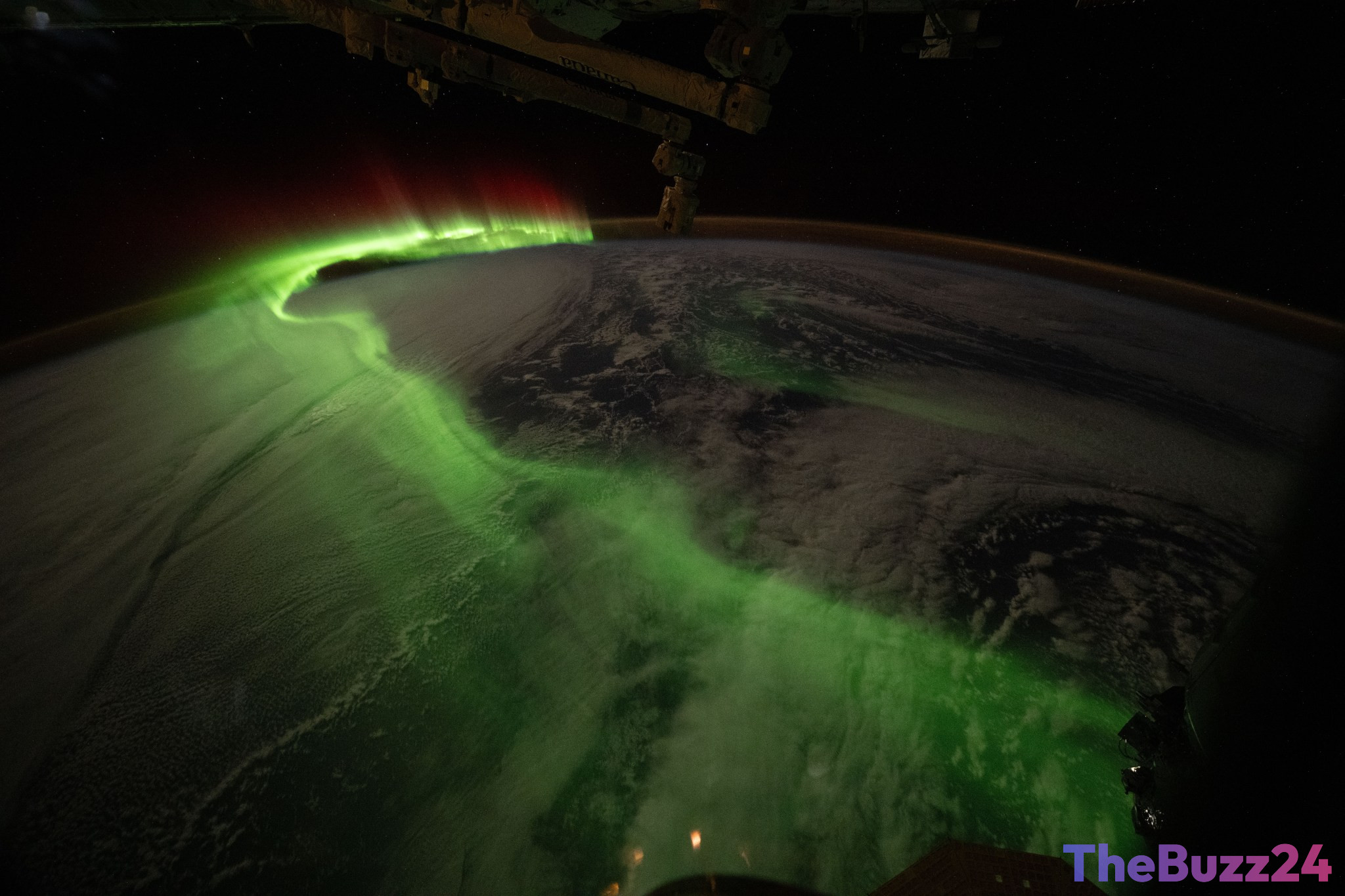
A stunning new photograph captured from the International Space Station (ISS) has offered a breathtaking view of the Aurora Australis, or Southern Lights, cascading over Earth’s atmosphere. The image, taken from an orbital altitude of 271 miles above the Indian Ocean, southwest of Perth, Australia, showcases a vibrant green and purple arc stretching across the horizon during a period of active space weather.
These celestial light shows are far more than just visual wonders; they are the direct result of a complex cosmic interaction. Auroras occur when charged particles streaming from the Sun collide with gases in Earth’s atmosphere, guided by the planet’s magnetic field. This intricate dance of particles and magnetism, collectively referred to as space weather, produces dynamic and delicate displays that constantly shift in color and intensity.
Astronaut Jessica Meir documented the phenomenon, highlighting the unique vantage point that the ISS provides for studying atmospheric and space science. From low Earth orbit, researchers and astronauts can observe the full scale of these geomagnetic storms, offering crucial data that cannot be easily obtained from ground-based observatories.
Understanding these auroral displays is increasingly important in our highly technological world. Severe space weather events can disrupt satellite communications, GPS navigation, and power grids on Earth. By studying the intensity and behavior of the Aurora Australis, scientists can better predict solar storms and safeguard critical infrastructure against cosmic disruptions.
Key Takeaways
- The International Space Station captured a vivid image of the Aurora Australis from 271 miles above the Indian Ocean.
- Auroras are caused by the interaction of solar particles with Earth's magnetic field, a phenomenon known as space weather.
- Documenting these events from low Earth orbit helps scientists better understand geomagnetic storms and protect global technology infrastructure.
Editor’s Analysis & Impact
The stunning imagery of the Aurora Australis captured from the ISS underscores the growing importance of space weather monitoring in the modern era. As humanity becomes increasingly reliant on satellite constellations, global positioning systems, and interconnected power grids, the vulnerability to solar storms rises exponentially. This news highlights the dual value of manned space missions: they not only inspire the public through breathtaking photography but also serve as vital scientific outposts. The ability to observe atmospheric phenomena from low Earth orbit provides invaluable data for heliophysics and meteorology. Moving forward, the integration of AI-driven predictive modeling with real-time orbital observations will be crucial for developing early warning systems for severe geomagnetic storms, ultimately safeguarding billions of dollars in global technological infrastructure.
Frequently Asked Questions
Q: What causes the Aurora Australis?
A: The Aurora Australis, or Southern Lights, is caused by charged particles from the Sun colliding with Earth's atmospheric gases, guided by the planet's magnetic field lines.
Q: Where was this specific aurora photograph taken from?
A: The photograph was taken by astronaut Jessica Meir from the International Space Station, orbiting 271 miles above the Indian Ocean, southwest of Perth, Australia.
Q: Why is studying space weather important?
A: Space weather can disrupt satellite communications, GPS systems, and electrical grids on Earth. Studying auroras helps scientists predict and mitigate the impacts of solar storms.
AI Disclosure: This article is based on verified data and official reports. Our Team and AI have cross-referenced every financial detail with primary sources to ensure total accuracy.
More from this Category