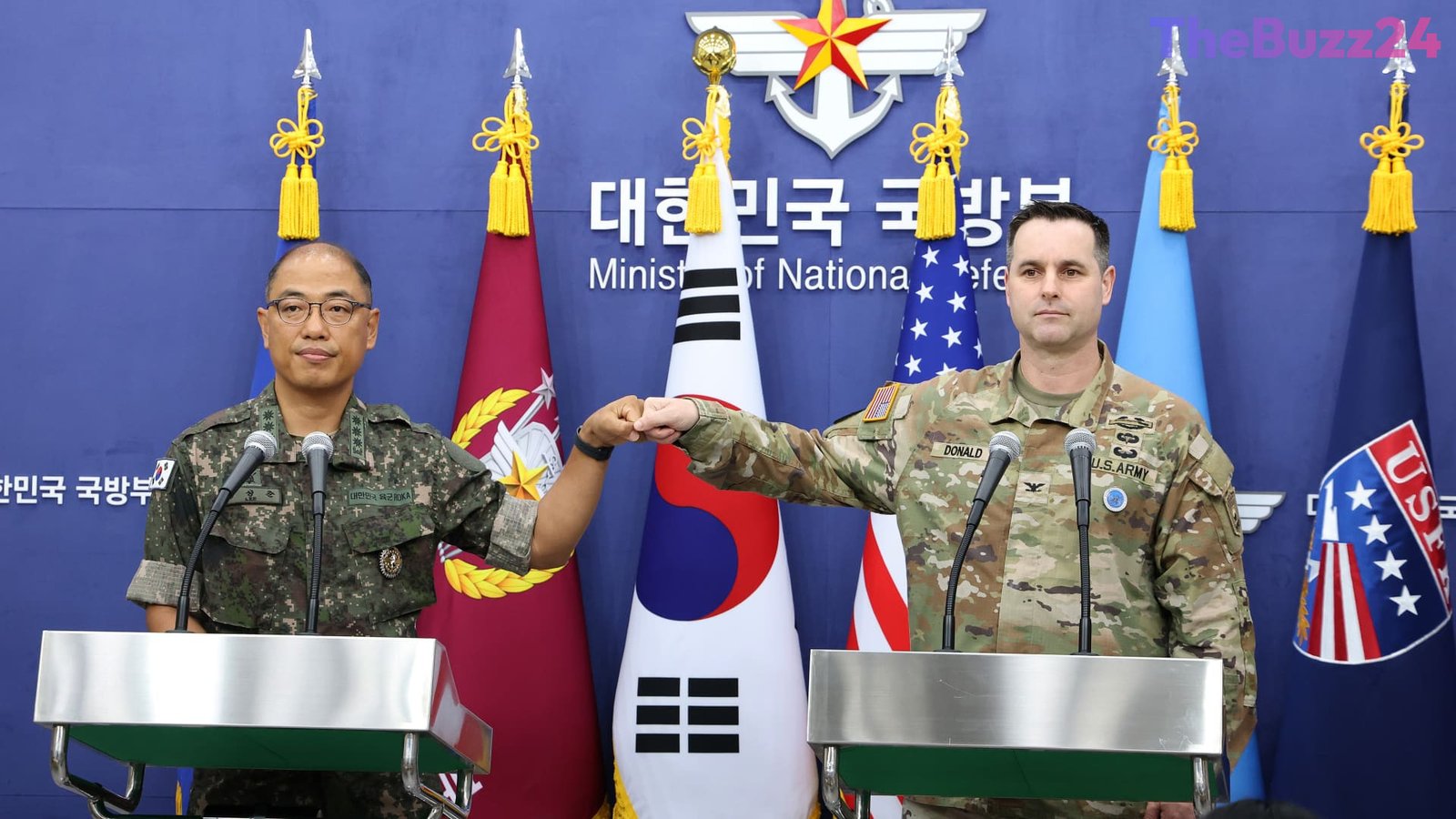
Strategic Shift: U.S. Scales Back South Korea Drills Amid Rising Regional Tensions
President Donald Trump has directed a significant reduction in the scope and duration of joint U.S.-South Korean military exercises, a decision that has reportedly surprised officials in Seoul. The move, intended to lower tensions with North Korea, resulted in the early conclusion of the Ulchi Freedom Shield exercise. While the administration maintains that essential training objectives remain intact, the policy shift has sparked a heated debate regarding the future of regional security and the reliability of American defense commitments.
Critics of the decision, including former military commanders and security analysts, argue that scaling back these drills creates a dangerous operational gap. There is particular concern that as North Korean forces gain modern combat experience—including drone and electronic warfare tactics through their involvement in the conflict in Ukraine—the U.S.-South Korea alliance must increase, rather than decrease, its ability to stress-test defense systems. Experts warn that prioritizing political gestures over military readiness could weaken deterrence at a time when the adversary’s battlefield proficiency is rapidly evolving.
Conversely, some policy analysts suggest that reducing the frequency and scale of these exercises could foster a more stable environment. Proponents of this view argue that large-scale drills often trigger escalatory responses from regional powers like North Korea and China, which frequently react by conducting their own military maneuvers or weapons testing. By de-escalating the intensity of these exercises, the administration hopes to create space for diplomatic engagement, though early reactions from Pyongyang suggest that North Korean leadership remains skeptical of the gesture, dismissing it as a superficial move that does not address underlying hostilities.
Key Takeaways
- President Trump ordered a reduction in joint U.S.-South Korea military exercises to lower tensions with North Korea.
- Military experts warn that the move could create a 'dangerous operational disconnect' while North Korean troops gain modern combat experience in Ukraine.
- The decision has sparked debate over the credibility of U.S. security guarantees, with some analysts fearing it undermines long-standing alliance commitments.
Editor’s Analysis & Impact
The decision to scale back joint military exercises represents a pivot toward a more transactional approach to regional security, prioritizing diplomatic signaling over traditional deterrence. From a market and geopolitical perspective, this creates significant uncertainty for allies in the Indo-Pacific region. If South Korea perceives a degradation in the U.S. security umbrella, it may lead to increased domestic pressure for independent defense capabilities, including potential nuclear proliferation debates. Furthermore, the move signals to adversaries that the U.S. is willing to adjust its military posture for diplomatic leverage, which could embolden regional actors. The long-term implication is a potential shift in the regional balance of power, forcing investors and policymakers to account for a less predictable security environment in one of the world’s most critical economic corridors.
Frequently Asked Questions
Q: Why were the U.S.-South Korea military exercises reduced?
A: The reduction was ordered by President Trump as a diplomatic gesture intended to lower hostility toward North Korea and avoid sending what the administration deemed an inappropriate signal.
Q: How has North Korea responded to the reduction in drills?
A: North Korean officials, including Kim Yo Jong, have dismissed the move, stating that they view the continued existence of the drills as an expression of open hostility regardless of their reduced scale.
AI Disclosure: This article is based on verified data and official reports. Our Team and AI have cross-referenced every financial detail with primary sources to ensure total accuracy.
More from this Category