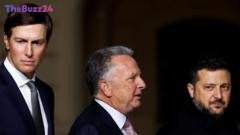
Symbolic Summit: US Envoys Meet Zelensky Amidst Deep-Seated Ukraine-Russia Divide
High-level diplomatic engagement unfolded in Kyiv as U.S. envoys, including Steve Witkoff and Jared Kushner, made a significant visit to Ukraine, marking their first presence on Ukrainian soil since the commencement of Russia’s full-scale invasion. The journey itself underscored the volatile security situation, necessitating travel by train due to the risks associated with air travel amidst ongoing Russian drone activity.
The meeting, held at the historic Saint Sophia Cathedral, a site of profound Ukrainian cultural significance and located near recent Russian drone strike targets, carried substantial symbolic weight. President Volodymyr Zelensky’s reception of the American representatives highlighted the gravity of the moment and Ukraine’s resilience. The discussions, which later included European national security advisors like the UK’s Jonathan Powell, were described by participants as substantive, with hopes expressed for the revitalization of past trilateral dialogues involving the United States and Europe.
Despite the positive rhetoric surrounding the talks, fundamental disagreements between Ukraine and Russia persist. The U.S. envoys arrived from Moscow, where President Vladimir Putin asserted Russia’s “tangible advances” on the battlefield. In stark contrast, Ukrainian officials reported territorial gains in August and significant Russian casualties, painting a different picture of the conflict’s momentum. Putin also reiterated Russia’s demand for the conflict’s root causes to be addressed, a stance interpreted as a call for Ukraine to cede territory, abandon NATO aspirations, and reduce its military.
President Zelensky emphasized Ukraine’s need for robust security guarantees and a strong military, signaling no willingness to relinquish territory in the eastern Donbas region, a point he characterized as “difficult.” While Witkoff acknowledged that progress was made and the potential for a settlement exists, he conceded that substantial compromises would be necessary from both sides to bridge the current divide. The prevailing sentiment in Kyiv suggests an expectation of continued fighting and a challenging winter ahead, though some diplomats speculate about a potential settlement window in the spring.
Key Takeaways
- U.S. envoys visited Kyiv for symbolic talks with President Zelensky amidst the ongoing Russia-Ukraine conflict.
- Despite positive discussions and hopes for renewed trilateral talks, fundamental differences between Ukraine and Russia remain unresolved.
- Both sides presented contrasting battlefield assessments, and Ukraine insists on security guarantees without territorial concessions, while Russia demands strategic concessions.
Editor’s Analysis & Impact
This high-profile visit by U.S. envoys to Kyiv, while rich in symbolism, underscores the persistent chasm in the Russia-Ukraine conflict. The divergent narratives on battlefield progress and the non-negotiable stances on territorial integrity and security alliances highlight the immense challenges to achieving a lasting peace. The current geopolitical climate suggests a prolonged period of conflict, with potential diplomatic windows appearing distant. The economic and humanitarian implications of continued fighting, especially heading into winter, remain significant concerns for Ukraine and its international partners.
Frequently Asked Questions
Q: What was the significance of the U.S. envoys visiting Saint Sophia Cathedral?
A: The visit to Saint Sophia Cathedral, a major historical and cultural landmark in Ukraine, carried significant symbolic weight. It underscored Ukraine's resilience and its deep historical roots, especially in proximity to recent Russian drone attacks, emphasizing the cultural and national stakes of the conflict.
Q: What are the main points of contention between Russia and Ukraine regarding a potential settlement?
A: Key points of contention include Russia's demands for Ukraine to cede territory, abandon its aspirations to join NATO, and reduce its military size. Ukraine, conversely, insists on robust security guarantees, maintaining its territorial integrity, and strengthening its military.
Q: What is the outlook for peace talks following this visit?
A: While the visit fostered dialogue and expressed hope for future trilateral talks, fundamental differences remain. The current expectation is for continued fighting, with some diplomats seeing a potential, albeit uncertain, opportunity for settlement in the spring. The immediate future suggests a difficult winter for Ukraine.
AI Disclosure: This article is based on verified data and official reports. Our Team and AI have cross-referenced every financial detail with primary sources to ensure total accuracy.
More from this Category