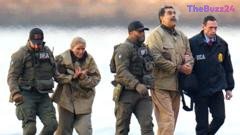
Syrian Court Sentences Bashar al-Assad to Death in Absentia for War Crimes
A Syrian court has delivered a posthumous death sentence to former dictator Bashar al-Assad, convicting him of war crimes and crimes against humanity during the nation’s protracted civil war. This marks the first judicial conviction against Assad, who fled Damascus for Moscow with his family following the collapse of his regime in December 2024, ending a five-decade dynastic rule.
Also sentenced to death in absentia was Atef Najib, Assad’s cousin and former head of political security for Deraa province, widely recognized as the cradle of the uprising against the Assad government. Najib’s trial, where he appeared in a prison uniform, concluded with convictions for murder, including the intentional killing of children and torture resulting in death. The court further sentenced six other former military and security officials, including Bashar al-Assad’s brother Maher, who commanded the elite Fourth Division, to death. Maher al-Assad also reportedly fled to Moscow after the regime’s fall.
The legal proceedings were initiated earlier this year by Syria’s interim government, targeting officials associated with the former regime. The prosecution team included Nouha al-Masri, who lost her brother during the violent crackdown in Deraa in March 2011. Al-Masri expressed that the verdict validates the immense sacrifices made by victims and their families, stating, “We have been waiting for 15 years to reclaim even a small part of our rights.” She emphasized the need for accountability, asserting, “In the new Syria, there will be no impunity from this day forward.”
While an arrest warrant was previously issued for Bashar al-Assad last December on charges of murder and torture, securing his extradition from Russia remains uncertain. The new Syrian leadership, which assumed power through a swift military campaign led by President Ahmed al-Sharaa, has been detaining former regime officials. However, many high-ranking figures, including the Assad brothers, are believed to be out of reach in Russia. Previous attempts by Syrian opposition figures to prosecute Assad in Western courts during his tenure were unsuccessful.
Key Takeaways
- Former Syrian dictator Bashar al-Assad has been sentenced to death in absentia by a Syrian court for war crimes and crimes against humanity.
- Atef Najib, Assad's cousin and former security official, along with six other former regime officials including Maher al-Assad, also received death sentences.
- The convictions represent a significant step towards accountability for victims of the Syrian civil war, though the extradition of those sentenced from Russia remains a challenge.
Editor’s Analysis & Impact
The death sentence handed down to Bashar al-Assad and other former regime officials signifies a pivotal moment in Syria’s post-conflict justice landscape. While the verdict offers a symbolic victory for victims and a clear message against impunity, its practical enforcement is heavily contingent on international cooperation, particularly with Russia, where key figures are believed to be residing. This development could embolden further legal actions against former regime members and influence regional dynamics. The long-term implications will depend on the new Syrian government’s ability to navigate complex geopolitical relationships and its commitment to establishing a robust justice system that addresses past atrocities while fostering future stability.
Frequently Asked Questions
Q: Why was Bashar al-Assad sentenced to death?
A: Bashar al-Assad was sentenced to death in absentia after being convicted by a Syrian court of committing war crimes and crimes against humanity during the Syrian civil war.
Q: Will Bashar al-Assad be extradited to Syria?
A: It is currently unclear whether Syria's new authorities will be able to secure the extradition of Bashar al-Assad and other sentenced officials from Russia, where they are believed to be located.
Q: Who else was sentenced in the trial?
A: In addition to Bashar al-Assad, his cousin Atef Najib, his brother Maher al-Assad, and six other former military and security officials were also sentenced to death in absentia.
AI Disclosure: This article is based on verified data and official reports. Our Team and AI have cross-referenced every financial detail with primary sources to ensure total accuracy.
More from this Category