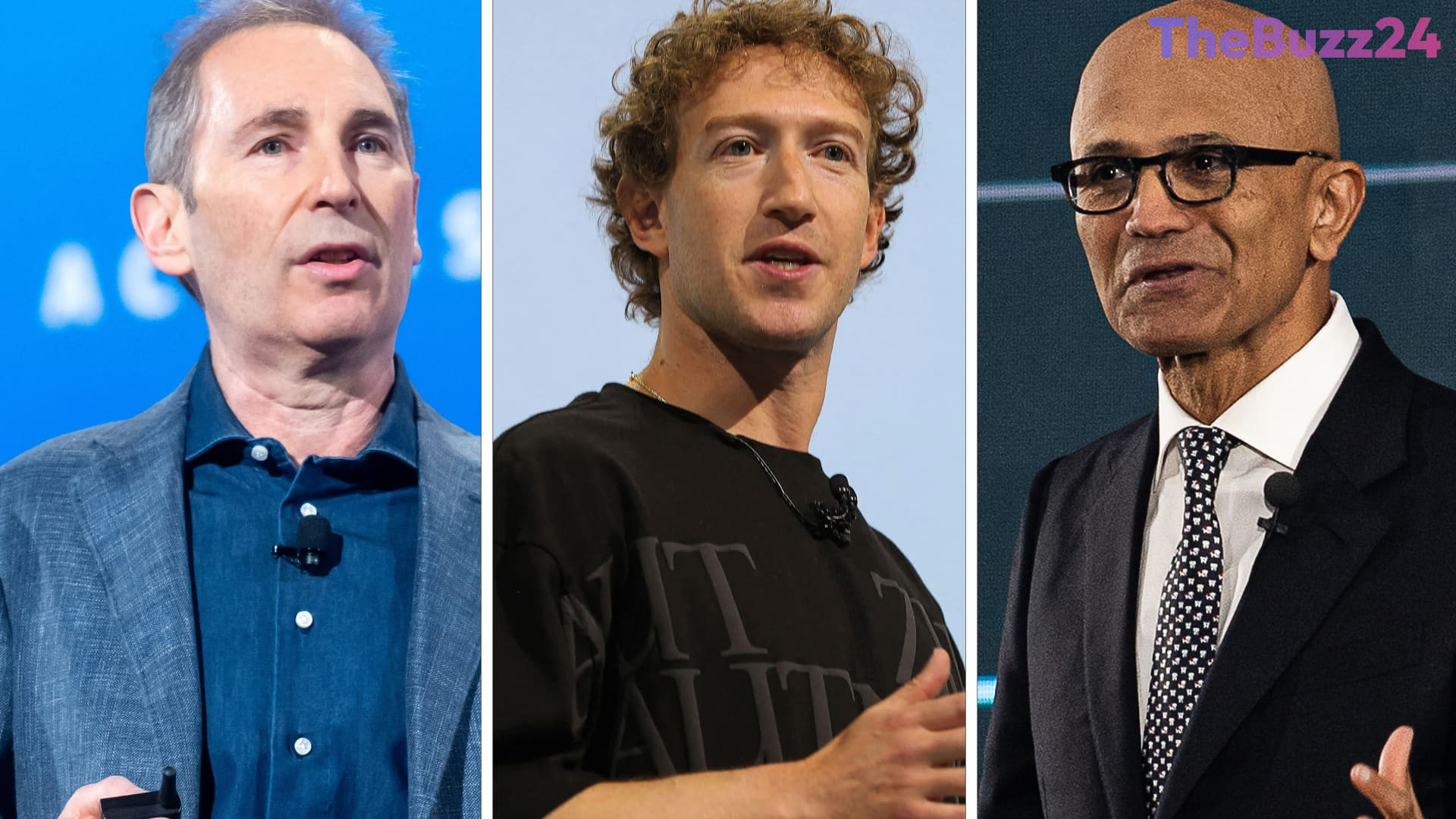
Tech Giants Face Investor Reckoning Over Skyrocketing AI Spending
A wave of anxiety is sweeping through Wall Street as the world’s largest technology companies prepare to report their latest quarterly earnings. Following a sharp sell-off triggered by Alphabet’s massive capital expenditure hike, investors are increasingly skeptical of the immense financial outlays required to build out artificial intelligence infrastructure. Shares of Amazon, Meta, and Microsoft all tumbled in sympathy with Alphabet, signaling a shift in market sentiment from enthusiastic optimism to cautious scrutiny regarding the timeline for AI profitability.
For quarters, rising capital expenditures were celebrated as a sign of robust demand for AI services. However, the sheer scale of these investments is now raising red flags. Alphabet’s decision to lift its 2026 capex forecast to $205 billion has intensified pressure on its peers to follow suit. This aggressive spending is beginning to strain balance sheets; Amazon’s long-term debt surged 81% to $119 billion in the first quarter, while Alphabet’s debt climbed 111% to $98 billion in the first half of the year. Furthermore, free cash flows are dipping into negative territory, with Microsoft projected to see negative free cash flow in the fourth quarter for the first time in over two decades.
Despite the financial strain, the underlying demand for cloud and AI services remains incredibly strong. Google’s cloud division recorded an impressive 82% expansion in the second quarter, while Microsoft’s Azure and Amazon Web Services (AWS) continue to post double-digit growth. Industry analysts note that while the massive data center buildouts and chip acquisitions are incredibly costly, failing to invest could mean losing market share to rivals. The challenge for executives this week will be convincing shareholders that these near-term capital sacrifices will yield sustainable, high-margin returns in the medium to long term.
Key Takeaways
- Alphabet's increased capital expenditure forecast sparked a broader tech sell-off, highlighting growing investor anxiety over the high costs of AI infrastructure.
- Tech giants are experiencing significant balance sheet pressure, with rising debt levels and projected negative free cash flows as they fund massive data center expansions.
- Despite market skepticism, cloud demand remains robust, forcing companies to balance aggressive infrastructure spending against shareholder demands for near-term profitability.
Editor’s Analysis & Impact
The current market reaction signals a transition from the ‘hype phase’ of artificial intelligence to the ‘demonstration phase.’ Investors are no longer satisfied with promises of future AI capabilities; they are demanding clear pathways to monetization and return on investment (ROI). The massive capital expenditures projected by Alphabet, Microsoft, and Amazon reflect a classic prisoner’s dilemma in technology: no single player can afford to underinvest and risk falling behind in the AI arms race, yet collective overinvestment risks depressing industry-wide margins. In the medium term, we expect to see a polarization in stock performance, where companies that can successfully demonstrate AI-driven revenue acceleration (particularly in cloud services) will be rewarded, while those with rising costs and stagnant growth will face prolonged valuation corrections.
Frequently Asked Questions
Q: Why are investors suddenly concerned about tech companies spending on AI?
A: While investors previously viewed high capital expenditures as a sign of strong demand, they are now worried about the massive scale of these investments, rising corporate debt, and the uncertain timeline for when these AI infrastructures will generate meaningful profits.
Q: How are these massive investments affecting the financial health of these companies?
A: The aggressive spending is leading to significant financial strain, including surging long-term debt and negative free cash flows. For instance, Microsoft is projected to experience negative free cash flow for the first time since 2001, while Amazon's free cash flow has also dipped into the red.
Q: Is cloud growth slowing down amidst these spending concerns?
A: No, cloud growth remains highly robust. Google Cloud reported an 82% expansion in its second quarter, and both Microsoft Azure and Amazon Web Services continue to show strong double-digit revenue growth, indicating that underlying demand for computing power is still very high.
AI Disclosure: This article is based on verified data and official reports. Our Team and AI have cross-referenced every financial detail with primary sources to ensure total accuracy.
More from this Category