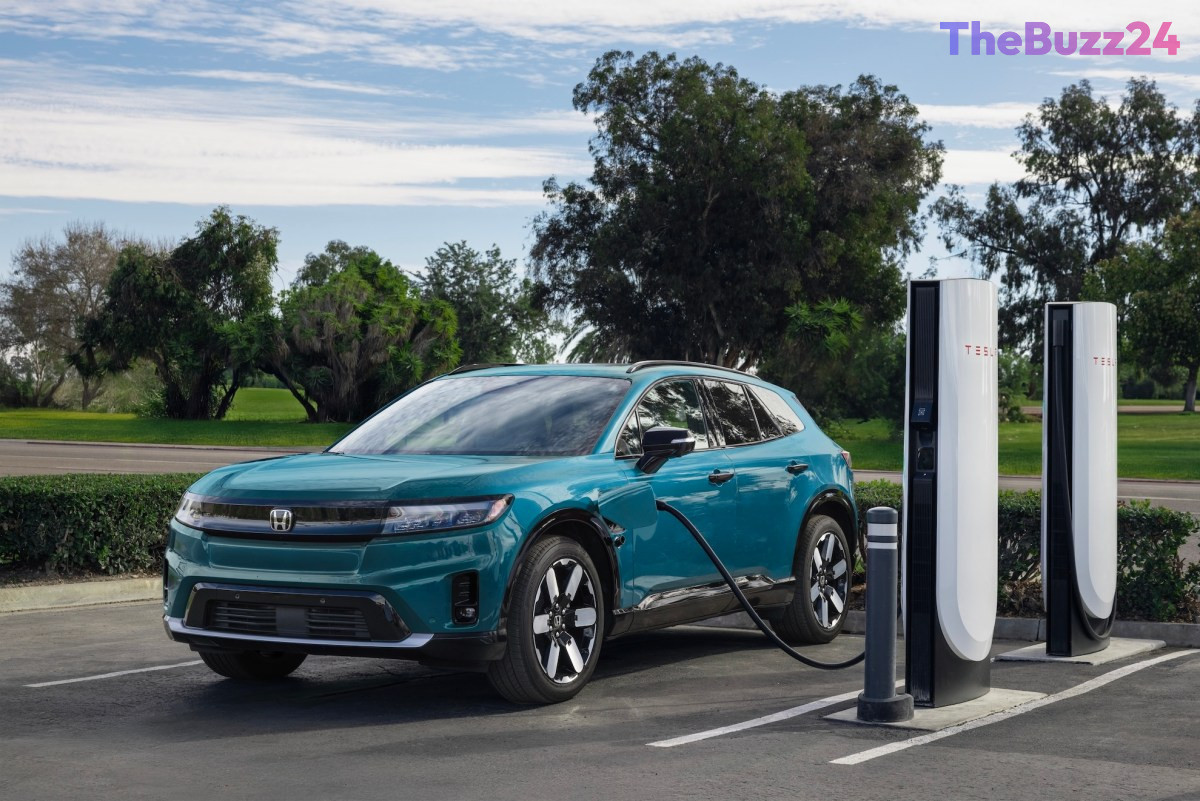
The Great EV Retreat: Why Major Automakers Are Pulling the Plug on U.S. Electric Models
The landscape of the American electric vehicle market is undergoing a significant transformation as several major automakers quietly phase out popular models. From the discontinuation of the Honda Prologue to the strategic pivot of Tesla’s production lines, the industry is recalibrating its approach to the U.S. consumer. This shift is driven by a complex mix of economic pressures, including the expiration of federal tax incentives, evolving trade tariffs, and a strategic pivot toward autonomous technology and high-volume internal combustion vehicles.
Honda’s recent decision to end the Prologue program marks a broader retreat from its ambitious ‘O Series’ EV roadmap, citing intense competition and trade barriers. Similarly, other global manufacturers are adjusting their portfolios. Hyundai has opted to discontinue the standard Ioniq 6 in the U.S. to focus on domestically produced models, while Nissan has ceased production of the Ariya SUV for the 2026 model year. Even luxury and performance-oriented brands are not immune; Polestar has faced significant hurdles due to regulatory restrictions on Chinese-connected vehicle technology, and Volvo has pulled its affordable EX30 subcompact from the American market.
Perhaps most notably, Tesla has officially ended production of its flagship Model S and Model X vehicles. The company is repurposing its Fremont, California assembly lines to prioritize the development of AI-driven robotics and autonomous systems, signaling a shift in corporate focus away from traditional luxury EVs. Meanwhile, Volkswagen is scaling back its ID.4 production in Tennessee to accommodate higher-demand gas-powered SUVs, though it maintains that its ID Buzz model will return to the market in 2027.
While the market is seeing a contraction in available models, industry analysts suggest this is a period of consolidation rather than a total abandonment of electrification. As companies navigate the end of federal subsidies and the rising costs of global supply chains, the focus is shifting toward more profitable, localized production strategies. Despite these cancellations, new entrants and next-generation platforms continue to emerge, suggesting that the U.S. EV market is entering a more mature, albeit more selective, phase of development.
Key Takeaways
- Major automakers are discontinuing various EV models in the U.S. due to a combination of expiring tax credits, new trade tariffs, and shifting corporate priorities.
- Tesla has pivoted its production focus from the Model S and X toward AI and robotics, while other manufacturers like Honda and Volkswagen are reallocating resources toward more profitable vehicle segments.
- Regulatory challenges, such as bans on Chinese-connected vehicle technology, have forced brands like Polestar to alter their U.S. market strategies significantly.
Editor’s Analysis & Impact
The current contraction in the U.S. electric vehicle market reflects a ‘correction phase’ following years of aggressive, subsidy-fueled expansion. Automakers are moving away from speculative, low-margin, or import-heavy EV projects to focus on operational efficiency and regulatory compliance. The pivot by companies like Tesla toward AI and robotics suggests that the next frontier for automotive giants is not just electrification, but the integration of software-defined autonomy. Moving forward, we expect to see a bifurcation in the market: a focus on high-volume, domestically manufactured EVs that qualify for remaining incentives, and a secondary market dominated by high-tech, autonomous-ready platforms. The industry is essentially trading breadth for depth, prioritizing long-term profitability over the rapid, wide-scale adoption seen in the early 2020s.
Frequently Asked Questions
Q: Why are so many EV models being discontinued in the U.S. right now?
A: The primary drivers include the expiration of federal tax credits, increased tariffs on imported vehicles, higher production costs, and a strategic shift by manufacturers toward more profitable vehicle segments or autonomous technology.
Q: Does the discontinuation of these models mean automakers are giving up on EVs?
A: Not necessarily. While many companies are pulling specific models, most are simply consolidating their portfolios to focus on vehicles that are more cost-effective to produce locally or that align better with current consumer demand and regulatory requirements.
AI Disclosure: This article is based on verified data and official reports. Our Team and AI have cross-referenced every financial detail with primary sources to ensure total accuracy.
More from this Category