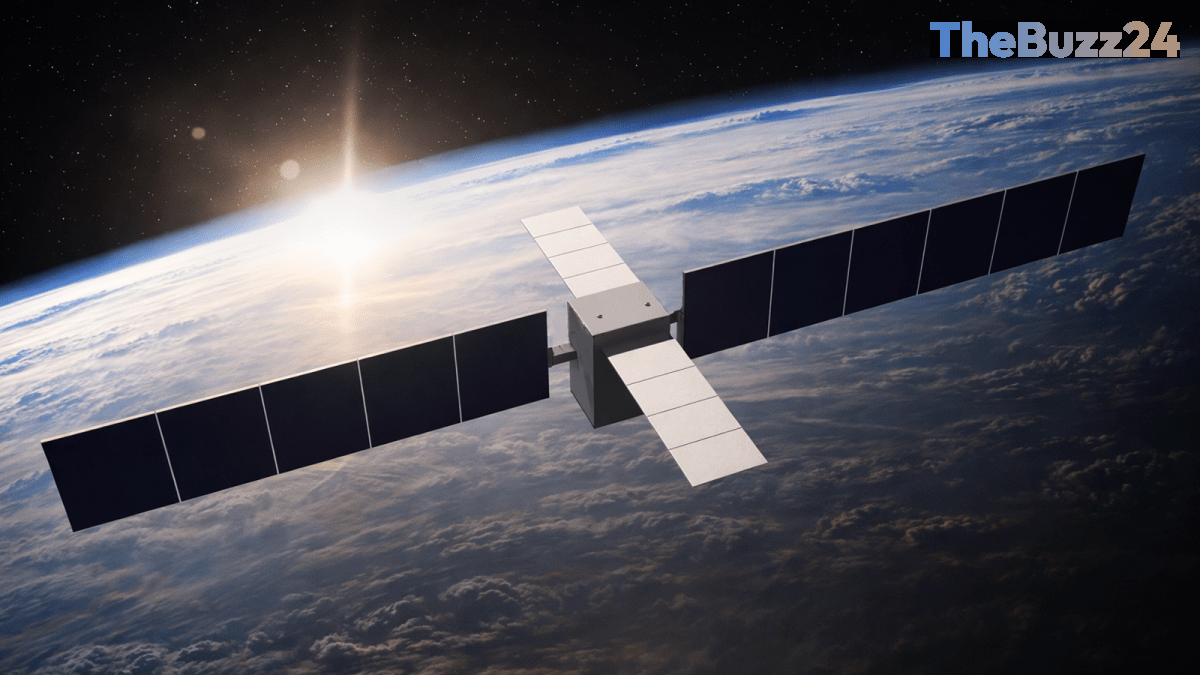
The New Frontier: Startup Secures $5 Million to Build Data Centers in Orbit
A new aerospace venture, Orbital, has successfully secured $5 million in seed funding to develop data centers capable of operating in space. The company, which emerged from a prominent startup accelerator, aims to address the surging global demand for AI computing power by leveraging the unique environment of low-Earth orbit. By moving data processing off-planet, the firm hopes to bypass terrestrial constraints such as limited energy availability and complex environmental regulatory hurdles.
Led by Euwyn Poon, the founder of the e-scooter company Spin, Orbital is banking on the future availability of heavy-lift launch vehicles, specifically SpaceX’s Starship. Current launch costs remain a significant barrier to the economic viability of space-based computing; however, the company believes that as launch technology matures and costs decrease, the business model will become highly profitable. The team, which includes veterans from major aerospace and technology firms, is currently preparing for a demonstration flight to test radiation shielding and thermal management systems using Nvidia hardware.
Orbital’s long-term vision is ambitious, involving the deployment of a constellation of 10,000 satellites designed to provide a distributed gigawatt of computing power. While the project faces significant technical and financial hurdles—potentially requiring a decade of development and billions in capital—investors are increasingly showing interest in long-term, capital-intensive space infrastructure. As the company prepares for its first major satellite launches in the coming years, it joins a growing field of competitors racing to define the future of orbital AI inference.
Key Takeaways
- Orbital raised $5 million to develop space-based data centers designed to handle AI inference workloads.
- The company's business model relies heavily on the future cost-efficiency of heavy-lift rockets like SpaceX's Starship.
- The startup plans to test its proprietary radiation and thermal management technology on a demo flight before scaling to a 10,000-satellite constellation.
Editor’s Analysis & Impact
The emergence of space-based data centers represents a significant shift in venture capital appetite, moving from short-term software plays to long-term, high-capex infrastructure projects. This trend is driven by the insatiable demand for AI compute, which is currently straining terrestrial power grids and real estate. While the technical challenges of radiation hardening and thermal dissipation in a vacuum are non-trivial, the primary hurdle remains the ‘cost-per-kilogram’ to orbit. If launch costs continue to plummet as projected, the economic feasibility of orbital computing will transition from speculative to viable. However, the sector will likely see intense competition, as firms like Blue Origin and other startups pursue similar goals. The success of these ventures will ultimately depend on their ability to integrate with the rapidly evolving AI hardware ecosystem while managing the immense logistical complexities of space deployment.
Frequently Asked Questions
Q: Why move data centers to space?
A: Moving data centers to space aims to solve terrestrial issues such as limited energy availability, cooling challenges, and the complex environmental and regulatory reviews required to build large-scale data facilities on Earth.
Q: What is the biggest challenge for Orbital?
A: The primary challenge is the current high cost of launching hardware into orbit. The company is specifically waiting for the operational maturity of SpaceX’s Starship to make the economics of space-based computing feasible.
AI Disclosure: This article is based on verified data and official reports. Our Team and AI have cross-referenced every financial detail with primary sources to ensure total accuracy.
More from this Category