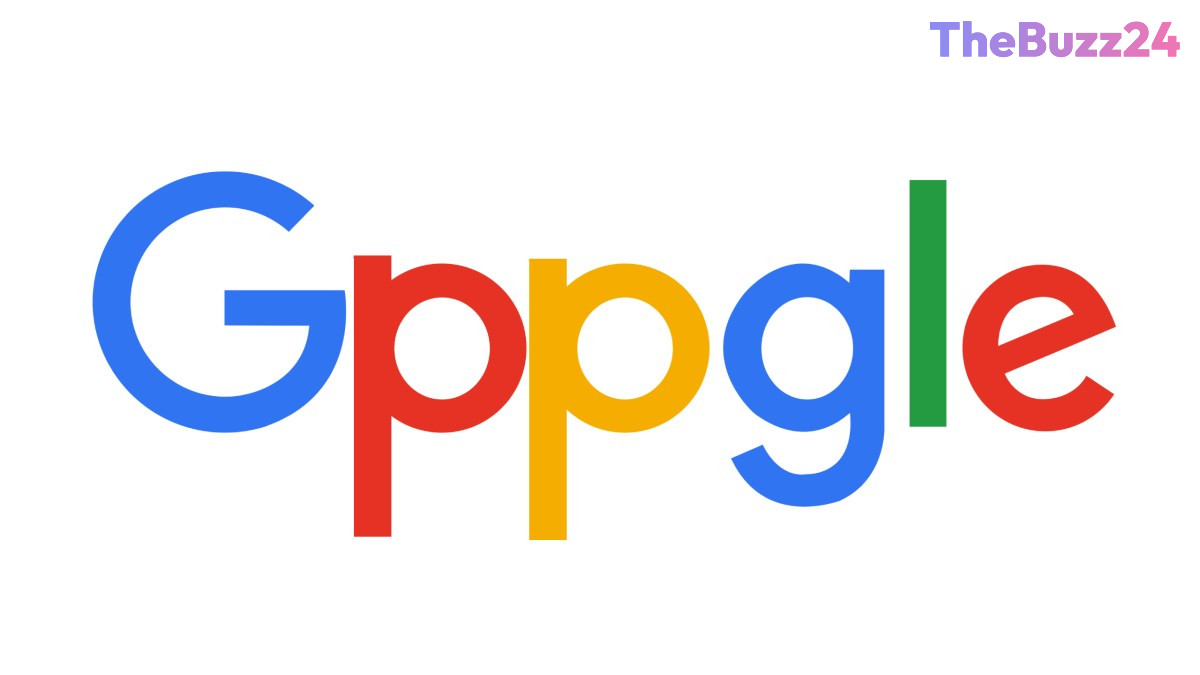
The Tokenization Trap: Why Google’s AI Struggles with Basic Literacy
Google’s integration of generative AI into its search engine has encountered significant hurdles, with users increasingly pointing out the system’s inability to perform elementary literacy tasks. Despite the platform’s capacity to handle sophisticated coding and complex mathematical equations, AI Overviews have frequently failed at simple challenges, such as counting the number of letters in a word or correctly spelling well-known names. These inconsistencies have raised questions about the reliability of AI-generated summaries in everyday search queries.
The root of these errors lies in the underlying architecture of Large Language Models (LLMs). These systems do not process language as a sequence of individual characters or letters. Instead, they utilize a transformer architecture that converts text into numerical tokens. Because the model interacts with these abstract tokens rather than the literal spelling of a word, it lacks an inherent grasp of character-level structure. This design choice is fundamental to how modern AI operates, making simple spelling or counting tasks surprisingly difficult for the technology to execute accurately.
While Google has publicly acknowledged that these counting errors are a known limitation and is actively seeking technical solutions, the persistence of these glitches highlights a broader issue within the industry. As companies race to embed generative AI into the core of the internet experience, these recurring inaccuracies serve as a reminder of the technology’s current boundaries. For now, experts suggest that users should approach AI-generated search results with a degree of caution, verifying critical information through traditional, reliable sources.
Key Takeaways
- Google's AI Overviews are experiencing recurring errors with basic tasks like spelling and letter counting.
- The issues stem from the token-based architecture of LLMs, which process numerical representations of text rather than individual characters.
- These limitations highlight the necessity for users to verify AI-generated information, as the technology is not yet optimized for character-level accuracy.
Editor’s Analysis & Impact
The struggle of Google’s AI with basic literacy tasks underscores a critical ‘black box’ problem in current generative AI development. While LLMs excel at pattern recognition and synthesizing vast amounts of data, their inability to perform simple character-level operations reveals a disconnect between human cognitive processing and machine logic. From a market perspective, this highlights the risks of deploying ‘probabilistic’ models for ‘deterministic’ tasks. As Google and its competitors continue to integrate these tools into search, the industry faces a reputational challenge: balancing the impressive utility of AI with the potential for trivial, yet damaging, factual errors. Future iterations will likely need to incorporate hybrid architectures or specialized modules to handle tasks that require precise, character-level accuracy, ensuring that AI remains a reliable tool for information retrieval rather than a source of misinformation.
Frequently Asked Questions
Q: Why can't Google's AI count letters correctly?
A: The AI processes text as numerical tokens rather than individual letters, meaning it doesn't 'see' the word as a collection of characters, which makes counting them difficult.
Q: Is this a permanent flaw in AI technology?
A: It is a fundamental limitation of current transformer-based architectures, though developers are working on ways to improve accuracy through better training data and architectural adjustments.
AI Disclosure: This article is based on verified data and official reports. Our Team and AI have cross-referenced every financial detail with primary sources to ensure total accuracy.
More from this Category