Tragedy in Bangkok: Locked Exits and Flammable Decor Blamed for Deadly Bar Fire Claiming 30 Lives
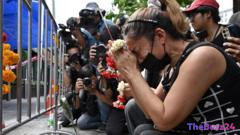
A devastating fire at a Bangkok nightlife venue has claimed the lives of at least 30 people and left dozens more injured, sparking a major investigation into safety negligence. The blaze broke out late Sunday at the Rong Beer Na Lat Phrao, a venue registered as a live music restaurant. Investigators believe a short circuit in an air conditioning unit triggered the fire, which rapidly knocked out power and plunged the crowded room into darkness. Of the injured, more than 70 people have been hospitalized, with at least 24 remaining in critical condition.
Survivors and safety experts have pointed to severe structural and safety failures that turned the venue into a death trap. Reports indicate that emergency exit signs were non-existent or unlit, and key exit doors were locked or obstructed by furniture. As the fire erupted near the stage, panicked patrons instinctively fled toward the back of the venue near the restrooms. Tragically, many became trapped in the restrooms due to a locked rear door, leading to a high concentration of casualties in that area. Among the victims were two members of the local indie band Thotsakan, who were performing when the disaster struck.
The rapid spread of the inferno has been attributed to highly flammable decorative materials, including plastic flowers on the stage and combustible foam plastering the ceiling. Structural engineers noted that these materials likely released highly toxic gases, such as carbon monoxide and hydrogen cyanide, which can incapacitate and kill victims within moments before flames even reach them. Because the establishment was registered as a restaurant rather than an entertainment venue, it managed to bypass stricter building codes requiring fire-retardant materials.
In the wake of the tragedy, Bangkok’s Metropolitan Administration has announced a comprehensive review of safety regulations, aiming to close loopholes that allow restaurants with live music to operate under laxer standards than traditional nightclubs. Adding to the scrutiny, records reveal that the owner of Rong Beer Na Lat Phrao previously owned another establishment in Yasothon province that was completely destroyed by a fire in December 2019, though no casualties occurred in that daytime incident.
Key Takeaways
- A devastating fire at Bangkok's Rong Beer Na Lat Phrao bar killed at least 30 people, with locked emergency exits and a lack of signage trapping victims.
- The rapid spread of the fire and toxic smoke was fueled by highly flammable decorations, including plastic flowers and ceiling foam.
- The venue bypassed strict fire safety regulations by registering as a restaurant with live music rather than an entertainment venue.
Editor’s Analysis & Impact
This tragedy highlights a critical regulatory loophole in urban safety management, where venues exploit classification differences to bypass stringent fire codes. By registering as a ‘restaurant with live music’ instead of an ‘entertainment venue,’ the establishment avoided mandatory fire-retardant materials. This disaster will likely force a sweeping regulatory overhaul in Thailand, compelling municipal authorities to standardize safety requirements across all hospitality sectors. For the broader tourism and nightlife industry in Southeast Asia, this serves as a stark reminder of the reputational and financial risks associated with lax enforcement. Insurers and local governments are expected to demand stricter compliance, regular safety audits, and harsher penalties for venue owners who fail to maintain clear, unlocked emergency exits.
Frequently Asked Questions
Q: What caused the fire at the Bangkok bar?
A: Preliminary investigations indicate that the fire was caused by an electrical short circuit in an air conditioning unit, which quickly cut power to the venue.
Q: Why were so many victims unable to escape?
A: Many patrons were trapped because emergency exits were locked or blocked by furniture, there was a lack of visible exit signage, and the venue was filled with highly toxic smoke from burning flammable decorations.
Q: How did the venue bypass strict fire safety laws?
A: The establishment was registered as a 'restaurant with live music' rather than an 'entertainment venue,' exempting it from stricter regulations regarding the use of fire-retardant materials.
AI Disclosure: This article is based on verified data and official reports. Our Team and AI have cross-referenced every financial detail with primary sources to ensure total accuracy.
More from this Category