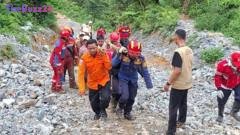
Tragedy in Indonesia: 13 Dead in Flooded Illegal Gold Mine, Highlighting Dangerous Industry
A devastating incident in Indonesia’s West Java province has claimed the lives of at least 13 illegal gold miners, with more feared missing after torrential rains caused a catastrophic flood at an open-pit mine. The disaster occurred when a nearby river overflowed, inundating two shafts where approximately 25 miners were working at a depth of about 100 meters.
Search and rescue teams have been working tirelessly in challenging conditions, navigating dark, narrow, and slippery shafts that continue to be flooded from below. The operation is complicated by the mine’s depth and limited visibility, requiring rescuers to use ropes and exercise extreme caution. Ambulances and medical personnel are on standby near the site to assist any potential survivors.
This tragedy underscores the perilous reality of small-scale, illegal gold mining in Indonesia, a practice that, despite being banned, remains widespread across the archipelago. The industry has seen a significant surge in recent years, often fueled by soaring gold prices, which incentivizes miners to expand operations, often with little regard for safety regulations. State-owned company Aneka Tambang (Antam), which holds the permit for the affected area, has stated the mine was unauthorized.
Authorities have acknowledged the scale of the illegal mining problem, with recent police operations uncovering dozens of illegal mining cases in West Java alone. However, experts suggest the true number of illicit operations far exceeds official figures, pointing to systemic issues including corruption and a lack of effective law enforcement. The allure of quick financial gain often draws individuals with limited economic alternatives into these dangerous ventures, where accidents due to landslides, floods, and hazardous gases are unfortunately common. This incident follows similar fatal accidents in the region, highlighting the urgent need for comprehensive solutions to address the deep-rooted issues plaguing the illegal mining sector.
Key Takeaways
- At least 13 illegal gold miners have died in a flooded mine in West Java, Indonesia.
- The disaster highlights the dangers and prevalence of unregulated small-scale gold mining in the country.
- Authorities are facing challenges in combating illegal mining due to corruption and lack of enforcement, despite its known risks.
Editor’s Analysis & Impact
This tragic event in Indonesia serves as a stark reminder of the human cost associated with unregulated industries, particularly in resource-rich developing nations. The illegal gold mining sector, driven by fluctuating global commodity prices and often supported by illicit networks, presents a complex challenge for governments. Beyond the immediate rescue efforts, this incident demands a deeper examination of the systemic issues, including corruption and lack of economic alternatives, that perpetuate such dangerous practices. The long-term outlook for mitigating these risks hinges on robust law enforcement, addressing corruption at all levels, and providing sustainable economic opportunities for vulnerable populations.
Frequently Asked Questions
Q: Why is gold mining illegal in Indonesia?
A: Small-scale gold mining is banned in Indonesia primarily due to safety concerns, environmental impact, and the difficulty in regulating and taxing these operations. The government aims to control resource extraction and ensure safety standards, which are often bypassed in illegal mining.
Q: What are the main dangers associated with illegal gold mining?
A: Illegal gold mines often lack proper safety infrastructure, making them prone to collapses, landslides, and flooding. Miners also face risks from exposure to toxic gases like carbon monoxide, inadequate ventilation, and the potential for accidents due to unstable ground and poor excavation techniques.
Q: What is being done to address illegal mining in Indonesia?
A: While law enforcement operations are conducted periodically, experts and officials acknowledge that these efforts have had limited impact. There are calls for more comprehensive strategies that address the entire chain of illegal mining, including those who provide capital and market the products, alongside efforts to combat corruption within local and provincial governments, police, and military.
AI Disclosure: This article is based on verified data and official reports. Our Team and AI have cross-referenced every financial detail with primary sources to ensure total accuracy.
More from this Category