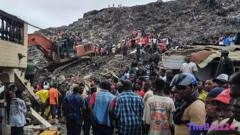
Tragic Landfill Collapse in Guinea Capital Claims At Least 30 Lives After Torrential Rains
A devastating landslide at a massive waste disposal site in Conakry, the capital of Guinea, has claimed the lives of at least 30 people and left dozens of others injured. The disaster occurred in the early hours of the morning in the Dar-es-Salam neighborhood, following hours of torrential overnight rainfall. A towering mound of garbage gave way, burying several nearby residential homes under tons of debris while residents were sleeping.
Emergency response teams, bolstered by military personnel, have been deployed to the disaster zone to search for survivors trapped beneath the rubble. Officials confirmed that at least 22 individuals sustained injuries, with six currently in critical condition. Local authorities and rescue workers are utilizing heavy machinery, including excavators, to sift through the vast mountain of scattered waste. Prime Minister Mamadou Oury Bah visited the site to coordinate rescue efforts and assess the scale of the tragedy, as community leaders express fears that the death toll could continue to rise.
This catastrophic event highlights ongoing safety and infrastructure concerns surrounding the landfill, which has long posed a hazard to the surrounding community. A similar landslide at the very same waste site in 2017 claimed the lives of 10 people, sparking renewed anger among local residents who feel that preventive measures should have been implemented sooner. The tragedy underscores the vulnerability of informal settlements built adjacent to unstable municipal waste sites, particularly during severe weather seasons.
Key Takeaways
- A massive garbage landslide in Conakry, Guinea, has killed at least 30 people and injured 22 others after heavy rains.
- Military and emergency services are actively conducting search and rescue operations in the affected Dar-es-Salam neighborhood.
- The disaster has reignited safety concerns, echoing a similar fatal landfill collapse at the same location in 2017.
Editor’s Analysis & Impact
This tragic incident in Conakry exposes the critical vulnerabilities of urban infrastructure and waste management systems in rapidly growing developing cities. Landfills situated adjacent to residential areas present severe environmental and physical hazards, which are dramatically amplified by extreme weather events driven by climate change. The recurrence of a fatal landslide at this specific site—following a similar disaster in 2017—points to systemic failures in urban planning, zoning enforcement, and municipal safety regulations. Moving forward, African municipal governments must prioritize the relocation of communities living near high-risk waste sites and invest in modern, secure waste processing facilities. Failure to address these structural issues will inevitably lead to more preventable humanitarian crises as seasonal rainfall patterns become increasingly volatile.
Frequently Asked Questions
Q: What caused the landfill collapse in Conakry?
A: The collapse was triggered by heavy overnight rainfall, which destabilized a massive mound of waste at the landfill, causing it to slide onto nearby residential homes in the Dar-es-Salam neighborhood.
Q: Has this landfill experienced similar disasters in the past?
A: Yes, the same waste site was the location of another deadly landslide in 2017, which resulted in the deaths of 10 people.
Q: What measures are being taken in response to the disaster?
A: Emergency services and military personnel have been deployed to search for survivors using heavy machinery. Prime Minister Mamadou Oury Bah has also visited the site to oversee the response and assess the situation.
AI Disclosure: This article is based on verified data and official reports. Our Team and AI have cross-referenced every financial detail with primary sources to ensure total accuracy.
More from this Category