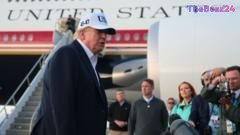
Trump Dismisses Artificial Intelligence Safety Concerns as a ‘Hoax’ Amid Rising Regulatory Debates
Former US President Donald Trump has publicly dismissed safety warnings surrounding artificial intelligence as a “hoax,” strongly pushing back against proposals for strict federal guardrails on the rapidly evolving technology. In a series of social media statements, Trump argued that the only necessary safeguard for the sector is a “strong and smart” leader, while comparing ongoing risk discussions to political controversies of the past. He further asserted that an international race is underway, warning that overly restrictive measures would ultimately benefit global competitors like China.
The pushback arrives at a time of intense debate within the global tech ecosystem. Industry leaders, including figures from major artificial intelligence firms such as Anthropic and OpenAI, have increasingly voiced concerns over the existential risks posed by advanced models. Proposals for third-party kill switches, mandatory industry regulations, and a deceleration of development timelines have gained traction among various executives and lawmakers. Proponents of tighter oversight argue that unchecked growth could lead to severe societal hazards, while critics of heavy regulation contend that slowing down innovation risks undermining national competitiveness.
Meanwhile, international policymakers are attempting to balance the extraordinary economic and public service potential of artificial intelligence against the need for risk mitigation. While some officials emphasize the tremendous upside for healthcare and public administration, others warn against complacency. The growing friction between accelerating technological advancement and the demand for robust safety frameworks highlights a deepening global divide over how humanity should govern the future of intelligent machines.
Key Takeaways
- Donald Trump labeled AI safety concerns a 'hoax' and rejected the need for stringent federal regulations.
- Prominent tech executives, including leaders from Anthropic and OpenAI, have previously called for independent monitoring and mandatory kill switches.
- Debates persist globally as policymakers attempt to balance the technological and economic benefits of AI against potential existential risks.
Editor’s Analysis & Impact
The stark divide between political figures and tech industry leaders regarding artificial intelligence regulation underscores a critical juncture for the global market. As companies pour billions into scaling advanced models, internal warnings from researchers about existential risks have forced a rare public reckoning. Trump’s dismissal of these concerns highlights a deregulatory stance that favors commercial speed and national competitiveness, particularly against rivals like China. However, the counter-movement led by tech executives advocating for safety guardrails suggests that the industry itself is grappling with the ethical and operational limits of its own creations. Moving forward, the tension between rapid innovation and precautionary governance will likely shape legislative agendas worldwide, creating compliance challenges for multinational tech firms and influencing investor confidence across the sector.
Frequently Asked Questions
Q: Why did Donald Trump criticize AI safety warnings?
A: Donald Trump criticized AI safety warnings by labeling them a 'hoax' and arguing that excessive regulations would harm American competitiveness while only benefiting global rivals like China.
Q: What specific safety measures have tech executives proposed?
A: Certain tech executives and researchers have proposed mandatory third-party kill switches, slower development timelines, and independent monitoring to mitigate potential existential risks associated with advanced AI.
Q: How are international governments responding to the growth of AI?
A: Governments are divided; some officials emphasize the need for caution and regulatory frameworks to prevent risks, while others warn against over-regulation that could stifle innovation in public services and the economy.
AI Disclosure: This article is based on verified data and official reports. Our Team and AI have cross-referenced every financial detail with primary sources to ensure total accuracy.
More from this Category