Trump Expresses Uncertainty Over Iran’s Use of Oil Revenue Amidst Agricultural Trade Discussions
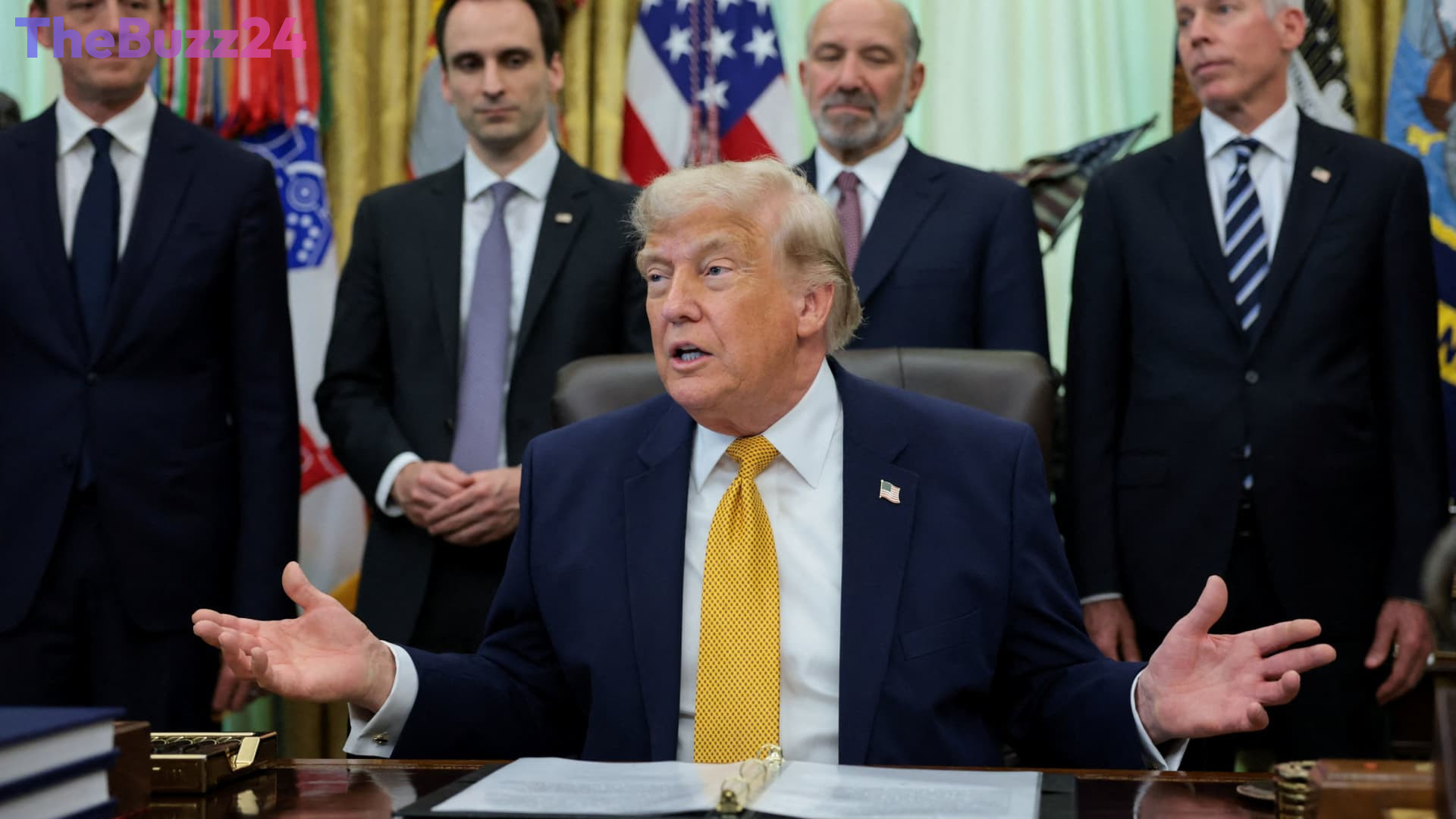
President Donald Trump has expressed a degree of uncertainty regarding Iran’s commitment to using oil profits for humanitarian purposes, specifically for purchasing agricultural goods, rather than for military rearmament. When questioned about assurances that Iran would not divert funds to rebuild its military, Trump stated, “Well, they’re not supposed to be doing that, so we’ll see.” He emphasized that the expectation was for Iran to utilize these funds to procure essential food items for its population, highlighting corn and soybeans as key agricultural imports from the United States.
Trump further elaborated on the understanding that Iranian funds being unfrozen would be allocated towards buying American agricultural products. He indicated that this arrangement was a source of satisfaction for U.S. farmers. This statement followed recent developments, including the U.S. Treasury Secretary authorizing the import of Iranian oil and refined products into the U.S. and the U.S. Navy lifting a blockade on Iranian ports, which had previously restricted oil exports.
However, this perspective has been met with a differing view from Iran’s central bank. Abdolnaser Hemmati, the governor of Iran’s central bank, has reportedly stated that there is no explicit obligation for Iran to purchase agricultural inputs exclusively from the United States. While acknowledging that Iran needs to import billions of dollars worth of essential goods and medicine annually, Hemmati indicated that the source of these purchases would depend on factors like price and quality, suggesting that Iranian entities are not bound to buy solely from U.S. suppliers.
Key Takeaways
- President Trump expressed doubt about Iran using oil profits for military purposes, suggesting they should buy U.S. agricultural goods instead.
- Iran's central bank governor stated there is no obligation for the country to exclusively purchase agricultural inputs from the U.S.
- Recent U.S. policy shifts, including the authorization of Iranian oil imports and the lifting of a naval blockade, precede these discussions.
Editor’s Analysis & Impact
This exchange highlights the complex geopolitical and economic dynamics at play between the U.S. and Iran. While the U.S. administration appears to be leveraging potential agricultural trade as a tool to influence Iran’s financial dealings and potentially limit military spending, Iran’s central bank is asserting its autonomy in trade decisions. The situation underscores the delicate balance of sanctions, trade agreements, and national security concerns. The market impact could be seen in agricultural futures and oil prices, depending on the actual flow of goods and adherence to any informal or formal agreements. The future outlook remains uncertain, contingent on continued diplomatic engagement and verifiable actions from both sides.
Frequently Asked Questions
Q: What was President Trump's expectation for Iran's oil profits?
A: President Trump expected Iran to use profits from oil sales to purchase agricultural products, such as corn and soybeans, from the United States to feed its population.
Q: Does Iran have to buy agricultural products from the U.S.?
A: According to Iran's central bank governor, Abdolnaser Hemmati, Iran is under no obligation to exclusively purchase agricultural inputs from the U.S. The decision depends on factors like price and quality compared to other international suppliers.
Q: What recent U.S. actions might be related to these discussions?
A: The U.S. Treasury Secretary authorized the import of Iranian oil and refined products into the U.S., and the U.S. Navy lifted a blockade on Iranian ports, which had previously restricted the country's oil exports.
AI Disclosure: This article is based on verified data and official reports. Our Team and AI have cross-referenced every financial detail with primary sources to ensure total accuracy.
More from this Category