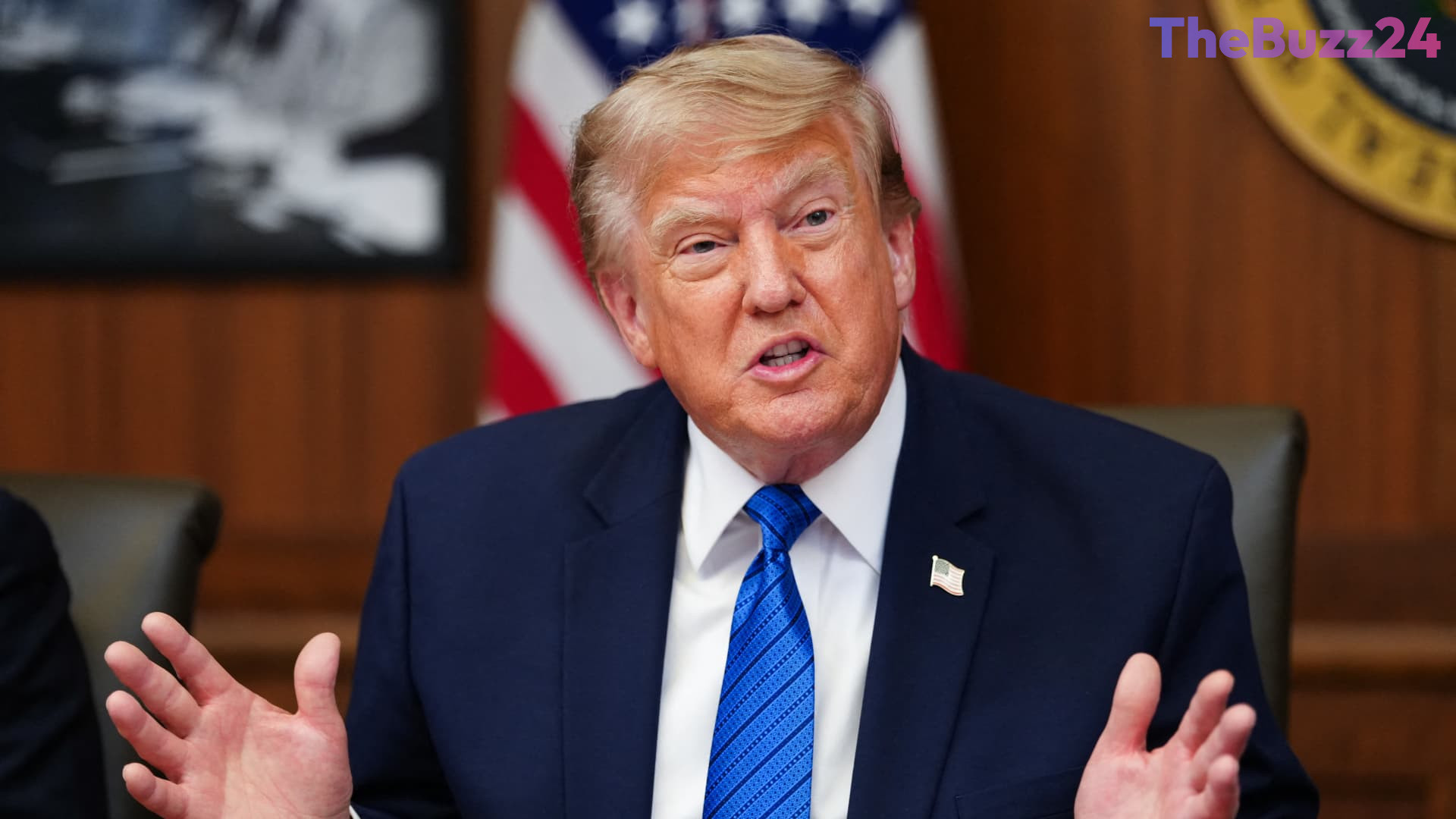
Trump Reverses Stance on Patriot Missile Production Licenses for Ukraine
President Donald Trump has signaled a significant shift in U.S. policy regarding the potential domestic production of Patriot missile systems within Ukraine. Despite earlier indications that the United States would grant Kyiv the necessary licenses to manufacture the advanced air defense technology, the President stated on Friday that no such agreement has been finalized. The Patriot system is considered a critical asset for Ukraine in its ongoing efforts to intercept ballistic missiles launched by Russian forces.
During a Cabinet meeting at Camp David, the President expressed caution regarding the transfer of such sophisticated military technology. He noted that the U.S. must be careful when sharing high-level defense capabilities, citing concerns that recipient nations could potentially turn against the U.S. in the future. While discussions between the two nations remain ongoing, the administration appears to be reconsidering the strategic implications of allowing foreign production of these high-value assets.
This development follows a series of conflicting signals from the White House. Just weeks prior, the President had publicly suggested that the U.S. would provide the licensing to Ukraine, though he acknowledged at the time that defense contractors like Lockheed Martin and RTX had not yet been formally notified. Ukrainian President Volodymyr Zelenskyy continues to prioritize the acquisition of these systems, maintaining active communication with U.S. officials and defense industry representatives to explore potential co-production solutions to bolster regional security.
Key Takeaways
- President Trump has walked back previous comments suggesting the U.S. would grant Ukraine licenses to manufacture Patriot missile systems.
- The administration cited security concerns and the sensitivity of sharing advanced military technology as primary reasons for the hesitation.
- Despite the uncertainty, Ukraine continues to view the domestic production of Patriot systems as a top priority for its defense against ballistic missile attacks.
Editor’s Analysis & Impact
The reversal on Patriot missile licensing highlights the complex intersection of geopolitical strategy and defense industrial policy. For defense contractors like Lockheed Martin and RTX, the prospect of co-production in a conflict zone presents significant intellectual property and security risks, which likely influenced the administration’s pivot. From a market perspective, this underscores the tension between supporting allies and maintaining strict control over proprietary military technology. The future outlook remains volatile; while Ukraine is pushing for localized production to ensure long-term sustainability, the U.S. is clearly balancing these requests against the risk of technology proliferation and the depletion of its own strategic stockpiles. This situation serves as a case study in how domestic political priorities and global security needs often collide, creating uncertainty for both international partners and defense sector stakeholders.
Frequently Asked Questions
Q: Why is the Patriot missile system important to Ukraine?
A: The Patriot missile system is a highly advanced air defense platform capable of intercepting incoming ballistic missiles, which is essential for protecting Ukrainian infrastructure and civilians from Russian aerial attacks.
Q: Which companies are primarily involved in the manufacturing of Patriot systems?
A: The Patriot missile systems are manufactured by major U.S. defense contractors, specifically Lockheed Martin and RTX (formerly Raytheon Technologies).
AI Disclosure: This article is based on verified data and official reports. Our Team and AI have cross-referenced every financial detail with primary sources to ensure total accuracy.
More from this Category