Trump Roasts Media with ‘Derangement Syndrome’ Jabs at Rescheduled Correspondents’ Dinner
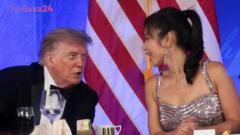
President Donald Trump delivered a characteristic blend of humor and sharp criticism at the White House Correspondents’ Association (WHCA) dinner, marking a rescheduled event that celebrated press freedom.
The dinner, held after a previous event was interrupted by a shooting incident, saw reporters from outlets with whom the President has frequently clashed, including The New York Times, CNN, and The Wall Street Journal, receiving honors for their work. Despite the somber backdrop of the earlier security scare, the evening aimed to reaffirm the importance of a free press.
While acknowledging the resilience of the press corps and even offering some conciliatory remarks, President Trump did not shy away from his critical stance on certain media coverage. He playfully accused many journalists in attendance of suffering from “Trump Derangement Syndrome” and labeled some reporting as “fake news.” The President’s remarks, delivered over an hour, also touched upon familiar political targets and underscored his belief in open debate as the cornerstone of American democracy.
The event itself was a more subdued affair compared to its predecessor, with enhanced security measures in place. The WHCA President, Weijia Jiang of CBS News, emphasized the organization’s commitment to continuing its work despite threats, referencing the courage shown by attendees during the earlier incident. Officer Victor Gonzalez of the U.S. Secret Service, who was injured during the shooting, was honored by the President for his bravery.
Key Takeaways
- President Trump attended and spoke at the rescheduled White House Correspondents' Association dinner, a night dedicated to press freedom.
- During his speech, Trump directed barbs at the media, accusing some outlets of "fake news" and journalists of having "Trump Derangement Syndrome."
- The event featured enhanced security and honored individuals, including a Secret Service officer injured during a previous shooting incident at the dinner.
Editor’s Analysis & Impact
The White House Correspondents’ Dinner, particularly with President Trump’s attendance, continues to be a focal point for the complex and often contentious relationship between the U.S. presidency and the media. Trump’s use of the platform to reiterate his criticisms, while also engaging in lighthearted banter, reflects a strategic approach to managing public perception and reinforcing his base. The event’s scaled-down nature and heightened security underscore the lingering impact of past security concerns, highlighting the ongoing challenges in balancing public events with safety protocols. This dynamic is crucial for understanding the broader landscape of political communication and media relations in the current era.
Frequently Asked Questions
Q: What is the White House Correspondents' Association (WHCA) dinner?
A: The WHCA dinner is an annual event where the association, representing journalists who cover the White House, honors outstanding work in political journalism and celebrates the First Amendment. It typically includes remarks from the President of the United States.
Q: Why was the dinner rescheduled?
A: The dinner mentioned in the article was a rescheduled event. The original dinner was interrupted by a shooting incident, prompting its cancellation and postponement.
Q: What does 'Trump Derangement Syndrome' refer to?
A: 'Trump Derangement Syndrome' is a term often used by President Trump and his supporters to describe what they perceive as an irrational or extreme hostility towards him and his policies among political opponents and some media figures.
AI Disclosure: This article is based on verified data and official reports. Our Team and AI have cross-referenced every financial detail with primary sources to ensure total accuracy.
More from this Category