Trump’s $1 Million ‘Gold Card’ Visa Program Struggles to Attract Global Elite Amid Legal Hurdles
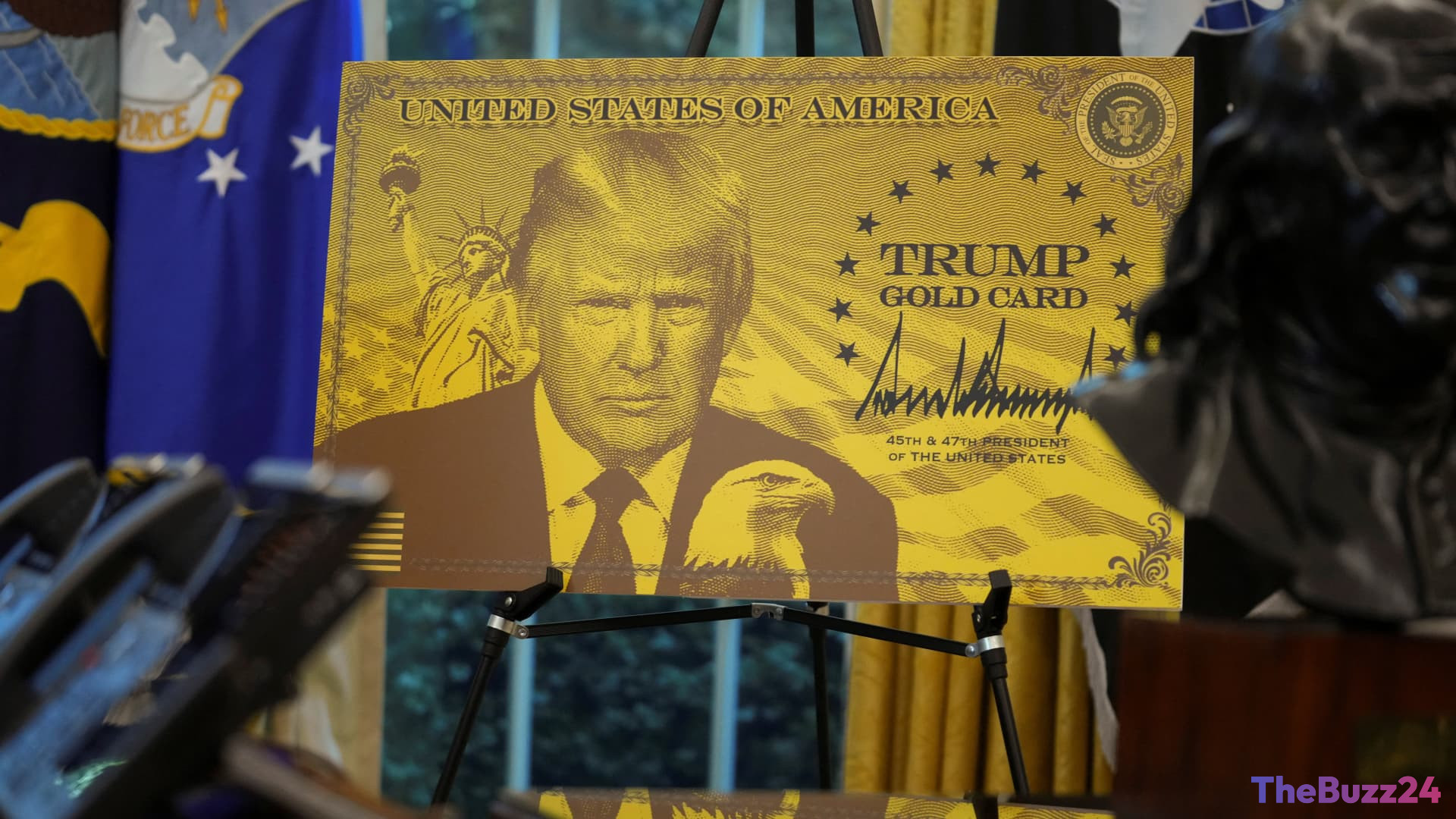
The ambitious “Gold Card” initiative launched by President Donald Trump to grant wealthy foreigners U.S. residency in exchange for a $1 million donation is facing a sluggish start. Despite initial projections of massive demand, official figures from the Department of Homeland Security (DHS) reveal that only 338 individuals have applied for the program, with just 165 paying the initial $15,000 processing fee. This stands in stark contrast to early government predictions made by Commerce Secretary Howard Lutnick, who anticipated issuing 80,000 cards and generating over $100 billion in revenue.
A central selling point of the Gold Card was the promise of expedited residency, advertised on its official website as taking only “a matter of weeks.” However, recent court filings from the DHS have contradicted these claims, stating that Gold Card applicants will not receive preferential treatment or faster processing times than standard visa applicants. This admission has severely dampened enthusiasm among international millionaires who are looking for reliable, fast-tracked immigration pathways.
The program’s legal foundation is also under intense scrutiny. Because immigration laws are constitutionally designated to Congress, the program was established via executive order by leveraging existing EB-1 and EB-2 visa categories—traditionally reserved for individuals of extraordinary ability. A lawsuit led by the American Association of University Professors argues that the program is unlawful and threatens to crowd out highly qualified, merit-based applicants. While DHS maintains the program has its own dedicated staff and will not impact other applicants, the ongoing litigation has made wealthy investors hesitant to risk a nonrefundable $1 million.
Due to the uncertainty surrounding the Gold Card, many affluent foreigners are turning back to established pathways like the EB-5 investor visa. Unlike the Gold Card’s nonrefundable donation, the EB-5 program requires an investment of $800,000 to $1 million in a job-creating U.S. enterprise, allowing investors to retain their capital. Industry experts note that until the Gold Card program secures congressional approval or clears its legal hurdles, the global elite are unlikely to embrace it.
Key Takeaways
- Only 338 people have applied for the $1 million 'Gold Card' visa program, far below the government's initial projection of 80,000 applicants.
- A DHS court filing revealed that Gold Card applicants will not receive expedited processing, contradicting initial promises of residency in 'record time.'
- Ongoing lawsuits challenge the legality of using executive orders to bypass Congress and utilize EB-1 and EB-2 visa categories for wealthy donors.
Editor’s Analysis & Impact
The sluggish launch of the ‘Gold Card’ program highlights the delicate balance between executive immigration initiatives and established statutory frameworks. High-net-worth individuals prioritize predictability and legal security above all else when planning global mobility. By bypassing Congress and structuring the program as a nonrefundable donation rather than an investment, the administration created a high-risk proposition. Furthermore, the revelation that applicants will not receive expedited processing removes the primary incentive for the program. In the long term, this failure is likely to bolster traditional pathways like the EB-5 visa program, which offers a proven, court-tested route to residency. For any future investment-based immigration policies to succeed, they must secure legislative backing to assure global investors of their permanence and legitimacy.
Frequently Asked Questions
Q: What is the 'Gold Card' visa program?
A: It is an immigration initiative launched via executive order that offers U.S. residency to wealthy foreign nationals in exchange for a nonrefundable $1 million gift to the government, utilizing existing EB-1 and EB-2 visa categories.
Q: Why are wealthy investors avoiding the program?
A: Investors are hesitant due to ongoing lawsuits challenging the program's legality, the nonrefundable nature of the $1 million fee, and recent government admissions that applicants will not receive faster processing times.
Q: How does the Gold Card differ from the EB-5 visa?
A: The EB-5 visa requires an investment of $800,000 to $1 million in a U.S. business that creates at least 10 jobs, allowing investors to potentially recoup their capital, whereas the Gold Card requires a nonrefundable $1 million donation directly to the government.
AI Disclosure: This article is based on verified data and official reports. Our Team and AI have cross-referenced every financial detail with primary sources to ensure total accuracy.
More from this Category