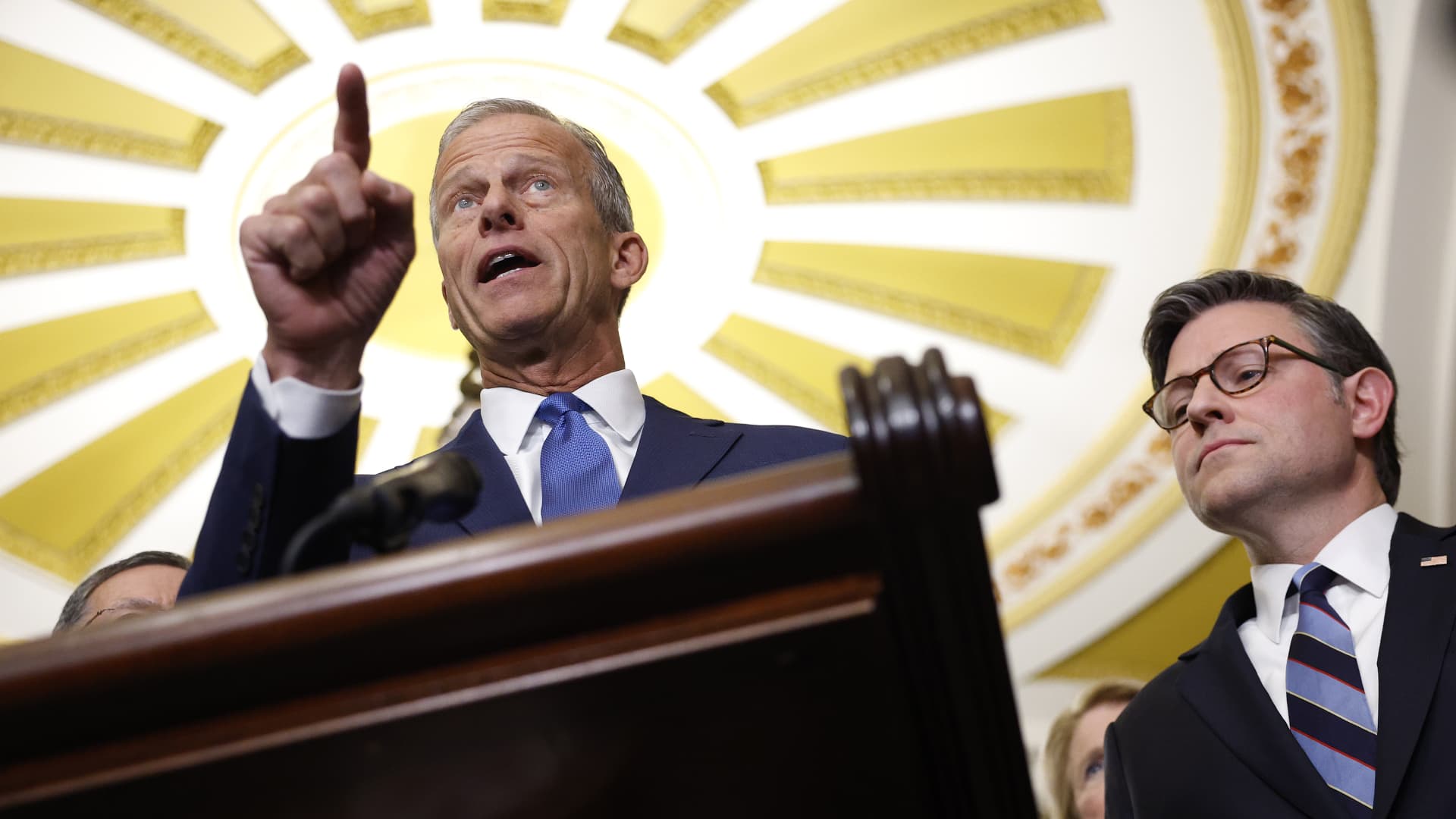
Congressional GOP Unveils Two-Track Plan to End DHS Funding Impasse
Republican leadership in Congress has unveiled a new legislative strategy designed to break the ongoing deadlock surrounding the partial shutdown of the Department of Homeland Security (DHS). The impasse, which has persisted for nearly two months, has created significant operational challenges, particularly for the Transportation Security Administration (TSA), where staffing shortages and unpaid labor have led to increased airport delays and security concerns.
To resolve the crisis, Senate Majority Leader John Thune and House Speaker Mike Johnson are proposing a bifurcated approach. The first track focuses on utilizing the standard appropriations process to secure immediate funding for the majority of the department. This move is intended to stabilize essential operations and ensure that federal employees, including TSA personnel, receive their back pay.
The second track involves using budget reconciliation to fund Immigration and Customs Enforcement (ICE) and specific Customs and Border Protection (CBP) units. By leveraging this procedural tool, leadership aims to bypass the traditional 60-vote filibuster threshold in the Senate, allowing the funding to pass with a simple majority. This strategy follows a period of intense political friction sparked by a February incident in Minneapolis involving federal agents, which led Democrats to demand significant policy reforms before agreeing to further funding.
President Donald Trump has expressed his support for this dual-track proposal, specifically endorsing the use of reconciliation to secure border funding by the June 1 deadline. Senator Lindsey Graham is currently spearheading the development of the reconciliation package. However, political analysts caution that the plan faces potential hurdles, noting that the inclusion of extraneous policy riders could jeopardize the bill’s eligibility for the simple-majority reconciliation process.
Key Takeaways
- Republican leadership is proposing a two-track legislative plan to separate general DHS funding from specific immigration enforcement funding.
- The strategy aims to use budget reconciliation to bypass the 60-vote Senate threshold for ICE and CBP funding, while using standard appropriations for the rest of the agency.
- President Trump supports the plan, which faces a June 1 deadline, though experts warn that adding unrelated policy riders could derail the reconciliation process.
Editor’s Analysis & Impact
The proposed two-track strategy represents a calculated maneuver by Republican leadership to mitigate the political fallout of the DHS shutdown while maintaining their stance on border enforcement. By decoupling essential agency functions from contentious immigration policy, the GOP hopes to alleviate the immediate pressure on airport security and federal employee morale. However, the reliance on budget reconciliation introduces significant legislative risk. If the reconciliation package becomes a vehicle for broader, unrelated policy agendas, it may fail to meet the strict budgetary requirements necessary for a simple-majority vote. Furthermore, the success of this plan hinges on maintaining party unity and navigating the intense partisan divide that has defined this session. If successful, it could set a precedent for resolving future funding standoffs, but failure could deepen the current legislative gridlock and further strain the federal workforce.
Frequently Asked Questions
Q: Why is the Department of Homeland Security currently facing a partial shutdown?
A: The shutdown stems from a legislative impasse over immigration enforcement policies, which intensified following a February incident in Minneapolis involving federal agents.
Q: What is the purpose of using budget reconciliation in this plan?
A: Budget reconciliation is being used to bypass the 60-vote filibuster threshold in the Senate, allowing the GOP to pass funding for ICE and CBP with a simple majority.
AI Disclosure: This article is based on verified data and official reports. Our Team and AI have cross-referenced every financial detail with primary sources to ensure total accuracy.
More from this Category