Ugandan Landslide Survivors File Landmark UN Petition Demanding Climate Accountability and Fair Compensation
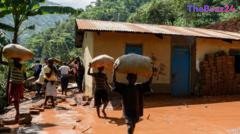
Survivors of a devastating 2019 landslide in eastern Uganda’s Bududa district have taken international legal action against the national government, submitting a formal petition to the United Nations Human Rights Committee. A group of 48 complainants asserts that state authorities violated constitutional obligations by failing to establish functional disaster management systems and early-warning apparatuses in a region repeatedly hit by mudslides. The 2019 disaster claimed more than 53 lives, including 33 children, adding to a legacy of catastrophic landslides in 2010 and 2018 that killed over 142 residents.
The legal challenge comes as local communities face escalating threats from heavy seasonal rainfalls, soil degradation, and declining agricultural productivity. While the government introduced a resettlement framework over a decade ago, progress has remained drastically slow. A recently launched government initiative offers high-risk households 18 million Ugandan shillings (approximately $4,300) in cash or land subsidies to relocate, coupled with an ultimatum demanding residents move within two months or face forced eviction. However, displaced families argue that the payout is vastly insufficient to buy land, construct safe housing, and restore lost farming livelihoods.
Backed by environmental legal group Greenwatch, the claimants contend that emergency state strategies must guarantee economic security, land rights, and structural protection rather than mere displacement. Legal analysts emphasize that low-emission developing nations require significantly increased international financial aid to execute adequate climate adaptation policies. With similar weather-driven tragedies surging across East Africa and beyond, the UN Human Rights Committee has formally asked the Ugandan government to respond within six months, marking a unprecedented effort to hold states international accountable for climate risk response.
Key Takeaways
- Forty-eight survivors of Uganda's fatal 2019 Bududa landslide have petitioned the UN Human Rights Committee over state disaster management failures.
- Complainants argue that the government's $4,300 relocation package is insufficient to cover loss of livelihoods and property ahead of forced eviction deadlines.
- The UN complaint marks a potential legal precedent holding governments accountable for climate adaptation and human rights protection during natural disasters.
Editor’s Analysis & Impact
This legal challenge before the UN Human Rights Committee signals a crucial evolution in global climate litigation, shifting focus from post-disaster relief to mandatory state adaptation duties. Developing nations across Africa face mounting pressure as intensifying weather patterns triggered by global climate change outpace local infrastructure and adaptation budgets. By framing government inadequacy in disaster prevention as a fundamental human rights violation, the Bududa survivors are charting a path that could force states to upgrade disaster response and relocation protocols. Furthermore, the case amplifies calls from international legal organizations demanding that high-income nations fulfill commitments to loss-and-damage climate funding. If the UN committee delivers a favorable ruling, it could set a binding global precedent that strengthens the legal rights of vulnerable communities disproportionately affected by climate disasters worldwide.
Frequently Asked Questions
Q: Why are Bududa landslide survivors taking legal action at the United Nations?
A: The survivors argue that the Ugandan government failed to implement effective disaster protection and early-warning systems, violating their constitutional rights to safety, land, and livelihood after repeated deadly landslides.
Q: What offer has the government made to relocate families from high-risk areas?
A: The government launched a program providing high-risk households 18 million Ugandan shillings ($4,300) as cash or a mix of land and construction grants to move to safer regions.
Q: What makes this UN case internationally significant?
A: It is believed to be the first case before an international body specifically seeking state accountability and structural climate adaptation measures, which could establish global legal expectations for climate disaster management.
AI Disclosure: This article is based on verified data and official reports. Our Team and AI have cross-referenced every financial detail with primary sources to ensure total accuracy.
More from this Category