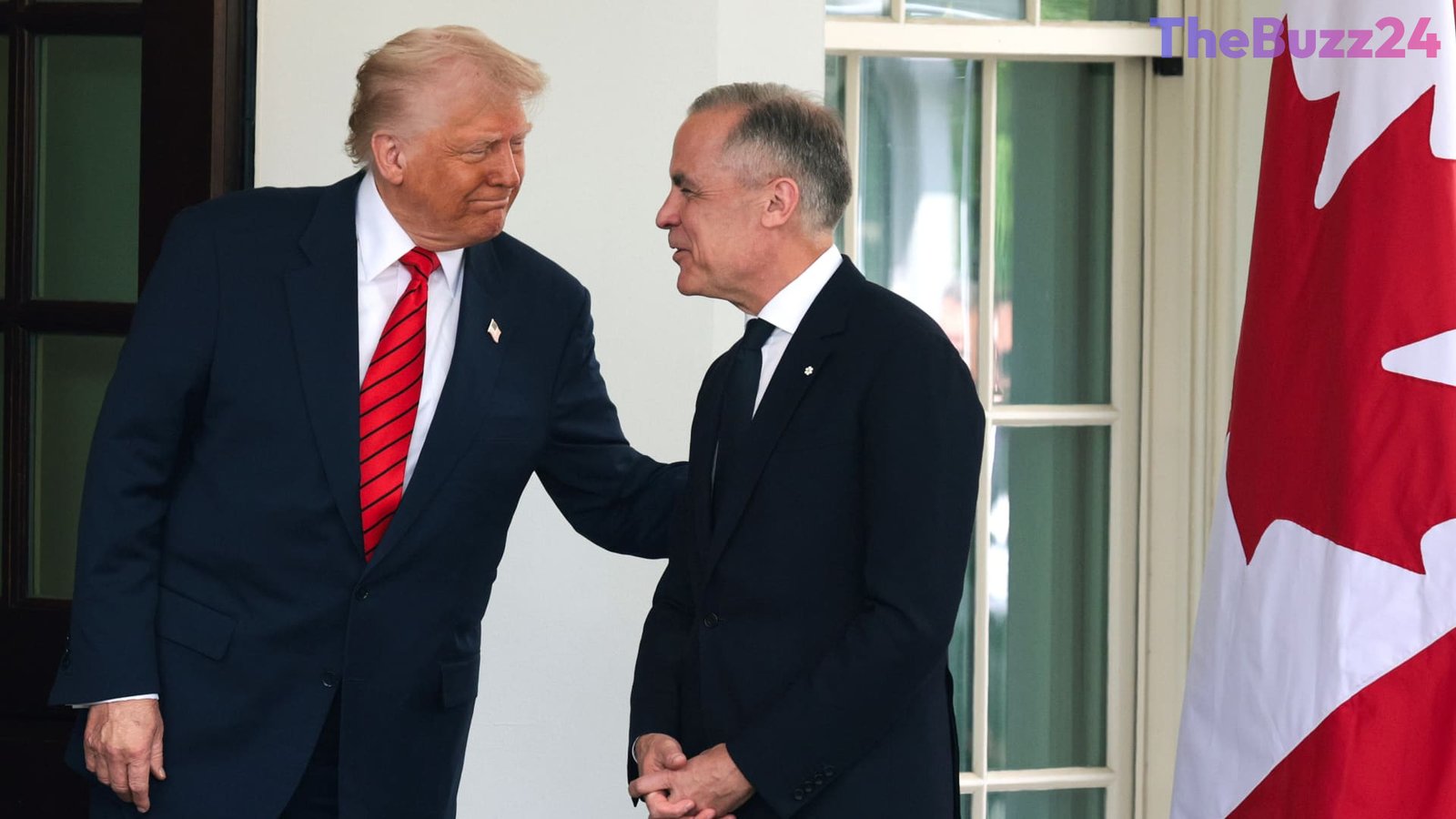
US and Canada Reach Tentative Agreement to Avert 50% Tariffs Amid High-Stakes Negotiations
A potential trade showdown between the United States and Canada was narrowly avoided after President Donald Trump announced a tentative framework to suspend aggressive 50% tariffs on Canadian imports. The planned penalties, which targeted roughly $20 billion worth of Canadian products ranging from agricultural goods and wine to sports equipment, were paused just hours before the scheduled midnight deadline to allow both nations to finalize official documentation.
The emerging agreement appears to encompass several high-profile economic and industrial sectors. President Trump suggested that negotiations could revive discussions around the Keystone XL crude pipeline, an infrastructure initiative running from Alberta to Nebraska that had previously been halted in 2021. In addition, the White House signaled potential relief on existing U.S. tariffs on Canadian automotive manufacturing, steel, and aluminum, describing the move as a balanced effort to align North American trade policies.
From Ottawa’s perspective, securing protections for core strategic industries has been central to ongoing discussions. Canadian Prime Minister Mark Carney affirmed that significant progress had been achieved to protect Canadian trade interests, noting that negotiators are aiming for a robust pact that reinforces bilateral economic stability. Canadian officials maintained a measured tone as technical negotiations continued behind closed doors in Washington.
United States Trade Representative Jamieson Greer confirmed that bilateral meetings with Canadian counterparts have effectively addressed key trade barriers. The tentative deal is expected to broaden American agricultural market access—notably in the dairy sector—while harmonizing digital trade and regional economic security, offering temporary relief to cross-border supply chains that had braced for severe disruption.
Key Takeaways
- A last-minute tentative deal paused impending 50% U.S. tariffs on $20 billion worth of Canadian imports.
- Bilateral talks involve concessions on agricultural barriers, potential tariff reductions on steel and autos, and the possible revival of the Keystone XL pipeline.
- Officials from both Washington and Ottawa expressed optimism that a comprehensive framework will stabilize cross-border trade relations.
Editor’s Analysis & Impact
The eleventh-hour de-escalation between the United States and Canada underscores the deeply integrated nature of North American supply chains, where punitive tariffs carry substantial domestic economic fallout. A 50% duty on basic goods and industrial components would have immediately spiked manufacturing costs and consumer prices on both sides of the border. By pivoting toward negotiated concessions—such as agricultural access and potential pipeline infrastructure—both administrations gain strategic leverage without triggering a destructive trade spiral. However, with the agreement still pending final documentation, businesses operating across the border must navigate short-term policy volatility until formal treaties and regulatory guarantees are permanently codified.
Frequently Asked Questions
Q: What goods were initially targeted by the proposed 50% tariffs?
A: The proposed tariffs targeted roughly $20 billion worth of Canadian imports, encompassing consumer goods, sports equipment such as hockey sticks, wine, and various agricultural items.
Q: What concessions are being discussed as part of the tentative deal?
A: Discussions include Canada removing barriers on U.S. agricultural products like dairy, potential adjustments to U.S. tariffs on Canadian steel, aluminum, and autos, and preliminary talks regarding the Keystone XL pipeline.
Q: When will the agreement between the U.S. and Canada be finalized?
A: The initial tariffs were paused under a temporary window to allow trade officials from both nations to complete legal documentation and formalize the final terms.
AI Disclosure: This article is based on verified data and official reports. Our Team and AI have cross-referenced every financial detail with primary sources to ensure total accuracy.
More from this Category