US Reinstates Iran Port Blockade, Imposes 20% Cargo Levy on Strait of Hormuz Amid Heightened Tensions
The United States has announced the reinstatement of a naval blockade on Iranian ports and the imposition of a 20% charge on all cargo transiting the Strait of Hormuz. This significant escalation follows days of intensifying military exchanges between Washington and Tehran. The administration stated that the blockade, effective from Tuesday at 16:00 Eastern Time, aims to prevent “Iran’s ships or customers” from entering or exiting the vital oil shipping route, while ensuring “fair and open use” of the Strait for all other nations.
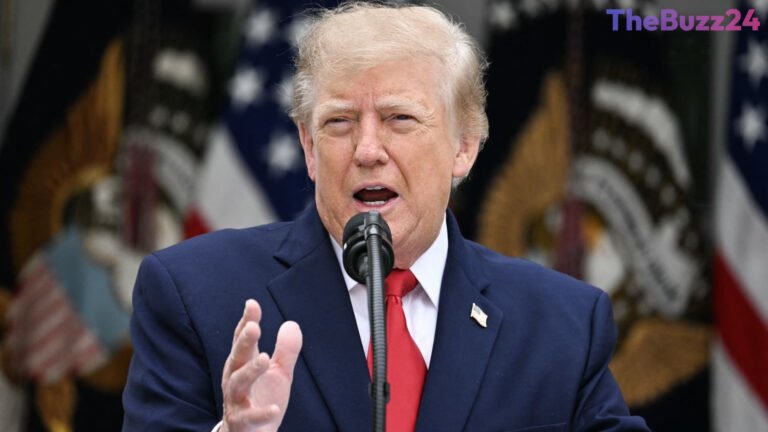
This development unfolds against a backdrop of ongoing military strikes. US Central Command (Centcom) confirmed launching a third consecutive night of strikes against Iran, asserting these actions would “impose a heavy cost on Iranian forces and degrade their ability to attack innocent civilians and commercial shipping.” In response, Iran’s army claimed to have targeted US military assets in Kuwait. President Donald Trump, in a post on Truth Social, reiterated the US position, declaring the Strait “will remain OPEN, with or without Iran,” and asserting the US would be “THE GUARDIAN OF THE HORMUZ STRAIT,” justifying the 20% fee as reimbursement for providing safety and security in the volatile region.
Internationally, the move has drawn scrutiny. Iran’s Foreign Minister Abbas Araghchi, while acknowledging the principle of compensation for secure passage, deemed the 20% fee “too much,” asserting Iran has always been and will remain the Strait’s “GUARDIAN.” The International Maritime Organization (IMO), the UN agency regulating global shipping, expressed strong opposition, with a spokesperson stating there is “no legal basis” for mandatory tolls simply to transit through a strait used for international navigation. Prior to the US announcement, Iran’s top military headquarters had warned against any US interference in the Strait’s management, with Khatam al-Anbiya spokesperson Ebrahim Zolfaghari cautioning that spreading conflict could “engulf all the countries of the region.”
The practical implications of President Trump’s latest announcement remain uncertain, particularly concerning international maritime law, which generally allows countries control over territorial seas up to 12 nautical miles. At its narrowest, the Strait of Hormuz lies entirely within the territorial waters of Iran and Oman. This renewed dispute follows a previous US naval blockade on Iranian ports in April, which was lifted in June as part of a memorandum of understanding aimed at de-escalation. The current actions risk alienating US allies who may object to the transit fees and could complicate the domestic political landscape for the administration, especially regarding rising oil prices and concerns from constituents.
Key Takeaways
- The US has reinstated a naval blockade on Iranian ports and imposed a 20% transit fee on all cargo passing through the Strait of Hormuz.
- This move comes amidst escalating military strikes between the US and Iran, with both sides asserting control over the critical waterway.
- The international community, including the International Maritime Organization, has expressed opposition to the unilateral imposition of transit fees, citing a lack of legal basis.
Editor’s Analysis & Impact
This latest move by the US to reinstate a naval blockade and impose a 20% transit fee on the Strait of Hormuz carries significant implications across global markets and international relations. Economically, it introduces substantial uncertainty and increased costs for commercial shipping, particularly for oil and liquefied natural gas, potentially driving up global energy prices. The maritime insurance industry will likely see premiums rise, further impacting trade. Geopolitically, the action escalates tensions in an already volatile Middle East, raising the specter of miscalculation and broader conflict. It challenges established international maritime law and norms, with the International Maritime Organization already voicing opposition. The unilateral nature of the fee could strain alliances and prompt other nations to seek alternative, albeit often less efficient, trade routes. Domestically, the administration faces scrutiny over the economic impact, especially rising fuel costs, and the long-term efficacy of such assertive policies.
Frequently Asked Questions
Q: What is the Strait of Hormuz and why is it important?
A: The Strait of Hormuz is a narrow, strategically vital waterway connecting the Persian Gulf with the Arabian Sea and the open ocean. It is one of the world's most critical chokepoints for global oil and liquefied natural gas shipments, with a significant portion of the world's seaborne oil passing through it daily. Its control and security are paramount for global energy markets and international trade.
Q: What is the legal basis for the US imposing a 20% cargo fee?
A: The legal basis for the US imposing a 20% cargo fee is highly contentious. International maritime law, particularly the United Nations Convention on the Law of the Sea (UNCLOS), generally prohibits mandatory tolls for transit through straits used for international navigation. The International Maritime Organization (IMO) has explicitly stated there is no legal basis for such fees. The US administration's justification centers on its role as "THE GUARDIAN OF THE HORMUZ STRAIT" and the need for reimbursement for providing security, a claim not recognized under existing international conventions.
Q: How has Iran responded to the US actions?
A: Iran has responded to the US actions with a mix of defiance and conditional agreement. Its Foreign Minister, Abbas Araghchi, acknowledged the principle of compensation for secure passage but deemed the 20% fee excessive, reiterating Iran's historical role as the Strait's "GUARDIAN." Iran's military headquarters has also warned against any US interference in the Strait's management, cautioning that escalating conflict could have severe regional consequences. Simultaneously, Iranian state media reported that Iran's army targeted US military assets in Kuwait amidst ongoing exchanges of strikes.
AI Disclosure: This article is based on verified data and official reports. Our Team and AI have cross-referenced every financial detail with primary sources to ensure total accuracy.
More from this Category