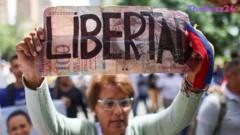
Venezuela Releases Political Prisoners Amid Renewed International Pressure
Venezuelan authorities have released a significant number of political prisoners, according to human rights organizations monitoring the situation. The releases, which occurred early Saturday morning, included individuals such as Wilder Vasquez, who had been serving a five-year sentence since 2018, and Miguel Castillo Cedeño, who had been detained since 2019. Frank Cabañas, a long-term detainee held for nine years, was also among those granted freedom.
The move follows high-level diplomatic discussions between Venezuelan interim President Delcy Rodriguez and U.S. President Donald Trump at the United Nations General Assembly. While the Venezuelan government has remained silent regarding the specific motivations behind these releases, the timing has fueled speculation that the action is a strategic gesture aimed at aligning with international expectations. The prisoner release program, initially framed as a reconciliation effort, had previously stalled, leading to widespread criticism from advocacy groups who argued that many political detainees remained behind bars.
Despite the releases, the political climate in Venezuela remains volatile. Opposition figures continue to demand transparent, free elections following the disputed 2024 results that saw Nicolás Maduro declared the winner. While the interim administration has publicly committed to holding future elections, it has yet to provide a concrete timeline. The international community, particularly the U.S., continues to navigate a complex path in Venezuela, balancing the desire for democratic stability with the ongoing challenges of a fractured political landscape.
Key Takeaways
- Venezuelan authorities released several high-profile political prisoners following recent diplomatic meetings in New York.
- The releases come amid mounting pressure from opposition groups and the international community for the government to commit to a clear election timeline.
- The interim government, led by Delcy Rodriguez, continues to face scrutiny over its commitment to democratic reforms and the handling of political dissent.
Editor’s Analysis & Impact
The recent release of political prisoners in Venezuela serves as a calculated diplomatic maneuver rather than a fundamental shift in governance. By utilizing these releases as a bargaining chip, the interim administration is attempting to secure international legitimacy and maintain favor with the U.S. administration. However, the lack of a definitive election schedule suggests that the current leadership is prioritizing short-term stability over a transition to democratic normalcy. For investors and international observers, this indicates a period of continued uncertainty. The broader implication is that while the regime is willing to make concessions to ease external pressure, the core power structures remain resistant to genuine electoral competition, likely leading to continued friction between the state and opposition forces in the coming months.
Frequently Asked Questions
Q: Why were these political prisoners released?
A: While the government has not issued an official statement, the releases are widely viewed as a diplomatic gesture following meetings between interim President Delcy Rodriguez and U.S. officials to address international concerns.
Q: Have the demands for new elections in Venezuela been met?
A: Not yet. While the interim government has reiterated that elections will take place, it has failed to provide a specific date or framework, leaving opposition leaders and international observers skeptical.
AI Disclosure: This article is based on verified data and official reports. Our Team and AI have cross-referenced every financial detail with primary sources to ensure total accuracy.
More from this Category