Wall Street Tugs Between Blockbuster Earnings and Chip Sector Slump as Global M&A Surges
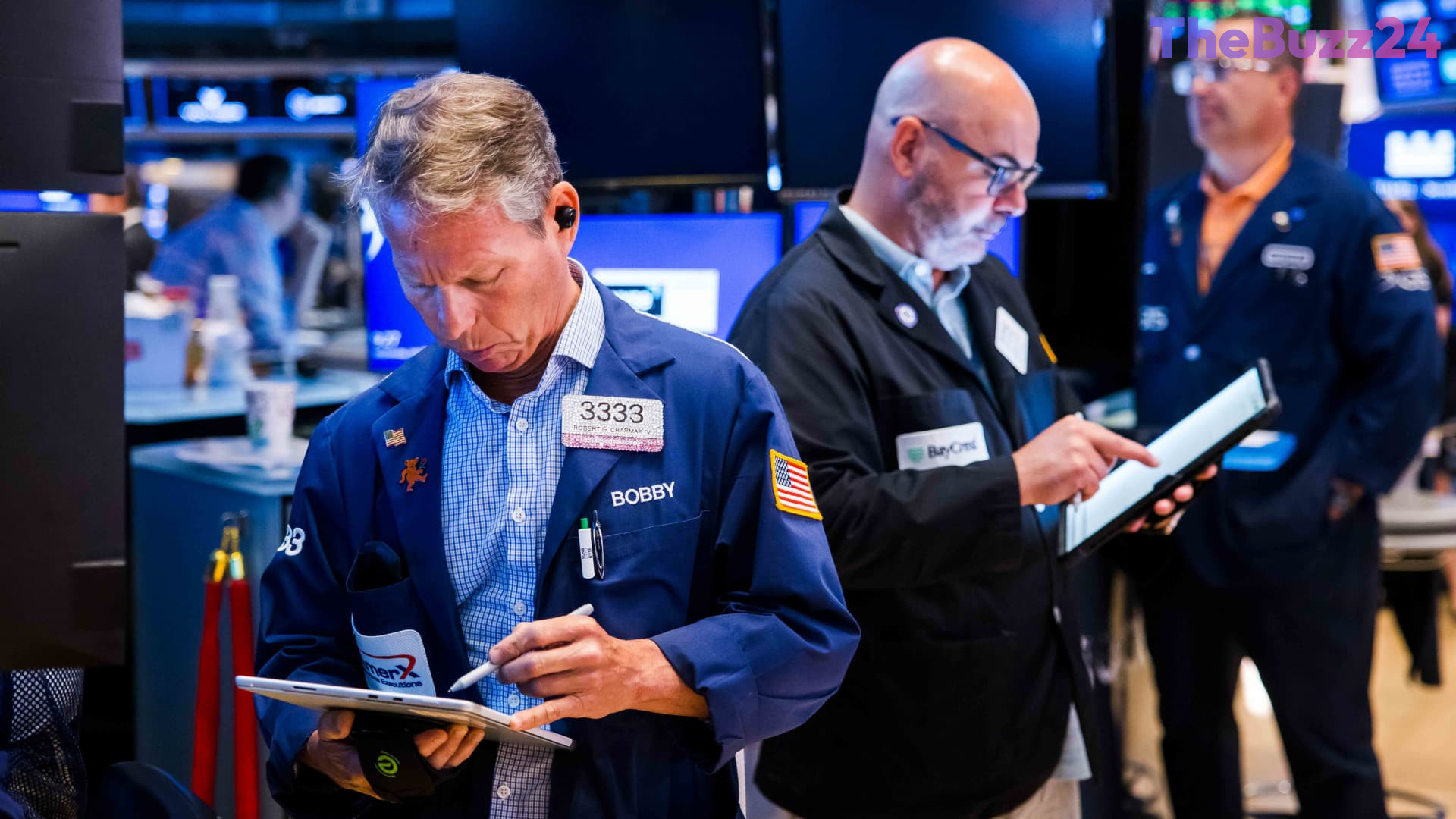
Wall Street experienced a polarized trading session as a wave of stellar corporate earnings clashed with a persistent sell-off across the semiconductor sector. While the Dow Jones Industrial Average pushed higher, buoyed by strong healthcare sector performance, the tech-heavy Nasdaq Composite struggled under the weight of declining chipmakers. Investors weighed robust macroeconomic indicators against rising capital expenditure forecasts in the tech supply chain, leading to a highly fragmented market landscape.
The corporate earnings season kicked off with remarkable momentum, with the vast majority of early-reporting S&P 500 companies outpacing expectations. Leading the charge was UnitedHealth, which surged after posting better-than-expected second-quarter results and upwardly revising its full-year guidance. This corporate resilience was mirrored in fresh economic data: weekly jobless claims fell unexpectedly to 208,000, and retail sales held steady. Furthermore, the Philadelphia Federal Reserve’s manufacturing index soared to a multi-year high of 41.4, signaling robust underlying economic health despite ongoing pricing pressures.
Conversely, the semiconductor industry faced heavy headwinds following Taiwan Semiconductor Manufacturing Company’s (TSMC) decision to raise its annual capital expenditure forecast to between $60 billion and $64 billion. While the hike reflects strong long-term demand, it sparked immediate concerns over rising infrastructure costs, dragging TSMC shares down and triggering a broader sell-off. Industry giants like Arm Holdings, Micron Technology, Advanced Micro Devices, and Broadcom all posted notable losses. The anxiety extended to Nvidia, where analysts highlighted potential business model contradictions linked to escalating computing costs, even as the company unveiled its new Cosmos 3 Edge AI model for physical robotics.
Beyond the tech and economic data, a flurry of multi-billion-dollar dealmaking captured investor attention. Pharmaceutical giant Eli Lilly confirmed a $2.8 billion acquisition of clinical-stage biotech firm AtaiBeckley, securing a promising pipeline of psychedelic-inspired treatments for treatment-resistant depression. In Europe, Swiss engineering group ABB announced its largest-ever acquisition, purchasing British industrial flow control manufacturer Rotork for $5.6 billion. Meanwhile, Uber launched a major takeover bid for German food delivery firm Delivery Hero, and tech giants Alibaba and Baidu saw their shares rise following confirmed partnerships to integrate their AI models into Apple services for the Chinese market.
Key Takeaways
- Strong corporate earnings, led by UnitedHealth's major beat, and positive economic data show a resilient U.S. economy.
- A massive sell-off hit global semiconductor stocks after TSMC raised its capital expenditure forecast, raising concerns over rising infrastructure costs.
- A wave of high-profile M&A activity swept global markets, highlighted by Eli Lilly's $2.8 billion biotech acquisition and ABB's $5.6 billion deal.
Editor’s Analysis & Impact
The current market dynamic highlights a stark divergence between the broader economy and the highly concentrated artificial intelligence trade. While traditional sectors like healthcare and manufacturing show robust health—supported by strong consumer spending and low unemployment—the semiconductor sector is experiencing a reality check. TSMC’s increased capital expenditure guidance, while fundamentally bullish for long-term AI infrastructure, has triggered short-term anxieties regarding the sheer cost of scaling AI technologies. Nvidia’s rising computing costs further underscore these structural challenges. However, the massive wave of global M&A activity, particularly in biotech and industrial engineering, suggests that corporate balance sheets remain highly liquid and confident. Moving forward, investors should expect continued volatility in tech as the market recalibrates AI monetization timelines, while value and cyclical sectors may find renewed support from solid economic fundamentals.
Frequently Asked Questions
Q: Why did semiconductor stocks fall despite TSMC's strong earnings?
A: Although TSMC reported strong earnings, it raised its capital expenditure forecast significantly. This signaled to investors that the cost of building and maintaining AI infrastructure is rising rapidly, sparking concerns over profit margins across the chip supply chain.
Q: What major acquisition did Eli Lilly announce?
A: Eli Lilly announced a $2.8 billion acquisition of AtaiBeckley, a clinical-stage biotech company specializing in psychedelic-inspired treatments for severe mental illnesses, notably treatment-resistant depression.
Q: How did the latest U.S. economic data perform?
A: U.S. economic data came in strong, with weekly jobless claims dropping to 208,000 (lower than expected), retail sales rising by 0.2%, and the Philadelphia Fed manufacturing index surging to a multi-year high of 41.4.
AI Disclosure: This article is based on verified data and official reports. Our Team and AI have cross-referenced every financial detail with primary sources to ensure total accuracy.
More from this Category