Webb Telescope Pierces Cosmic Dust to Reveal Secrets of the Cigar Galaxy
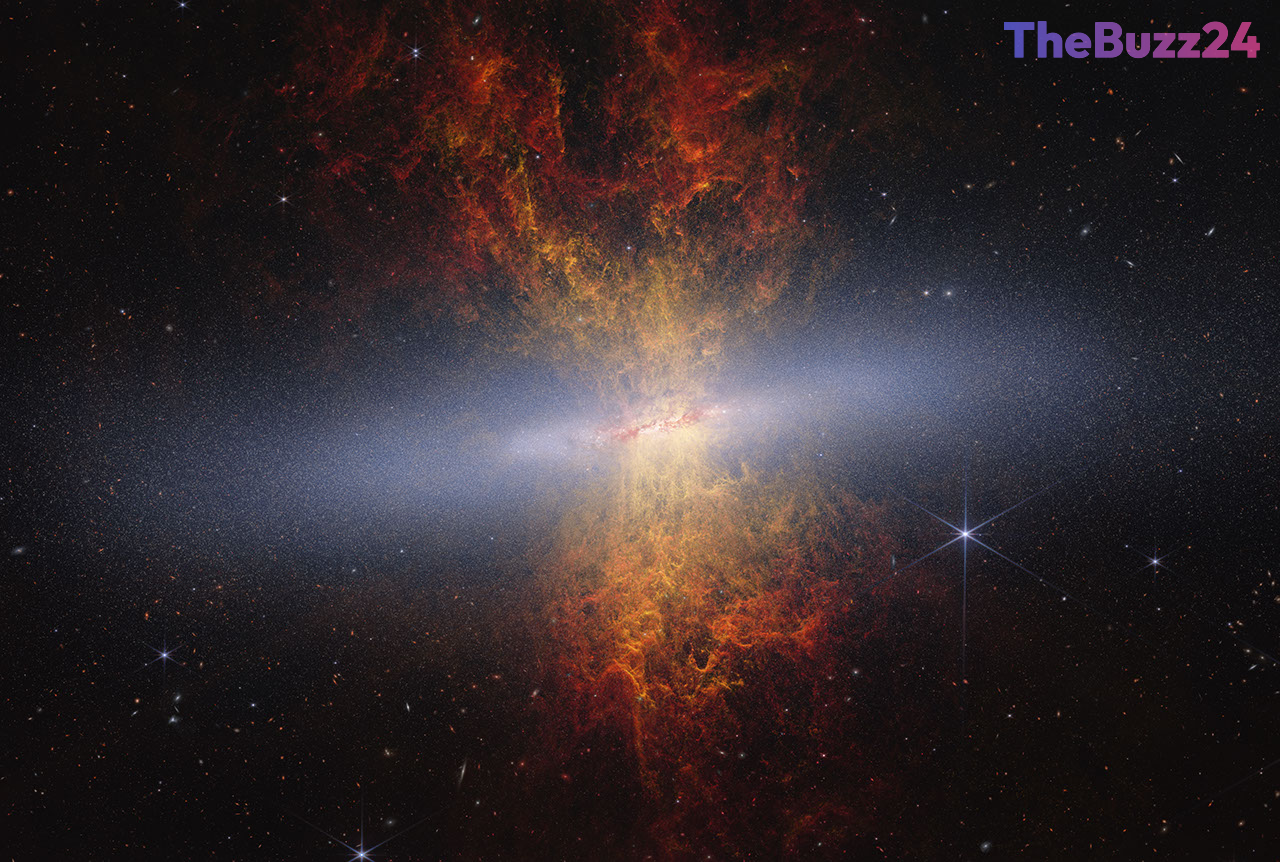
The James Webb Space Telescope has provided an unprecedented look into the heart of Messier 82, commonly known as the Cigar galaxy. Located 12 million light-years away, this galaxy is currently undergoing a period of intense star formation, a phenomenon often triggered by galactic mergers. By utilizing the telescope’s advanced Near-Infrared Camera (NIRCam), researchers were able to peer through the dense clouds of dust that have historically obscured the galaxy’s core from previous observatories.
This extensive 65-hour observation survey has successfully resolved approximately 16.5 million individual stars, providing astronomers with a detailed ‘fossil record’ of the galaxy’s evolutionary history. The high-resolution data reveals a complex, distended disk structure and asymmetrical features that suggest a turbulent past. These findings are critical for understanding how starburst galaxies function and how they drive massive outflows of material into the surrounding interstellar medium.
Beyond the stars themselves, the imagery captures the intricate dynamics of the galaxy’s bipolar plumes. These outflows, which extend above and below the galactic disk, consist of ionized gas and polycyclic aromatic hydrocarbons. By analyzing these structures, scientists hope to determine how star formation rates—which are currently ten times faster in M82 than in the Milky Way—influence the long-term stability and eventual transformation of such galaxies.
This research represents a significant leap forward in galactic archaeology. By synthesizing data from the James Webb Space Telescope with existing observations from the Hubble Space Telescope, the research team is building a more comprehensive model of the Cigar galaxy. This multi-wavelength approach allows for a deeper investigation into the physical processes that govern star birth and death, offering a clearer picture of the life cycles of galaxies throughout the universe.
Key Takeaways
- The James Webb Space Telescope used infrared technology to see through dense dust in the Cigar galaxy, revealing 16.5 million individual stars.
- Messier 82 is experiencing a 'starburst' phase, creating stars at ten times the rate of the Milky Way, which is likely the result of a past galaxy merger.
- The data provides a detailed record of the galaxy's evolution, helping scientists understand how star formation drives the ejection of material into space.
Editor’s Analysis & Impact
The successful imaging of Messier 82 marks a pivotal moment in observational astrophysics. By effectively ‘stripping away’ the dust that has long hindered our view of starburst galaxies, the James Webb Space Telescope is enabling a new era of galactic archaeology. The ability to resolve individual stars within such a chaotic environment provides a template for understanding galaxy formation that was previously impossible. Looking ahead, this data will likely refine current models of galaxy evolution, particularly regarding how mergers trigger starbursts and how these events regulate the interstellar medium. As researchers continue to combine these infrared datasets with legacy visible-light observations, we can expect a more nuanced understanding of the ‘fossil records’ contained within nearby galaxies, which will ultimately inform our broader theories on the history of the universe.
Frequently Asked Questions
Q: Why is the Cigar galaxy referred to as a 'starburst' galaxy?
A: It is called a starburst galaxy because it is experiencing an exceptionally high rate of star formation compared to typical galaxies, likely due to a recent interaction or merger with another galaxy.
Q: How does the James Webb Space Telescope see through dust that blocked Hubble?
A: Webb operates primarily in the infrared spectrum, which has longer wavelengths than visible light. These longer wavelengths can pass through dust particles that would otherwise scatter or block visible light, allowing the telescope to see the stars hidden behind the dust.
AI Disclosure: This article is based on verified data and official reports. Our Team and AI have cross-referenced every financial detail with primary sources to ensure total accuracy.
More from this Category