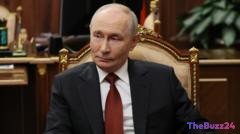
Western Officials Assess Putin Aims to Avoid Direct NATO Clash Despite Escalating Hybrid Warfare
Western intelligence officials have assessed that Russian President Vladimir Putin is actively seeking to avoid a direct military confrontation with NATO, despite increasingly sharp rhetoric directed at the United Kingdom and allied nations. Moscow’s recent threats, including warnings of potential strikes on Western defense manufacturing hubs and military assets aiding Ukraine, are viewed by security analysts as a familiar psychological pressure tactic rather than an imminent precursor to open war.
While direct conflict remains off the table for now, officials warn that Moscow has intensified its campaign of hybrid warfare across Europe. These non-conventional operations include cyberattacks, acts of sabotage, and provocative airspace intrusions, such as suspicious drone activities reported near critical logistics nodes like Germany’s Leipzig airport. Western defense strategists caution that while these measures are calibrated to stay below the threshold of invoking NATO’s collective defense clause, they carry an elevated risk of dangerous miscalculation.
The heightened posturing from the Kremlin also masks mounting domestic and operational challenges within Russia. Russian forces in Ukraine continue to achieve only slow, incremental territorial gains in the Donbas region while suffering heavy personnel losses. Estimates indicate that Moscow is currently losing approximately 6,000 more troops per month than it can successfully recruit, compounding logistical strains caused by Ukrainian long-range strikes on domestic energy infrastructure and fuel depots.
Despite these operational deficits, Western officials emphasize that the Kremlin has not abandoned its maximalist geopolitical goals. NATO members remain committed to maintaining long-term military aid to Ukraine, urging vigilance across allied territories against gray-zone sabotage while carefully calibrating deterrent measures to prevent broader escalation.
Key Takeaways
- Western officials assess that Russia wants to avoid a direct military clash with NATO despite aggressive rhetoric.
- Moscow is increasingly relying on hybrid warfare, including cyberattacks and sabotage, raising the risk of accidental escalation.
- Russian forces face heavy attrition, losing an estimated 6,000 more soldiers per month than current recruitment numbers can replace.
Editor’s Analysis & Impact
The assessment that Russia aims to avoid a direct confrontation with NATO underscores the effectiveness of Western deterrence, yet it exposes a growing vulnerability in the realm of gray-zone warfare. By relying on deniable sabotage, drone incursions, and cyber operations, Moscow seeks to weaken Western political cohesion without triggering Article 5. However, this asymmetric approach significantly narrows the margin for error. A single misattributed strike on critical allied infrastructure could rapidly trigger an unintended military escalation. Furthermore, Russia’s unsustainable casualty-to-recruitment deficit and domestic energy disruptions will force the Kremlin to either escalate asymmetric operations further or reconsider its long-term operational timeline in Ukraine.
Frequently Asked Questions
Q: Is Russia planning a direct military attack on NATO territory?
A: According to Western intelligence assessments, Russia currently seeks to avoid direct military conflict with NATO, viewing direct engagement as too costly despite its aggressive public warnings.
Q: What is hybrid warfare in the context of the Russia-NATO conflict?
A: Hybrid warfare involves non-traditional tactics below the threshold of open war, including cyberattacks, sabotage of logistics hubs, covert operations, and suspicious drone activity aimed at disrupting Western support for Ukraine.
Q: What internal challenges is the Russian military currently facing?
A: Russia is experiencing significant personnel attrition, losing roughly 6,000 more soldiers monthly than it can recruit, along with logistical strains caused by domestic fuel shortages and Ukrainian strikes on critical infrastructure.
AI Disclosure: This article is based on verified data and official reports. Our Team and AI have cross-referenced every financial detail with primary sources to ensure total accuracy.
More from this Category