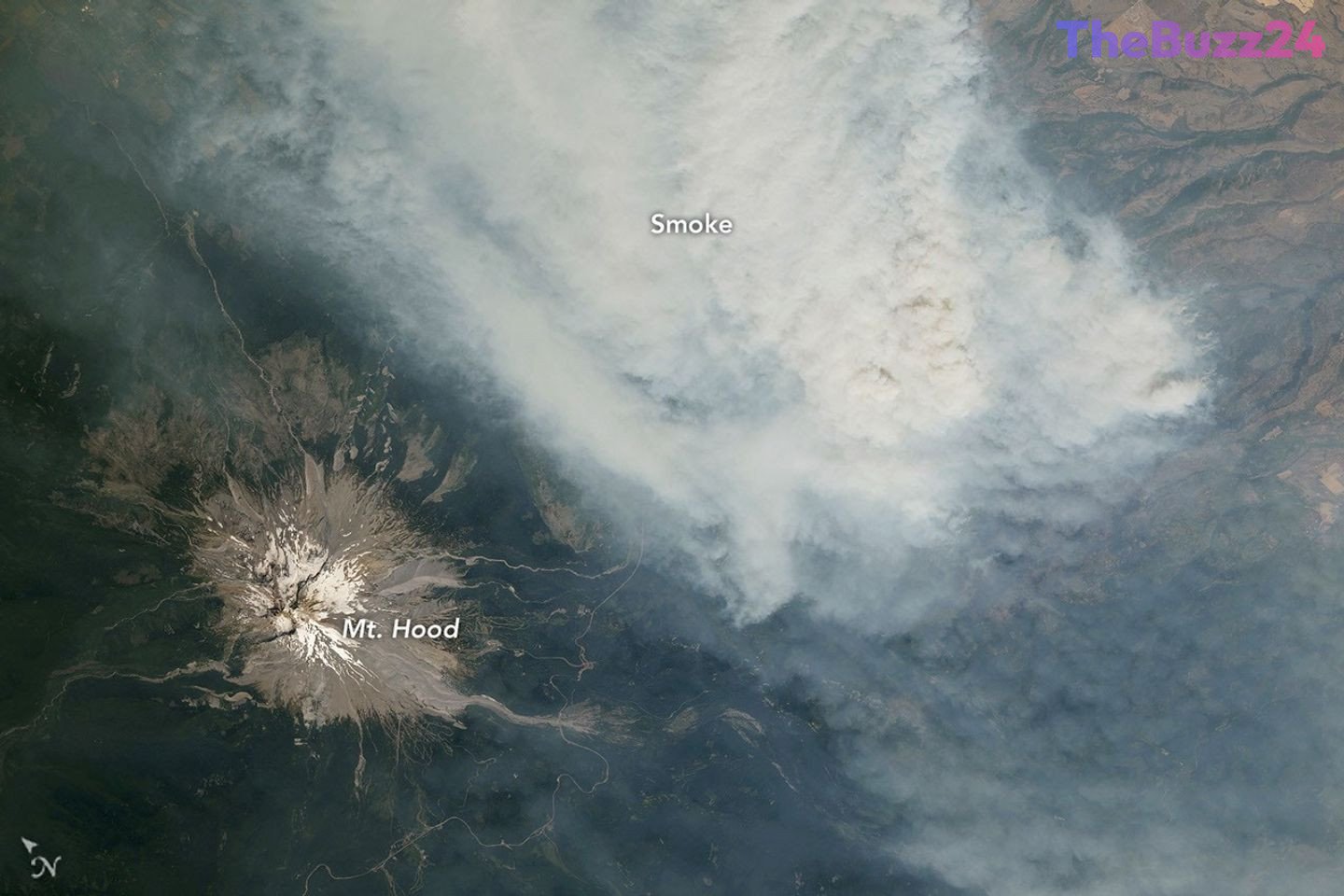
Wildfires Shroud Pacific Northwest’s Iconic Volcanic Peaks in Dense Smoke
A dramatic intersection of fire and ice has unfolded across the Pacific Northwest, as thick plumes of wildfire smoke blanket the glaciated peaks of the Cascade Range. Recent observations from late July and early August 2026 reveal a stark contrast between the region’s snow-capped volcanic giants and the massive blazes burning through surrounding forests. The active fire season, fueled by persistent hot and dry conditions, has triggered widespread air quality alerts and forced emergency evacuations in multiple communities.
In Oregon, Mount Hood—the state’s tallest peak at 11,249 feet—has been heavily impacted by the nearby Grasshopper fire. Ignited by a lightning strike on July 23, the blaze rapidly expanded through the Mount Hood National Forest, driven by scorching temperatures and parched vegetation. By mid-August, the fire had consumed nearly 84,000 acres, breaching national forest boundaries and prompting urgent “go now” evacuation orders for residents in Wasco County, while neighboring towns like Dufur remained on high alert.
Approximately 100 miles to the north, Washington’s Mount Rainier has similarly been enveloped in a dense haze. While no immediate large-scale fires were initially burning adjacent to the 14,411-foot peak, easterly winds driven by an offshore high-pressure system carried heavy smoke from active blazes in central and eastern Washington. This influx of fine particulate matter pushed air quality within Mount Rainier National Park to unhealthy levels. Shortly thereafter, a localized blaze named the Grand Park 2 fire emerged within the park’s boundaries, burning over 200 acres. Experts warn that El Niño-influenced weather patterns will likely sustain above-normal fire risks across the Northwest, keeping emergency responders on high alert.
Key Takeaways
- The Grasshopper fire, sparked by lightning, has scorched nearly 84,000 acres near Oregon's Mount Hood, forcing immediate evacuations in Wasco County.
- Winds from an offshore high-pressure system have carried heavy wildfire smoke to Washington's Mount Rainier, degrading air quality to unhealthy levels.
- An El Niño-influenced weather pattern of warm, dry conditions is expected to prolong high wildfire risks across the Pacific Northwest.
Editor’s Analysis & Impact
The intensifying wildfire activity in the Pacific Northwest underscores the growing vulnerability of high-altitude ecosystems to climate-induced weather extremes. The combination of El Niño-driven dry spells and lightning-induced ignitions is creating a volatile environment where fires spread faster and burn longer. Beyond the immediate ecological damage, these events carry severe economic consequences. The degradation of air quality and active fire threats near iconic landmarks like Mount Hood and Mount Rainier heavily disrupt regional tourism, outdoor recreation, and local hospitality sectors during their peak summer seasons. Furthermore, the persistent smoke poses a long-term public health challenge, straining local healthcare systems with respiratory illnesses. Moving forward, forest management and municipal planning must adapt to a reality where “above-normal” fire seasons become the baseline, requiring increased investment in early detection, fuel reduction, and community resilience infrastructure.
Frequently Asked Questions
Q: What caused the massive Grasshopper fire near Mount Hood?
A: The Grasshopper fire was ignited by a lightning strike on July 23, 2026, during a series of thunderstorms, and quickly spread due to hot, dry conditions.
Q: How is the smoke affecting Mount Rainier if there are no major fires nearby?
A: High-pressure weather systems offshore have created winds that carry smoke from active wildfires in central and eastern Washington directly toward Mount Rainier, significantly lowering air quality.
Q: What is driving the high wildfire potential in the Pacific Northwest this season?
A: A combination of warm, dry weather conditions influenced by El Niño, along with dry, cured forest fuels, has created prime conditions for large, persistent wildfires.
AI Disclosure: This article is based on verified data and official reports. Our Team and AI have cross-referenced every financial detail with primary sources to ensure total accuracy.
More from this Category