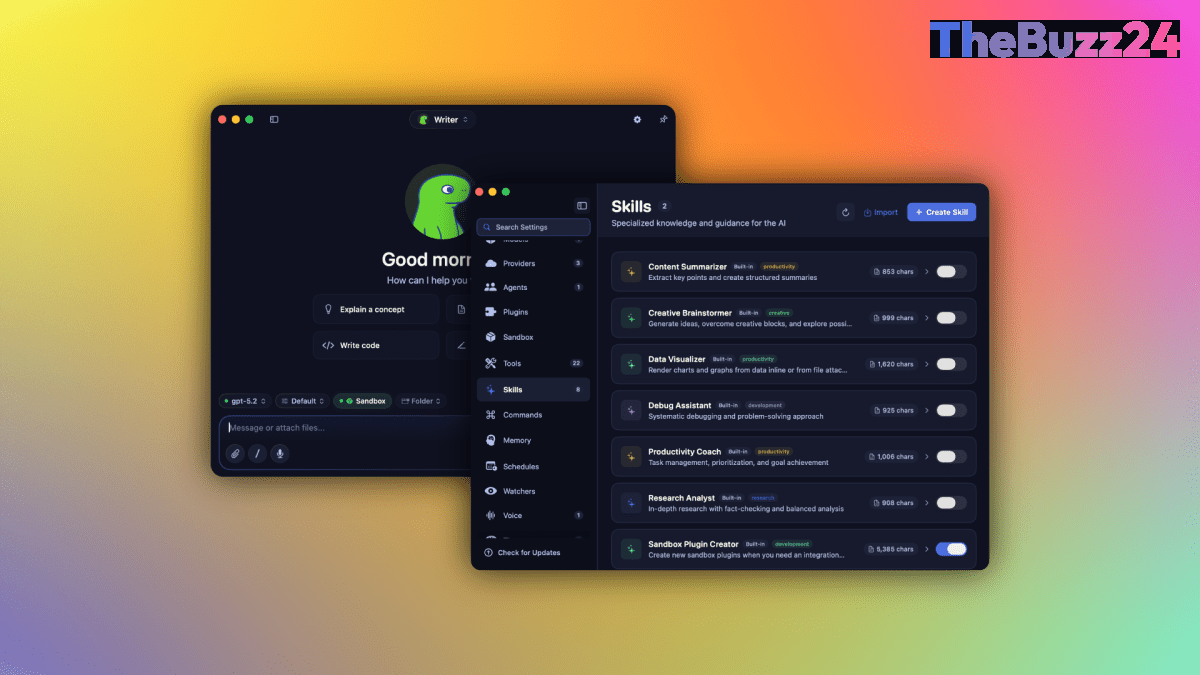
Osaurus Brings Secure, Localized AI Power to Apple Ecosystem
The rapid evolution of artificial intelligence has sparked a demand for tools that prioritize user privacy and local control. Osaurus, an open-source server designed specifically for Apple hardware, is addressing this need by allowing users to run large language models (LLMs) directly on their own machines. By keeping data processing on-device, the platform eliminates the privacy risks associated with sending sensitive information to external cloud servers, while still offering the flexibility to connect to major providers like OpenAI and Anthropic when necessary.
Founded by former Tesla and Netflix engineer Terence Pae and co-founder Sam Yoo, Osaurus emerged from the realization that users were deterred by the recurring costs and privacy trade-offs of token-based AI services. The software functions as a versatile ‘harness,’ enabling users to manage model memory, local files, and system tools within a secure, hardware-isolated virtual sandbox. This architecture ensures that even as the AI interacts with system applications like Mail, Calendar, and the filesystem, the user’s core data remains protected from unauthorized access.
While the platform is designed for accessibility, it remains a high-performance tool that currently requires significant hardware resources, such as 64GB to 128GB of RAM, to run advanced models like DeepSeek v4. Despite these hardware demands, the project has seen rapid adoption, surpassing 112,000 downloads in its first year. The development team is now looking toward the future, with plans to expand into privacy-sensitive sectors like legal and healthcare. By advocating for on-premise AI deployments, Osaurus aims to demonstrate that local Mac-based systems can rival the capabilities of massive, energy-intensive data centers while providing a more sustainable and secure alternative for the modern user.
Key Takeaways
- Osaurus provides a secure, open-source platform for running LLMs locally on Apple hardware, ensuring user data remains private.
- The software features a user-friendly interface and a virtual sandbox to protect system integrity while allowing AI to interact with local files and applications.
- With over 112,000 downloads, the project is expanding its focus toward enterprise applications in sectors like healthcare and law that require strict data sovereignty.
Editor’s Analysis & Impact
The emergence of Osaurus signals a significant shift in the AI landscape: the transition from centralized cloud-dependent models to decentralized, on-device intelligence. As privacy regulations tighten and the cost of cloud-based AI tokens remains a barrier for many, the ‘local-first’ approach offers a compelling value proposition for both power users and enterprises. The industry impact is twofold: it challenges the dominance of massive, energy-hungry data centers by proving that high-performance tasks can be handled locally, and it forces a rethink of how AI security is architected. Looking ahead, as hardware efficiency improves and ‘intelligence per wattage’ increases, we can expect local LLMs to become the standard for professional workflows, effectively turning personal computers into private, autonomous AI hubs.
Frequently Asked Questions
Q: What hardware is required to run Osaurus effectively?
A: Osaurus is resource-intensive; it typically requires at least 64GB of RAM, with 128GB recommended for running larger, more complex models like DeepSeek v4.
Q: Does Osaurus only work with locally hosted models?
A: No, while its primary strength is local execution, Osaurus acts as a flexible harness that can also interface with major cloud providers like OpenAI, Anthropic, and Gemini.
AI Disclosure: This article is based on verified data and official reports. Our Team and AI have cross-referenced every financial detail with primary sources to ensure total accuracy.
More from this Category