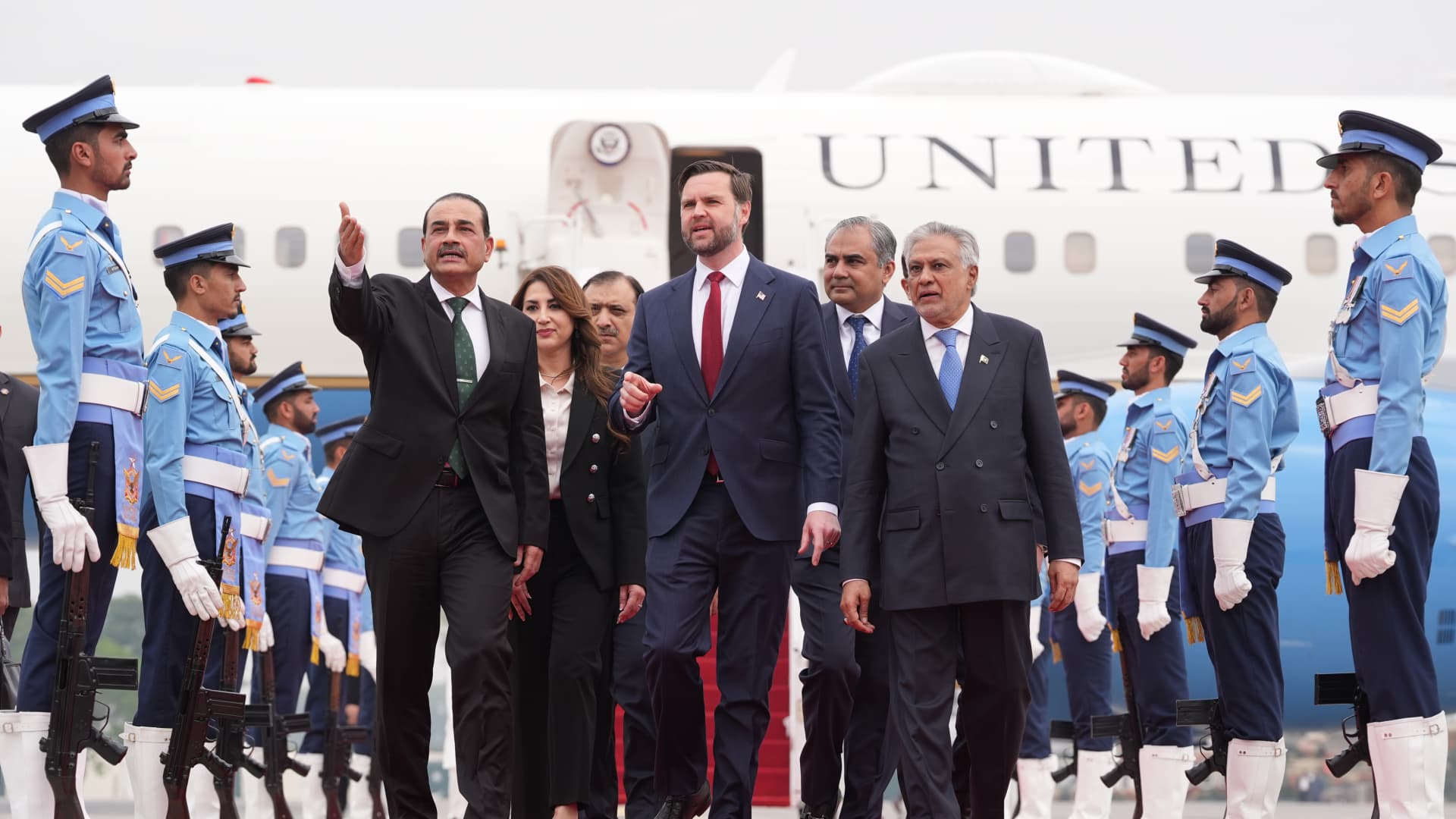
High-Stakes Diplomacy: U.S. and Iran Meet in Islamabad to Navigate Regional Tensions
Diplomatic delegations from the United States and Iran have convened in Islamabad, Pakistan, for a critical series of negotiations aimed at solidifying a fragile two-week ceasefire. The talks seek to address a six-week period of intense regional instability that has drawn significant international concern. The U.S. delegation, which includes Vice President JD Vance, Special Envoy Steve Witkoff, and Jared Kushner, is engaging directly with Iranian counterparts, including Foreign Minister Abbas Araghchi and parliamentary speaker Mohammad Bagher Ghalibaf, to find a path toward long-term de-escalation.
Despite the high-level nature of the summit, the path to a lasting agreement remains fraught with obstacles. A primary point of friction is the ongoing disruption of maritime traffic through the Strait of Hormuz, a vital global energy corridor. Iranian officials have explicitly tied the success of these negotiations to specific concessions, most notably the release of frozen Iranian financial assets and an immediate cessation of military operations in Lebanon. These demands represent a significant challenge for U.S. negotiators who are attempting to stabilize the region while maintaining their own strategic objectives.
President Donald Trump has voiced strong opposition to the current maritime blockade, specifically criticizing Iran for allegedly imposing unauthorized fees on commercial tankers passing through the Strait. While Vice President Vance has expressed a degree of cautious optimism regarding the potential for a breakthrough, he has also cautioned that the U.S. will not tolerate bad-faith maneuvers. As the international community watches the proceedings in Islamabad, the central question remains whether these discussions can foster a durable peace or if the deep-seated geopolitical divide will ultimately derail the effort.
Key Takeaways
- U.S. and Iranian officials are holding high-level talks in Islamabad to build upon a recent two-week ceasefire.
- Iran has conditioned further progress on the release of frozen assets and an end to military operations in Lebanon.
- The U.S. is demanding the removal of maritime restrictions in the Strait of Hormuz, citing concerns over illegal fees and global energy security.
Editor’s Analysis & Impact
The Islamabad summit serves as a pivotal moment for Middle Eastern stability, highlighting the precarious intersection of energy security and regional military policy. The Strait of Hormuz remains the primary pressure point; as a critical chokepoint for roughly 20% of global oil, any prolonged disruption directly threatens international market stability and energy prices. The current diplomatic impasse reflects a fundamental misalignment of priorities: the U.S. is focused on restoring maritime freedom and regional security, while Iran is leveraging its strategic position to secure economic relief and military concessions. The future outlook is highly uncertain, as the wide gap between these demands suggests that even if a temporary truce holds, a comprehensive, long-term resolution will require significant compromise from both sides. Failure to reach a framework could lead to renewed escalation, forcing global powers to re-evaluate their energy supply chain vulnerabilities.
Frequently Asked Questions
Q: Why is the Strait of Hormuz a central issue in these negotiations?
A: The Strait of Hormuz is a vital maritime chokepoint that facilitates the transport of approximately 20% of the world's crude oil. Restrictions here threaten global energy security and economic stability.
Q: What are the primary conditions set by Iran for the talks to proceed?
A: Iran has stated that substantive negotiations are contingent upon the release of its frozen assets and a halt to military operations in Lebanon.
AI Disclosure: This article is based on verified data and official reports. Our Team and AI have cross-referenced every financial detail with primary sources to ensure total accuracy.
More from this Category