Ireland Faces National Fuel Crisis as Protests Paralyze Infrastructure
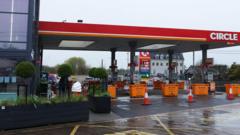
Ireland is currently navigating a severe fuel supply crisis as ongoing protests by farmers and hauliers enter their fifth day, causing widespread logistical disruption across the nation. Hundreds of petrol stations have reported empty pumps, forcing Taoiseach Micheál Martin to call an emergency cabinet meeting to address the escalating situation. Government officials are currently engaged in high-stakes negotiations with protest leaders to finalize a financial relief package aimed at de-escalating the unrest.
The protests have utilized slow-moving convoys and heavy machinery to blockade key transit routes, effectively bringing major transport networks to a standstill. Public transit in Dublin has faced significant service suspensions, and travelers heading to major airports have been warned of potential delays. The situation reached a critical point at Rosslare Europort, where blockades threatened to halt ferry operations. In a decisive move, Gardaí, backed by the Irish Defence Forces, cleared a blockade at the Whitegate Refinery in County Cork, resulting in multiple arrests and the use of non-lethal force to restore access to the facility.
Law enforcement officials have taken a firm stance against the demonstrations, labeling the obstruction of critical infrastructure as illegal. Garda Commissioner Justin Kelly has authorized an ‘exceptional event’ status, doubling the number of available officers to maintain order and protect fuel tanker drivers from intimidation. Meanwhile, the National Emergency Coordination Group has expressed grave concern regarding the availability of fuel for essential emergency services, including fire and ambulance crews.
The unrest is primarily fueled by a sharp spike in energy costs, exacerbated by geopolitical instability in the Middle East and the closure of the Strait of Hormuz, which has disrupted a significant portion of global oil trade. With diesel prices climbing past €2.17 per litre, the government is under immense pressure to find a resolution. While the Taoiseach has warned that the blockades threaten the nation’s energy security, political opposition leaders have called for more direct and urgent government engagement to resolve the standoff.
Key Takeaways
- Widespread fuel shortages have hit Ireland as protests by farmers and hauliers disrupt critical infrastructure and supply chains.
- Law enforcement and the Irish Defence Forces have intervened to clear blockades at key refineries, citing the illegality of obstructing essential services.
- The crisis is driven by a global surge in oil prices following geopolitical tensions in the Middle East, leading to record-high fuel costs for Irish consumers.
Editor’s Analysis & Impact
The situation in Ireland serves as a stark example of how global energy volatility can rapidly destabilize domestic infrastructure. By targeting critical nodes like refineries and ports, protesters have successfully leveraged the fragility of ‘just-in-time’ supply chains to force government attention. The economic impact is twofold: immediate inflationary pressure on transport and logistics, and a long-term threat to national energy security. Moving forward, the government faces a delicate balancing act; it must maintain the rule of law and protect essential services while addressing the legitimate economic grievances of a sector pushed to the brink by global market forces. Failure to reach a sustainable compromise could lead to prolonged civil unrest and further strain on the national economy, potentially setting a precedent for how other European nations handle similar energy-driven protests.
Frequently Asked Questions
Q: Why are farmers and hauliers protesting in Ireland?
A: The protests are primarily driven by the dramatic surge in fuel prices, which has significantly increased operational costs for the agricultural and transport sectors.
Q: What is the government's response to the blockades?
A: The government has declared an 'exceptional event' to increase police presence, cleared blockades at key refineries using law enforcement, and is currently negotiating a funding package with protest representatives.
AI Disclosure: This article is based on verified data and official reports. Our Team and AI have cross-referenced every financial detail with primary sources to ensure total accuracy.
More from this Category