Humanitarian Crisis Deepens in Southern Lebanon as Medical Infrastructure Comes Under Fire
The city of Nabatieh, formerly a vibrant hub in southern Lebanon, now stands largely deserted as the ongoing conflict continues to reshape the region. Since March, the escalation of hostilities has triggered a severe displacement crisis, with approximately 20% of the Lebanese population forced to abandon their homes in search of safety. As the humanitarian situation worsens, the risks to those providing essential life-saving services have reached critical levels.
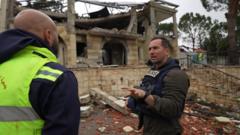
Frontline reports highlight the extreme danger currently faced by medical personnel. In a recent incident, a paramedic was killed during an airstrike on an ambulance facility, an event that has deeply impacted the local emergency response community. The situation is further complicated by conflicting claims regarding the use of medical sites. Israeli authorities have alleged that Hezbollah operatives are utilizing ambulances and health facilities for military activities, a claim that local health officials and paramedics have consistently denied, citing a lack of evidence to support such accusations.
In Bint Jbeil, a town with a long history of conflict, tensions reached a breaking point when the Israel Defense Forces claimed to have neutralized over 20 Hezbollah fighters operating from within a hospital compound. This assertion was immediately rejected by Lebanon’s health ministry, which accused the military of intentionally targeting civilian and medical infrastructure. As the rhetoric between the opposing sides intensifies, the ability of humanitarian workers to operate safely and effectively remains severely compromised, threatening the delivery of aid to those most in need.
Key Takeaways
- Roughly 20% of the Lebanese population has been displaced due to the intensifying conflict in the southern region.
- Emergency responders are operating under extreme peril, with recent strikes resulting in the death of a paramedic at an ambulance station.
- A major diplomatic and humanitarian divide exists, with Israel alleging the misuse of medical facilities by Hezbollah and Lebanese officials accusing Israel of targeting civilian infrastructure.
Editor’s Analysis & Impact
The conflict in southern Lebanon highlights a dangerous erosion of international humanitarian norms, where the protected status of medical facilities is increasingly being challenged. The dispute over whether hospitals and ambulances are being used for military purposes creates a volatile environment that complicates aid delivery and risks the total collapse of local healthcare systems. If these facilities continue to be treated as legitimate targets or tactical assets, the long-term impact on Lebanon’s medical infrastructure will be devastating, potentially leaving the region without essential services for years. Furthermore, the massive scale of displacement suggests that the socio-economic landscape of southern Lebanon is undergoing a permanent shift. The international community faces a significant challenge in verifying these conflicting claims while attempting to prevent a complete humanitarian catastrophe.
Frequently Asked Questions
Q: Why are medical facilities in southern Lebanon becoming a point of contention?
A: Medical facilities are at the center of a dispute because Israeli authorities claim they are being used by Hezbollah for military operations, while Lebanese officials and paramedics deny these claims and accuse Israel of targeting essential civilian infrastructure.
Q: What is the current scale of displacement in Lebanon due to the conflict?
A: The ongoing hostilities have forced approximately one in five people in Lebanon to abandon their homes to seek safety elsewhere.
AI Disclosure: This article is based on verified data and official reports. Our Team and AI have cross-referenced every financial detail with primary sources to ensure total accuracy.
More from this Category