Emergent Debuts Wingman: An Autonomous AI Agent for Messaging-Based Workflow Automation
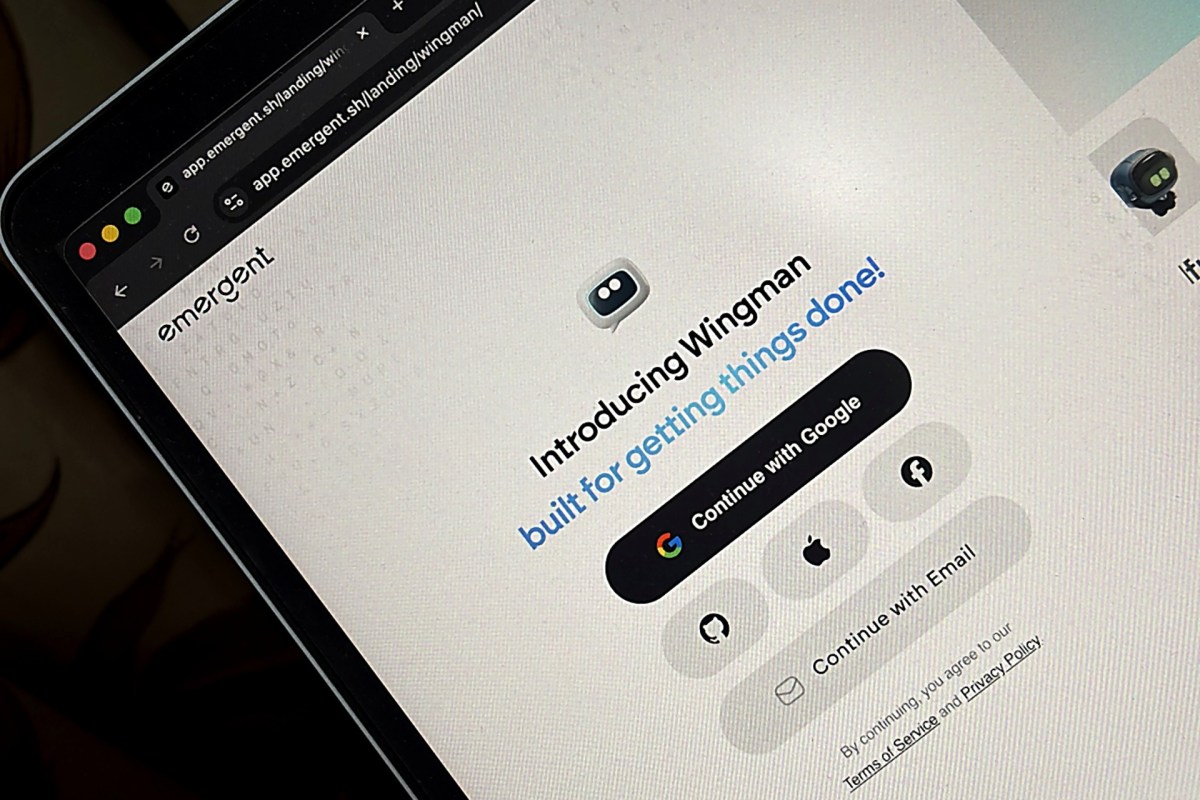
Bengaluru-based startup Emergent has officially pivoted into the autonomous AI sector with the launch of Wingman, a sophisticated digital agent engineered to streamline routine professional tasks. Transitioning from its previous focus on AI-driven coding platforms, the company is now prioritizing software execution, enabling users to manage complex operational workflows through simple natural language instructions.
The primary innovation behind Wingman is its deep integration with ubiquitous messaging platforms, including WhatsApp and Telegram. By operating directly within these familiar interfaces, the agent functions as a background assistant that coordinates with essential enterprise tools, such as email clients and digital calendars. This design philosophy seeks to transform artificial intelligence into a conversational, intuitive extension of the modern workday.
To address concerns regarding the autonomy of AI systems, Emergent has implemented a proprietary safety framework referred to as “trust boundaries.” This protocol allows the AI to manage repetitive, low-risk tasks independently while mandating human authorization for critical or sensitive business decisions. This hybrid approach aims to balance the efficiency of automation with the necessary oversight required for complex professional environments.
Despite being in the early stages of deployment, Emergent has already garnered significant industry attention. Following its founding in 2025, the startup recently closed a $70 million funding round, pushing its total valuation to $300 million. While the company acknowledges that the technology is still refining its ability to handle nuanced human judgment, it has launched a limited free trial to collect user feedback ahead of a planned subscription-based rollout.
Key Takeaways
- Emergent has introduced Wingman, an autonomous AI agent that integrates with WhatsApp and Telegram to automate professional task management.
- The system utilizes 'trust boundaries' to ensure human oversight for high-stakes decisions while automating routine background operations.
- The company recently reached a $300 million valuation following a successful $70 million funding round.
Editor’s Analysis & Impact
The launch of Wingman represents a pivotal shift in the AI industry, moving away from passive generative models toward ‘agentic’ systems capable of active task execution. By utilizing messaging apps as the primary interface, Emergent is tapping into the growing demand for conversational workspaces that reduce the friction of traditional enterprise software. This evolution challenges legacy productivity tools by lowering the barrier to entry for complex automation. However, the long-term success of this model will depend on the system’s reliability when navigating ambiguous tasks. As the market for autonomous agents becomes increasingly crowded, Emergent must prove that its safety protocols can scale effectively in high-stakes environments. The recent capital influx underscores strong investor confidence in the company’s strategic pivot toward operational AI.
Frequently Asked Questions
Q: How does Wingman interact with other software?
A: Wingman operates in the background, connecting to common workplace tools like email and calendars to execute tasks delegated by the user through chat interfaces.
Q: What are 'trust boundaries' in the context of Wingman?
A: Trust boundaries are safety protocols that require the AI to seek human confirmation before executing critical or high-stakes decisions, ensuring the user maintains control.
AI Disclosure: This article is based on verified data and official reports. Our Team and AI have cross-referenced every financial detail with primary sources to ensure total accuracy.
More from this Category