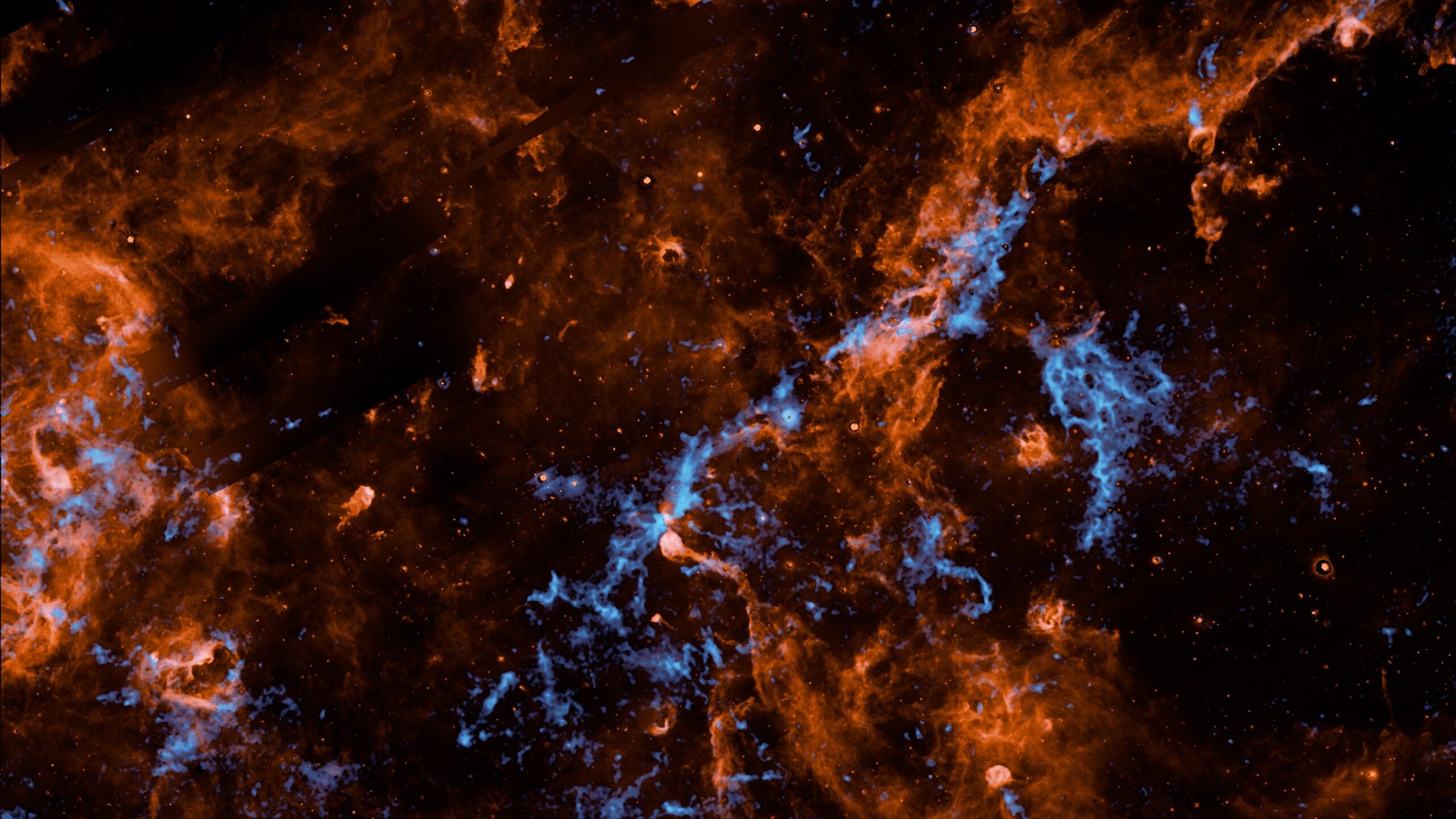
Mapping the Cosmos: SPHEREx Uncovers Vast Icy Reservoirs in Galactic Star Nurseries
The SPHEREx space observatory has reached a significant milestone in deep-space exploration by completing a comprehensive survey of interstellar ice. The mission has successfully identified massive frozen structures embedded within the molecular clouds of the Milky Way. Spanning 600 light-years, these regions act as critical laboratories for the birth of stars and planets, providing scientists with a clearer view of how the foundational elements of life are distributed across the galaxy.
Unlike previous missions that relied on localized observations, SPHEREx employs advanced all-sky infrared technology to create a detailed atlas of these cosmic glaciers. These structures consist of ice layers coating microscopic dust grains, which serve as the primary building blocks for emerging solar systems. As planetary bodies form, this trapped ice is incorporated into the developing worlds and comets, potentially delivering the water necessary to sustain oceans on future planets.
To achieve this level of precision, the observatory scans 102 distinct infrared wavelengths. This spectroscopic capability allows researchers to isolate specific chemical signatures, such as water and carbon dioxide, even within the volatile environments surrounding newborn stars. By tracking these materials, the mission is effectively mapping the chemical evolution of matter from simple cosmic dust into the complex environments required for planetary development.
Looking toward the future, the multi-year mission is set to map hundreds of millions of galaxies in three dimensions. This ambitious project aims to provide a robust framework for astrophysical research, helping the scientific community understand the chemical pathways that transform raw celestial material into habitable environments. This data is expected to be a cornerstone in the ongoing search for the origins of life throughout the universe.
Key Takeaways
- SPHEREx has mapped massive interstellar ice structures across 600 light-years of the Milky Way.
- The mission uses 102 infrared wavelengths to identify chemical signatures like water and carbon dioxide in star-forming regions.
- These icy reservoirs are essential for understanding how water and life-sustaining elements are delivered to developing planetary systems.
Editor’s Analysis & Impact
The SPHEREx mission represents a paradigm shift in how we observe the chemical composition of the universe. By moving from narrow-field observations to an all-sky infrared survey, the project provides a comprehensive ‘chemical map’ of the galaxy. This has profound implications for astrobiology and planetary science; by understanding the distribution of water and carbon-based molecules in star-forming regions, researchers can better predict the likelihood of habitable conditions in newly formed solar systems. The ability to track these materials in 3D across millions of galaxies will likely become a foundational dataset for future astrophysical research, potentially narrowing the search for life-supporting environments. As the mission progresses, the integration of this data will likely influence how we model the chemical evolution of the universe and the formation of terrestrial-like planets.
Frequently Asked Questions
Q: What is the primary goal of the SPHEREx mission?
A: The primary goal is to map the Milky Way and hundreds of millions of other galaxies in three dimensions using infrared technology to understand the distribution of water and other life-sustaining chemicals.
Q: Why is interstellar ice important for planetary formation?
A: Interstellar ice coats dust grains that eventually clump together to form planets and comets. This ice is a crucial source of water and organic molecules that may be necessary for the development of oceans and life on new planets.
AI Disclosure: This article is based on verified data and official reports. Our Team and AI have cross-referenced every financial detail with primary sources to ensure total accuracy.
More from this Category