Krabi Province: A Convergence of Ancient Geology and Modern Coastal Life
The Krabi Province, situated along the western coastline of Southern Thailand, stands as a remarkable testament to the intersection of deep geological history and contemporary tourism. The region is most famously defined by its towering limestone karst formations, which emerge dramatically from the Andaman Sea and the mainland. These striking structures are the product of millions of years of tectonic shifts and chemical weathering, where ancient marine deposits were uplifted and subsequently sculpted by tropical rainfall into the intricate, jagged silhouettes that define the local horizon.
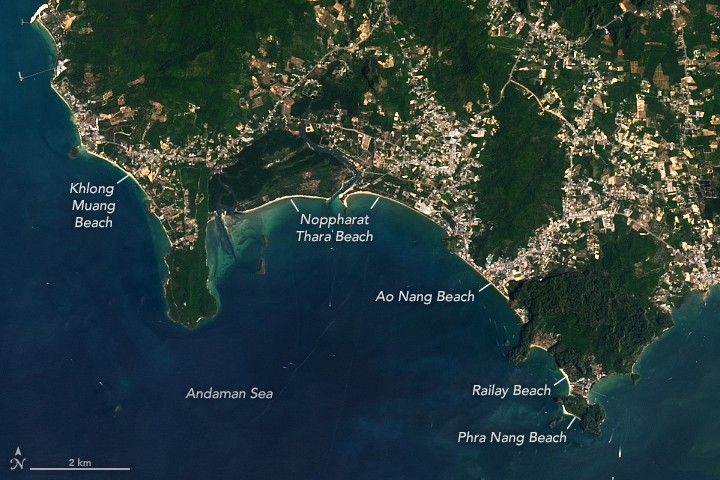
For outdoor enthusiasts, Krabi has evolved into a premier global destination. Iconic locations such as Railay and Phra Nang beaches are celebrated not only for their pristine sands but also for their world-class rock climbing opportunities on the sheer limestone cliffs. The surrounding archipelago, including islands like Ko Po Da Nai and Ko Hong, provides a rugged playground for kayakers and explorers, featuring hidden caves and steep cliff faces that showcase the area’s unique topography.
Moving inland, the landscape shifts from coastal beauty to a mix of dense forest ecosystems and human-managed terrain. The slopes of Khao Hang Nak offer expansive views of the Andaman Sea, while the river systems are lined with thriving mangrove forests. In the flatter regions, the landscape reflects the province’s economic backbone, where urban development meets agricultural production. The capital city of Krabi acts as a central hub, surrounded by structured plots dedicated to the cultivation of rubber, oil palm, and pineapples, highlighting the ongoing balance between preserving natural wonders and supporting regional economic growth.
Key Takeaways
- Krabi's iconic limestone karst towers were formed over millions of years through tectonic activity and tropical weathering.
- The region is a global hotspot for adventure tourism, particularly for rock climbing and sea kayaking.
- The local economy maintains a delicate balance between tourism and traditional agriculture, including rubber and oil palm cultivation.
Editor’s Analysis & Impact
The development of Krabi Province serves as a compelling case study for regions attempting to harmonize high-impact tourism with environmental conservation and agricultural stability. As global travel demand continues to rise, the pressure on Krabi’s unique geological sites will likely increase, necessitating stricter sustainable management practices. The integration of agricultural sectors like rubber and palm oil alongside a booming tourism industry suggests a diversified economic model that is resilient but vulnerable to climate-related shifts. Future growth in the region will depend on the ability of local authorities to protect the fragile karst ecosystems while managing the infrastructure demands of a growing population and visitor base. Investors and stakeholders should monitor how the province balances these competing interests, as it will likely set a precedent for other coastal regions in Southeast Asia.
Frequently Asked Questions
Q: What geological feature is Krabi most famous for?
A: Krabi is most famous for its dramatic limestone karst towers that rise from the mainland and the Andaman Sea.
Q: What are the primary agricultural products of the Krabi region?
A: The region's agricultural output is primarily focused on the cultivation of oil palm, rubber trees, and pineapples.
AI Disclosure: This article is based on verified data and official reports. Our Team and AI have cross-referenced every financial detail with primary sources to ensure total accuracy.
More from this Category