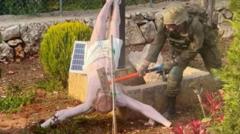
IDF Disciplines Soldiers Over Vandalism of Religious Statue in Southern Lebanon
Two Israel Defense Forces (IDF) soldiers have been sentenced to 30 days of military detention after being caught on video vandalizing a religious statue in southern Lebanon. The footage, which circulated widely, showed one soldier striking a statue of Jesus with a sledgehammer while another recorded the incident. Following an internal investigation, the military confirmed that both individuals have been removed from combat roles, citing a severe breach of military conduct and core values.
In addition to the primary offenders, six other soldiers who were present during the incident but failed to intervene or report the misconduct are facing separate disciplinary proceedings. The military has expressed formal regret for the actions, noting that the behavior does not reflect the standards of the IDF. To mitigate the damage caused, troops have worked with the local community in the village of Debel to replace the destroyed crucifix.
The incident has drawn sharp criticism from religious and political leaders, who view the act as a violation of sacred symbols and human rights. Father Fadi Flaifel, a local congregation leader in Debel, condemned the destruction, while Israeli Prime Minister Benjamin Netanyahu acknowledged the pain the act caused to believers globally. The controversy arrives during a fragile, US-brokered ceasefire between Israel and Hezbollah, adding a layer of diplomatic tension to an already volatile region.
Key Takeaways
- Two IDF soldiers were sentenced to 30 days of detention and removed from combat duties for vandalizing a religious statue in Lebanon.
- Six additional soldiers are facing disciplinary action for failing to report or stop the act of vandalism.
- The incident has sparked international condemnation and occurred during a sensitive period of ceasefire negotiations.
Editor’s Analysis & Impact
The incident highlights the ongoing challenges of maintaining discipline and cultural sensitivity within military forces operating in foreign territories, particularly in regions defined by deep religious and sectarian divisions. Beyond the immediate disciplinary actions, the event serves as a reminder of how individual soldier conduct can rapidly escalate into a diplomatic liability, potentially undermining fragile ceasefire agreements. The swift response by the IDF, including the replacement of the statue and the public announcement of punishments, suggests a strategic effort to contain the fallout and prevent the incident from being leveraged to incite further regional instability. Moving forward, the military will likely face increased scrutiny regarding the conduct of its personnel in southern Lebanon, as any further lapses could jeopardize the credibility of ongoing peace efforts and strain international relations with local Lebanese communities.
Frequently Asked Questions
Q: What punishment did the soldiers receive for the vandalism?
A: The two soldiers directly involved were sentenced to 30 days of military detention and removed from their combat duties.
Q: How did the military address the damage to the statue?
A: The IDF coordinated with the local community in the village of Debel to replace the destroyed crucifix.
AI Disclosure: This article is based on verified data and official reports. Our Team and AI have cross-referenced every financial detail with primary sources to ensure total accuracy.
More from this Category