Lunar Impact: Why Scientists Are Welcoming a SpaceX Rocket Crash
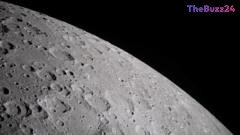
A spent upper stage of a SpaceX Falcon 9 rocket has collided with the Moon, creating a rare, unplanned opportunity for planetary scientists to study lunar geology. The rocket segment, which had been drifting in a chaotic orbit since its launch in early 2021, struck the lunar surface near the Einstein crater at a velocity of approximately 5,400 mph. While the impact was difficult to observe due to daylight conditions and the faint nature of the resulting flash, the event has been classified by researchers as a significant scientific gift.
Because the mass, speed, and trajectory of the rocket stage were well-documented, the collision effectively functions as a controlled experiment. Planetary geologists are eager to analyze the resulting crater to refine models regarding how impacts displace lunar regolith and generate seismic tremors. By comparing high-resolution imagery taken by the Lunar Reconnaissance Orbiter before and after the event, experts hope to gain a clearer understanding of the Moon’s subsurface composition and the mechanics of crater formation.
Beyond the immediate geological data, this event highlights the growing issue of space debris in the Earth-Moon system. While human-made objects have struck the Moon dozens of times since 1959—ranging from deliberate scientific probes to accidental debris—this incident provides practical insights for future lunar exploration. The data gathered will assist engineers in designing more resilient lunar bases and landers, specifically by helping them predict how debris behaves during high-velocity impacts and how ground vibrations might affect future infrastructure.
Key Takeaways
- A spent SpaceX Falcon 9 rocket stage struck the Moon, providing scientists with a unique, high-velocity impact experiment.
- Researchers will use before-and-after imagery from the Lunar Reconnaissance Orbiter to study crater formation and lunar subsurface geology.
- The data collected will help engineers better understand impact mechanics, which is essential for the safety of future lunar missions and base construction.
Editor’s Analysis & Impact
The collision of the Falcon 9 booster serves as a poignant reminder of the increasing density of human-made objects in cislunar space. While the scientific community has embraced this specific crash as a ‘gift’ due to the wealth of data it provides, it underscores a broader, more complex challenge: the management of space debris. As private and public entities accelerate lunar exploration, the accumulation of spent rocket stages and defunct hardware poses long-term risks to orbital safety. However, the industry is shifting toward a paradigm where these ‘accidents’ are leveraged for research. The future outlook suggests that as we move toward permanent lunar habitation, our ability to track, predict, and analyze these impacts will become a critical component of space traffic management and planetary engineering, turning potential hazards into valuable sources of geological intelligence.
Frequently Asked Questions
Q: Why is this rocket crash considered a 'scientific gift'?
A: Because scientists know the exact size, speed, and impact point of the rocket, they can use the resulting crater to test models of how impacts affect the Moon's surface and interior, providing data that would be too expensive to replicate in a lab.
Q: Will this impact affect future lunar missions?
A: The impact itself is localized and will not affect the Moon's orbit or overall stability. Instead, the data gathered will help engineers design safer lunar landers and habitats by better understanding how debris and tremors behave during impacts.
AI Disclosure: This article is based on verified data and official reports. Our Team and AI have cross-referenced every financial detail with primary sources to ensure total accuracy.
More from this Category