Unraveling the Geological Wonders and Starlit Skies of Utah’s Goosenecks
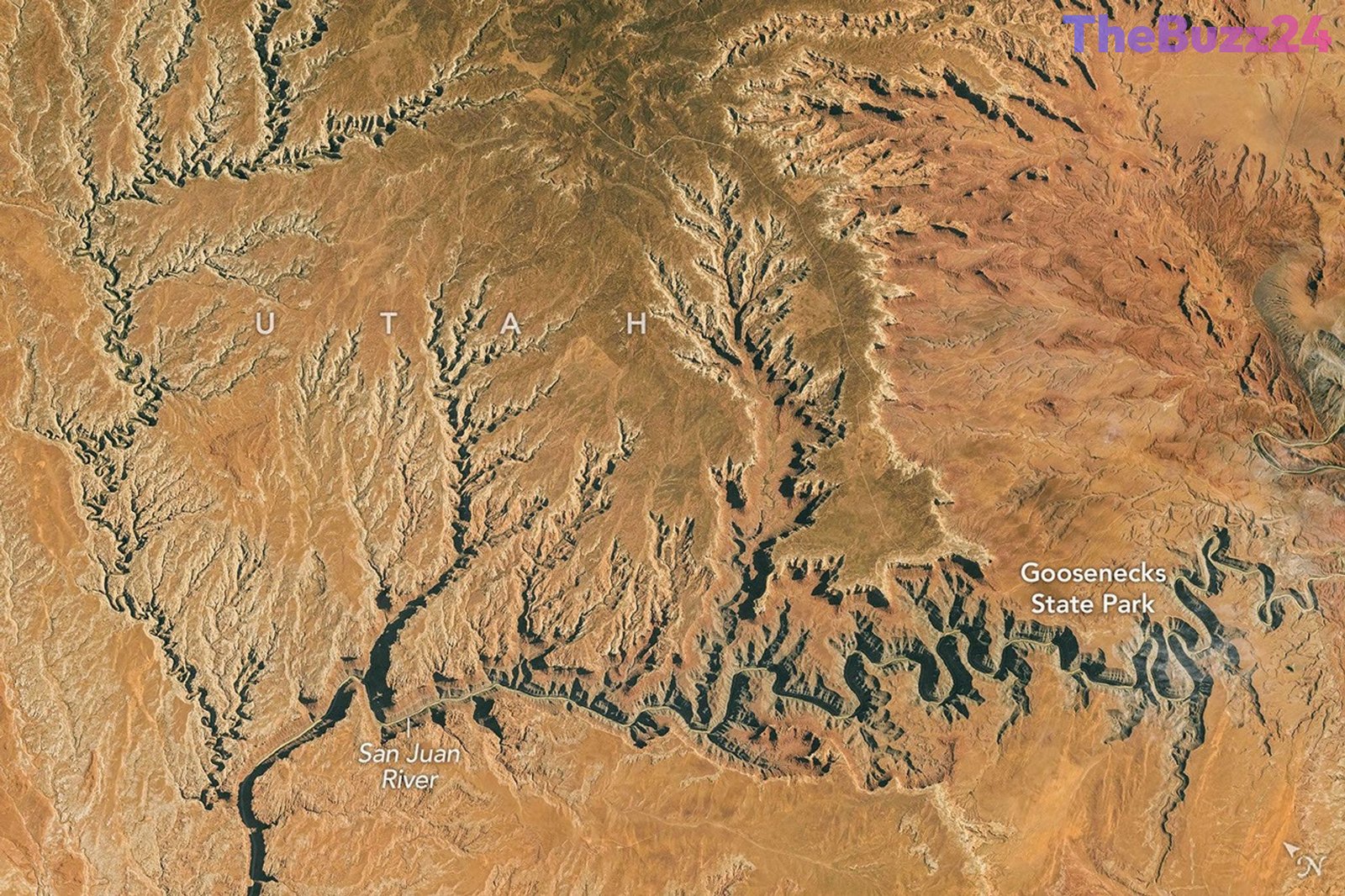
Millions of years ago, the San Juan River in what is now southern Utah shared striking similarities with the modern-day Mississippi River, flowing across a relatively flat plain in an ancient marine environment. Unencumbered by rugged topography, the waterway maintained a long, meandering path on its gentle descent. However, this landscape underwent a dramatic transformation when massive geologic forces pushed the Colorado Plateau upward.
As the plateau rose, it elevated the headwaters of the San Juan River, significantly increasing its gradient and water velocity. This accelerated flow supercharged the river’s erosive capabilities, allowing it to carve a deeply entrenched path through 300-million-year-old rock layers. Today, on its westward journey toward Lake Powell, the river cuts through a breathtaking series of dramatic, horseshoe-shaped bends known as goosenecks. In Goosenecks State Park, the water rushes through a canyon nearly 1,000 feet deep, featuring tight loops where the river travels 5.5 miles between two points separated by a mere 1.3 miles.
Beyond its stunning daytime geological formations, the remote region offers a world-class spectacle after sunset. Thanks to its high-desert elevation and pristine isolation, Goosenecks State Park achieved an International Dark Sky Park designation in 2021. Visitors and stargazers can easily spot celestial highlights like the Double Cluster in Perseus and the Messier 24 star cloud with the naked eye. Additionally, the park serves as an exceptional vantage point for observing annual astronomical events, such as the peak activity of the Northern Taurids, Southern Taurids, and Leonids meteor showers.
Key Takeaways
- Uplift of the Colorado Plateau forced the San Juan River to carve deep, entrenched meanders known as goosenecks into 300-million-year-old rock.
- Goosenecks State Park features extreme geological formations where the river loops 5.5 miles across a linear distance of just 1.3 miles.
- The remote high-desert location is an officially designated International Dark Sky Park, offering prime conditions for stargazing and meteor shower observation.
Editor’s Analysis & Impact
The geological evolution of Utah’s Goosenecks provides researchers with vital insights into tectonic uplift and landscape formation on the Colorado Plateau. Beyond its academic significance, the region highlights the growing economic and cultural value of dark-sky tourism. As light pollution increasingly threatens urban observatories, remote parks like Goosenecks are becoming premier destinations for astro-tourism, driving localized economic growth while emphasizing the critical need for environmental preservation and nighttime light-pollution regulations.
Frequently Asked Questions
Q: How were the goosenecks in southern Utah formed?
A: They were formed when tectonic forces pushed the Colorado Plateau upward, increasing the gradient and flow velocity of the San Juan River. This heightened erosive power allowed the river to carve deep, winding meanders into ancient rock over millions of years.
Q: What makes Goosenecks State Park a popular destination for stargazers?
A: The park's remote, high-desert location and 360-degree sky views earned it an International Dark Sky Park designation, allowing visitors to view prominent star clusters and meteor showers with the naked eye.
AI Disclosure: This article is based on verified data and official reports. Our Team and AI have cross-referenced every financial detail with primary sources to ensure total accuracy.
More from this Category