Bond: The New AI-Driven Social App Aiming to Break the Doomscrolling Cycle
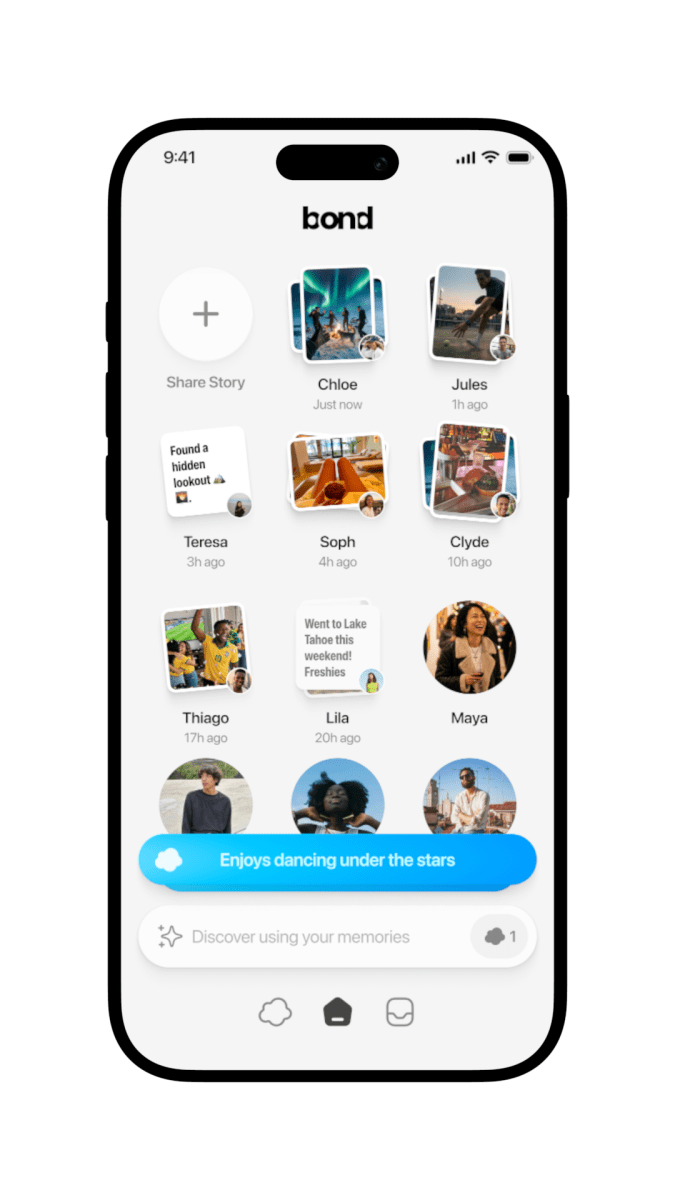
A new social media entrant named Bond has officially launched, positioning itself as a direct antidote to the pervasive issue of screen addiction. While conventional social platforms rely on infinite scrolling feeds designed to maximize time-on-app, Bond utilizes artificial intelligence to serve as a catalyst for real-world engagement. By analyzing user-contributed memories—including photos, videos, and audio—the platform generates personalized, event-based suggestions tailored to the user’s specific lifestyle and interests.
The application abandons the traditional feed architecture in favor of a cluster-based profile layout. Content shared by users is ephemeral, remaining visible for 24 hours before being moved to a private, searchable archive. The development team, comprised of industry veterans from major tech giants like Google, TikTok, and Twitter, designed the AI to actively encourage users to step away from their screens. For instance, the system might suggest local dining experiences or notify users about upcoming concerts for artists they follow, effectively bridging the gap between digital interaction and physical activity.
Bond is also taking a distinct approach to monetization, steering clear of the ad-heavy models that define the current social media landscape. Instead, the company is exploring a model where users can license their own archived data to organizations training AI systems, with the platform taking a modest commission on these transactions. While future e-commerce integrations are under consideration, the company maintains that monetization is not its immediate focus.
Privacy is a cornerstone of the platform’s architecture, with a firm commitment that user data will not be sold for advertising. Users maintain full control over their content, with the ability to delete individual memories or their entire profiles at any time. As the platform scales, the development team has prioritized the implementation of end-to-end encryption to further bolster user security and data protection.
Key Takeaways
- Bond uses AI to suggest real-world activities rather than keeping users trapped in an infinite scrolling feed.
- The platform features a unique data-licensing model that allows users to potentially monetize their own archived content.
- Privacy is a core focus, with a strict policy against selling user data for advertising purposes.
Editor’s Analysis & Impact
The launch of Bond represents a significant shift in the social media paradigm, reflecting a growing consumer fatigue with engagement-based algorithms that prioritize time-on-platform over user well-being. By positioning itself as an ‘anti-doomscrolling’ tool, Bond taps into the rising demand for digital wellness. The platform’s proposed data-licensing model is particularly disruptive; it challenges the status quo of ‘free’ social media where the user is the product, instead proposing a framework where users retain ownership of their data. If successful, this could set a new industry standard for data ethics. However, the challenge for Bond will be scaling its user base without succumbing to the same engagement metrics that drive traditional platforms, as well as proving that its AI-driven recommendations can provide genuine value in a crowded and competitive market.
Frequently Asked Questions
Q: How does Bond differ from traditional social media apps?
A: Unlike traditional apps that use infinite feeds to keep users online, Bond uses AI to suggest real-world activities and events, encouraging users to spend less time on their devices.
Q: How does the platform plan to make money?
A: Bond avoids traditional advertising. Instead, it is exploring a model where users can license their archived data to companies for AI training, with the platform taking a small commission.
Q: Is my data safe on Bond?
A: The company promises not to sell user data for advertising and allows users to delete their content or profiles at any time. They are also working on implementing end-to-end encryption.
AI Disclosure: This article is based on verified data and official reports. Our Team and AI have cross-referenced every financial detail with primary sources to ensure total accuracy.
More from this Category